SEO For Automotive Industry: 2026 Guide for Car Dealerships
When potential customers search "brake repair near me," most automotive shops remain invisible on page three of Google results. This represents countless missed opportunities in today's competitive landscape. Strategic search engine optimization can transform your online presence, helping you attract more customers and secure valuable leads through proven techniques.
Success doesn't require mastering every technical detail alone. Effective Auto Repair Marketing combines strong operations with a consistent digital presence, both elements that search engines reward. Running streamlined operations while building your online footprint naturally improves search rankings, and the right shop management software can integrate these efforts seamlessly.
Table of Contents
What is SEO, and How Does It Work for the Automotive Industry?
Why Is SEO Important for Auto Repair Shops and Automotive Businesses?
What are the Most Important SEO Ranking Factors for Automotive Businesses?
Key Strategies for Implementing SEO for the Automotive Industry in 2026
How to Measure Automotive SEO ROI
How Support Lane Helps Automotive Businesses Improve Their Online Presence
Sign up for Your Free Trial to Manage your Auto Shop with Ease Today
Summary
Most users never scroll past the first page of search results, with 75% stopping their search after viewing only the top listings. This behavior makes ranking position the sole factor determining whether potential customers discover your automotive business or immediately choose a competitor. For repair shops and dealerships, invisible placement on page three functionally equals not existing at all in the minds of drivers actively searching for services.
Local search intent drives immediate conversions in the automotive industry. Research shows that 88% of consumers who perform a local search on their smartphone visit or call a business within 24 hours. This urgency transforms search visibility directly into scheduled appointments and filled service bays, making geographic optimization and "near me" targeting critical for capturing ready-to-buy customers who need solutions now, not next week.
Content relevance and user engagement outperform keyword manipulation as ranking factors. Analysis of over 300,000 search positions found that text quality and visitor interactions (bounce rates, session duration, return visits) showed the strongest correlation with top rankings. Search engines now reward pages that solve real problems with clear explanations over those stuffing "brake repair" into every paragraph, measuring whether humans find your content useful enough to stay and explore.
SEO delivers an average return on investment of 748% compared to paid advertising's temporary visibility. Organic search leads close at 14.6% versus just 1.7% for outbound marketing efforts, and acquisition costs decline month over month as rankings compound, while paid ads require continuous spending for every single click. This efficiency gap explains why shops investing in long-term optimization capture more profitable customers while reducing their dependence on costly advertising budgets.
Technical performance creates the foundation that enables all other ranking factors to work. Core Web Vitals measuring page speed, interactivity, and visual stability, directly impact whether mobile searchers (who now represent 60% of automotive searches) can actually use your site to book appointments or browse services. Fast, stable experiences enable visitors to engage with your content long enough to generate the behavioral signals that search engines interpret as quality markers.
Shop management software addresses this by connecting customer-facing booking pages directly to scheduling calendars and service capacity, ensuring the seamless mobile experience and operational consistency that search engines reward through higher rankings.
What is SEO, and How Does It Work for the Automotive Industry?
SEO helps car businesses appear at the top of Google results when people search for vehicles, parts, repairs, or related services. It drives targeted traffic that outperforms paid ads because these visitors are actively seeking what you offer.
🎯 Key Point: SEO stands for Search Engine Optimization - the practice of optimizing your automotive website to rank higher in search results when potential customers look for car-related services.
"Organic search drives 53% of all website traffic, making SEO the most cost-effective long-term strategy for automotive businesses." — BrightEdge Research, 2023
💡 Example: When someone searches for "Honda dealership near me" or "brake repair services," SEO ensures your automotive business appears in the top results instead of being buried on page 2, where nobody looks.
How does SEO for the Automotive Industry connect businesses with customers?
SEO connects car dealerships, repair shops, and parts suppliers with ready-to-buy customers through technical skill, local relevance, and buyer-focused content.
What factors do search engines reward for automotive businesses?
Search engines reward sites that load fast, answer questions clearly, and earn trust through reviews and external recognition. For auto repair shops, this means optimizing service pages around terms like "brake repair near me" or "oil change in [city]" while maintaining a technically sound site that mobile users can navigate easily.
The result is steady organic traffic that builds long-term visibility without ongoing ad spend.
How Search Engines Decide Who Ranks First
Search engines prioritize content quality, user experience, and authority to display the most helpful pages first. They favor sites that provide clear answers, load quickly, function well on mobile devices, and demonstrate expertise through reviews and backlinks. According to HubSpot, 75% of users never scroll past the first page of search results, making ranking position critical to visibility.
On-Page SEO Speaking the Customer's Language
On-page SEO improves every part of your website (titles, headings, descriptions, and text) to match customer search queries. For car pages, this includes detailed vehicle descriptions with exact model years, features, and trim levels, as well as service pages covering common issues such as brake repairs and oil changes. Well-optimized pages use natural language, clear calls to action, and organized formats that help both users and search engines understand value, boosting click-through rates and time on site.
How does local SEO help automotive businesses dominate their geographic territory?
Google searches for local information make geographic optimization critical for automotive businesses. Local SEO targets customers searching within your area by optimizing Google Business Profiles, consistent NAP (name, address, phone) citations, and customer reviews. Strong local signals push your shop into map packs and "near me" results, driving foot traffic and conversions from ready buyers in your region.
What challenges do independent auto repair shops face with SEO for automotive industry success?
Most independent auto repair shops juggle paperwork, orders, separate scheduling tools, and manual customer follow-ups while maintaining an online presence. Fragmented systems create gaps that cause potential customers to slip away due to slow site load times, lack of mobile optimization, or ineffective lead capture.
Platforms like Support Lane integrate customer management, online booking, and workflow automation with SEO-friendly website features. Our shop management software modernizes your digital presence while simplifying daily operations.
But showing up in search results only matters if those visitors choose your services over the competition.
Why Is SEO Important for Auto Repair Shops and Automotive Businesses?

Drivers search online before choosing where to take their vehicles. If your shop doesn't show up in those results, competitors get the appointments and money that should be yours. According to research from BrightLocal's 2022 Local Consumer Review Survey, 98% of consumers used the internet to find information about local businesses. Being easy to find online determines whether your bays stay full or sit empty.
"98% of consumers used the internet to find information about local businesses." — BrightLocal's 2022 Local Consumer Review Survey
🎯 Key Point: Your online visibility directly impacts your bottom line - if customers can't find you in search results, they'll automatically choose competitors who rank higher.
🔑 Takeaway: In today's digital marketplace, SEO isn't optional for auto repair shops - it's the difference between a thriving business and one that struggles to fill appointment slots.
SEO Attracts High-Intent Local Customers
People searching for brake repair or oil changes need immediate help. When your shop appears in these searches, you connect with drivers who are actively looking to book appointments. Consumers who conduct a local search on their smartphone visit or call a store within 24 hours, converting search visibility directly into scheduled jobs and predictable revenue.
SEO Builds Trust in a Skeptical Industry
Customers approach repair shops cautiously after past experiences have left them uncertain about trustworthiness. One driver received three different diagnoses for the same transmission problem: from parts store code scans to conflicting mechanic opinions, leaving them unsure whether they needed a $4,000 replacement or a fluid change. Strong SEO showcases detailed service pages, clear pricing, and real customer reviews that establish reliability before the first phone call. When your business ranks at the top with trust already built in, visitors choose you over unfamiliar competitors.
SEO Reduces Reliance on Costly Advertising
Paid ads require ongoing spend to maintain results, while organic rankings deliver traffic without a per-click cost. Auto repair businesses gain steady leads from optimized websites and Google Business Profiles, eliminating monthly ad budget pressure and improving profits.
SEO Supports Long-Term Business Growth
Search optimization strengthens over time as you build authority through content, reviews, and technical improvements. Independent shops expand their reach for new services and seasonal promotions while building community reputation. Many shops struggle with fragmented paper orders, spreadsheets, and disconnected tools, making managing their digital presence overwhelming. Support Lane integrates customer management, online booking, and workflow automation with search-engine-friendly website features, helping shops modernize their digital presence without adding another complex system.
Visibility alone won't fill your schedule if your website fails the tests that search engines use to determine rankings.
Related Reading
What are the Most Important SEO Ranking Factors for Automotive Businesses?
Search engines judge automotive websites based on how well they answer what customers need, not on keyword frequency. The best ranking signals measure whether your site answers real questions, loads quickly on phones, demonstrates expertise, and earns trust from users and credible sources. Shops that rank consistently focus on helpful content, smooth experiences, and authority through genuine customer relationships rather than algorithm tricks.
Content That Solves Problems Beats Keyword Stuffing Every Time
When someone searches "grinding noise when braking," they want to know if it's dangerous, what causes it, and whether they need immediate service. Pages that answer these questions thoroughly rank higher than those that repeat "brake repair service" 20 times. According to Semrush's 2024 study of over 300,000 search positions, text relevance and content quality showed the strongest positive correlation with top rankings. Write for the driver worried about safety or confused about costs, not for the algorithm counting word frequency.
How do user experience signals impact SEO for automotive industry rankings?
A shop's website might rank for "oil change near me," but if visitors bounce because the page takes eight seconds to load or the booking button doesn't work on mobile, that ranking won't last. Search engines track how people interact with sites after clicking through from results. Low bounce rates, longer session times, and return visits signal that a site delivers value. Semrush research found direct traffic share and engagement metrics among the top predictors of sustained visibility: rankings depend on whether real humans find your site useful enough to explore and return.
What tools help auto shops maintain SEO-friendly websites?
Most shop owners use multiple tools to manage their business, from paper work orders to separate booking systems, making it difficult to maintain a modern web presence. Our shop management software integrates online booking, customer management, and automated workflows with search engine-optimized website features, helping shops deliver the fast, mobile-optimized experience that search engines reward while simplifying operations.
Technical Performance Creates the Foundation for Everything Else
Core Web Vitals measure page load speed, content stability during loading, and responsiveness to user interaction. A repair shop's service page with perfect content fails if images aren't optimized and the site takes five seconds to become interactive on mobile—users leave before reading anything. Fast, stable sites let visitors use your content, schedule appointments, or browse services without frustration, creating positive behavioral patterns that search engines interpret as quality signals.
Authority Builds Through Demonstrated Expertise and Trust
E-E-A-T (Experience, Expertise, Authoritativeness, Trustworthiness) determines whether search engines rank your site for competitive terms. For automotive businesses, this means certified technician profiles, transparent pricing, detailed service descriptions, and consistent positive reviews. Forbes guidelines on navigating the 2025 search landscape emphasize E-E-A-T as essential for trust-sensitive topics, with strong signals directly correlating to better visibility. Demonstrated automotive expertise through helpful advice and transparency earns rankings that manipulative link-building tactics cannot replicate.
Local Signals Connect Searches to Nearby Solutions
Google searches increasingly seek local information, making geographic relevance critical for repair shops and dealerships. Consistent business information across directories, an optimized Google Business Profile with accurate hours and services, and location-specific content help shops appear when drivers search "brake repair in [city]" or "auto shop near me." These proximity and consistency signals connect nearby searches to your actual location.
Key Strategies for Implementing SEO for the Automotive Industry in 2026
Turning SEO knowledge into action means building daily habits that support your rankings. The strategies that work in 2026 aren't about tricking the algorithm—they're about matching your digital presence with how customers search, what search engines reward, and how your shop operates. When these pieces connect, visibility becomes a natural result of running a modern, customer-focused business.
🎯 Key Point: The most effective automotive SEO strategies focus on authentic customer value rather than algorithm manipulation.
"SEO success in the automotive industry comes from aligning your digital strategy with genuine customer needs and search behaviours." — Industry Best Practice, 2026
💡 Tip: Implement one core strategy consistently before adding complexity—sustainable growth beats quick fixes every time.
Build Local Signals That Match Search Behavior
Local optimization puts your shop in front of drivers at the exact moment they need you. Mobile devices account for 60% of all automotive searches, most showing immediate intent. Claim your Google Business Profile completely with accurate hours, service descriptions, photos of your actual facility, and responses to every review. Create dedicated pages for each service area you cover. When someone three blocks away searches "brake repair open now," every signal should point to your shop as the clear, trustworthy answer.
Fix the Technical Foundation First
Technical performance determines whether search engines can find and understand your site. Core Web Vitals (page speed, interaction responsiveness, and visual stability) directly impact rankings by measuring real user frustration. Use a mobile-first design since most searches occur on mobile devices. Add schema markup for your services, operating hours, and customer reviews so search engines display rich results. Secure your site with HTTPS, compress images, and ensure your booking system loads in under three seconds. These baseline requirements separate search engines' trust from those they ignore.
How should you write content that answers real questions?
Stop writing for search engines and start writing for the person whose check engine light just came on. Create pages that address specific concerns: "Why does my car pull left after hitting a pothole?" or "How long should brake pads last on a 2022 Camry?" Use natural language, break information into easy-to-scan sections, and include photos or videos when helpful.
Build topic clusters around major service categories (brakes, transmission, electrical) with connected pages that demonstrate your expertise. Search engines reward depth and helpfulness over keyword density. When your content solves problems, people stay longer, share links, and return for service.
Why does SEO for the automotive industry require updated content?
As search behavior shifts toward mobile and voice, reactive approaches create invisible gaps. Potential customers search while your information sits outdated, and competitors with fresher content capture the traffic.
Shop management software like Support Lane integrates your online booking and customer management with your web presence, ensuring that service availability, hours, and booking options remain up to date without requiring separate manual updates across multiple platforms.
Measure What Actually Drives Business
Track metrics that connect to revenue, not vanity numbers. Monitor conversion rates (visits that become calls or bookings) on service pages. Watch your Google Business Profile insights to see which searches trigger your listing and click-through rates. Set up goal tracking for online appointment requests, phone calls from your site, and direction requests. Compare month-over-month ranking changes for core service terms in your service area. When "transmission repair [your city]" traffic spikes but appointments don't increase, your content or booking process needs work, not SEO.
Rankings and traffic mean nothing without connecting them to actual customers.
Related Reading
Ppc Advertising For An Auto Repair Shop
How to Measure Automotive SEO ROI

Measure automotive SEO ROI by connecting SEO investment (agency fees, tools, content creation) to revenue generated through organic search. Track the value of leads and sales from unpaid search results to determine whether your rankings translate into profitable customer acquisition or merely vanity metrics.
🎯 Key Point: Focus on revenue attribution rather than just traffic increases. A 10% boost in organic traffic means nothing if those visitors don't convert into qualified leads or vehicle sales.
"Businesses that track SEO ROI properly see 25% better resource allocation and 40% higher campaign effectiveness compared to those focusing solely on ranking metrics." — Search Engine Marketing Study, 2024
⚠️ Warning: Don't rely on Google Analytics alone for ROI measurement. Integrate your CRM data with search console metrics to get the complete picture of how organic search drives actual dealership revenue.
Set Revenue Goals That Match Your Shop's Reality
Define what success looks like in terms that your business cares about. If you run a repair shop, that might mean twenty additional oil change appointments per month or five transmission jobs booked through your website. Dealerships might target 15 qualified test-drive requests or 8 completed vehicle sales inquiries. These specific targets give you something concrete to measure against, rather than vague goals like "more traffic" or "better rankings."
Track the Full Journey from Search to Service Bay
Most shops lose track of customers between the Google search and the service bay. Install call tracking numbers on your website to identify which organic visitors call. Set up form analytics to capture quote requests and appointment bookings. Connect your CRM to see which leads came from organic search, paid ads, or referrals. According to seoprofy.com, SEO leads have a 14.6% close rate compared to 1.7% for outbound leads, but only if you track where your best customers come from. The fastest-growing repair shops know exactly which search terms bring their most profitable jobs.
Calculate Cost Per Acquisition and Lifetime Value
Break down what you spend to acquire each customer through SEO, then compare it against their lifetime value. A customer searching "brake repair near me" might spend $400 on their first visit, but return visits for oil changes, tire rotations, and major repairs could push lifetime value to $3,000 or more. Unlike paid ads, where you pay per click indefinitely, SEO costs decline month over month as rankings hold and compound. Research from First Page Sage shows SEO has an average ROI of 748%, largely because these costs decline while organic visibility persists. Run the maths quarterly to measure both immediate bookings and long-term customer relationships.
Compare Performance Against Paid Advertising Benchmarks
Compare what you spend on Google Ads or Facebook campaigns against the quality of leads each delivers. Organic search attracts customers who already trust you enough to click a non-sponsored result, while paid traffic often includes people seeking the best price. Track cost per completed job, not cost per click. If SEO brings transmission repairs at $50 per customer acquired versus $120 for ads, you've found your answer. Shops using shop management software with integrated online booking see this contrast clearly because our platform captures which marketing channel drove each appointment, eliminating guesswork from disconnected tools.
Review Monthly Trends Instead of Daily Fluctuations
SEO results build slowly, then speed up. One week of flat traffic means little, but three months of steady growth in "oil change [your city]" rankings combined with more appointment requests signals real progress. Pull reports showing year-over-year and quarter-over-quarter changes in organic sessions, lead volume, and attributed revenue. Watch for patterns like seasonal dips (fewer brake jobs in summer, more AC repairs) and adjust your interpretation accordingly. Shops that panic over a bad week and abandon their strategy never stick around long enough to see compounding returns.
How Support Lane Helps Automotive Businesses Improve Their Online Presence
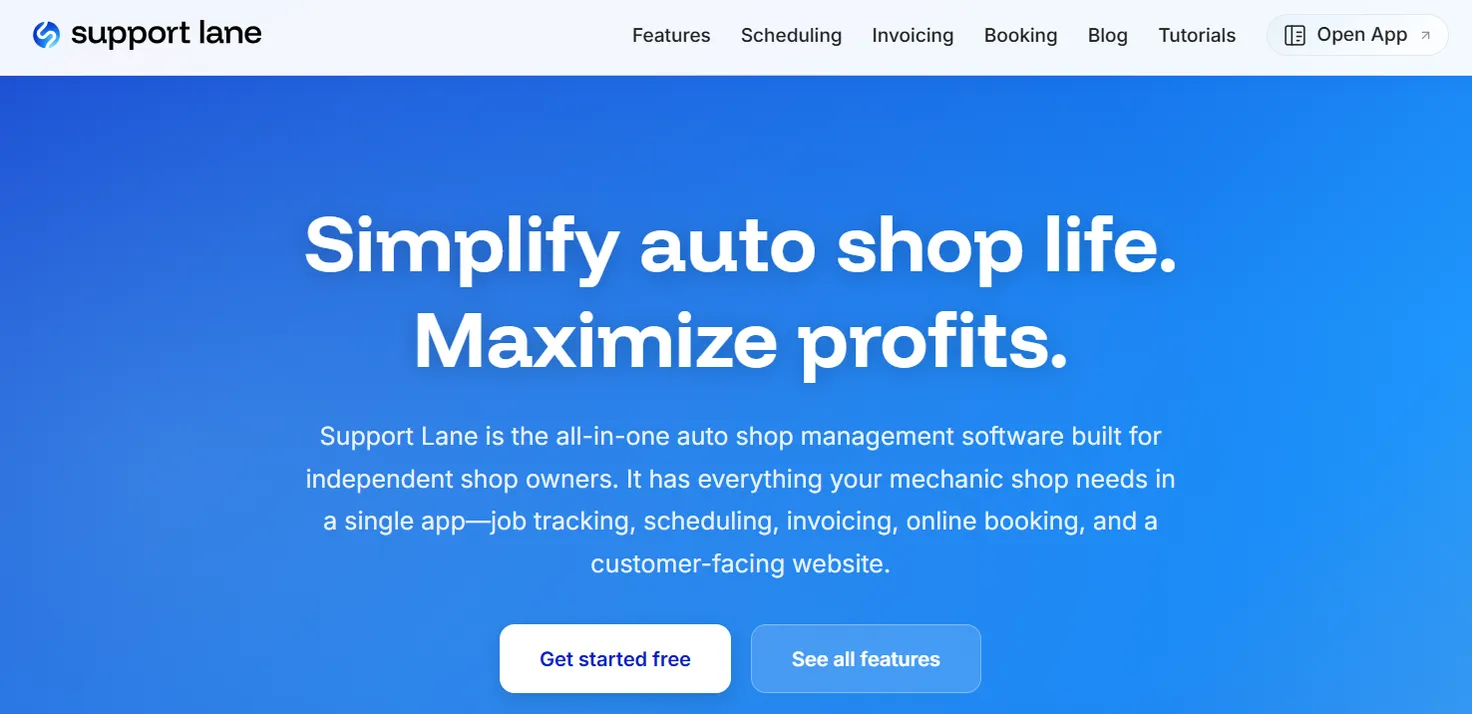
People buy from your shop when it delivers the smooth experience they expect after finding you online. Shop management platforms that connect customer-facing tools with backend operations transform your website from a static brochure into a booking engine operating around the clock, eliminating the need for customers to call during business hours or wait on hold.
🎯 Key Point: Your website should function as a 24/7 sales representative that captures leads and converts visitors into paying customers without requiring human intervention.
"Modern automotive customers expect instant gratification and seamless digital experiences - businesses that can't deliver lose potential revenue every day." — Digital Automotive Research, 2024
💡 Tip: Integrate your online booking system with your shop management software to automatically sync appointments, reduce double-bookings, and provide customers with real-time availability updates.
Hosted Websites That Actually Convert Searches Into Appointments
Most shop websites function as digital business cards with phone numbers and addresses, forcing customers through extra steps before booking. Support Lane provides a fully editable, hosted website with customizable service pages, team profiles, and contact forms that connect directly to your scheduling system. Customers select specific services and book appointments that automatically sync with your availability, eliminating friction that would otherwise drive potential customers to competitors. Despite 95% of car buyers using digital sources for information, most shops still require these digitally savvy customers to navigate outdated booking processes.
Integrated Communication That Builds Review-Worthy Experiences
The shops that rank at the top of local search results share a common trait: abundant positive reviews mentioning quick responses and clear updates. Support Lane consolidates all customer messages (email and SMS) in one place, preventing messages from getting lost across inboxes or voicemails. Every service generates professional invoices and estimates sent digitally, creating branded touchpoints that link to your website for easy rebooking. This reliability drives better reviews and higher ratings—trust signals that search engines recognise. Social media influences 84% of automotive purchase decisions, and customers expect the same transparency across every digital interaction with your shop.
How does operational consistency impact SEO for automotive industry rankings?
Search engines reward websites that deliver on their promises. Fast load times, accurate information, and working booking systems influence rankings through user experience metrics. Support Lane's job management tools to reduce no-shows and delays via Kanban boards and automated workflows, preventing negative reviews.
The platform's vehicle history tracking and VIN decoding enable personalized service recommendations on customer portals, increasing engagement time on your site—a positive SEO signal. Smooth operations keep customers engaged with your digital properties rather than searching for alternatives.
Why do disconnected systems hurt automotive SEO performance?
Most shops treat their website and management system as separate tools, forcing manual updates that create inconsistencies between what customers see online and what your team can deliver. Our shop management software connects customer-facing booking pages directly to your scheduling calendar and service capacity.
When availability changes or services launch, updates flow automatically across every touchpoint, eliminating the need for separate website edits and the risk of outdated information that can damage trust. However, sophisticated tools only matter if you commit to using them consistently enough to see compounding returns.
Sign up for Your Free Trial to Manage your Auto Shop with Ease Today
Most shops improve their search presence while their backend operations rely on scattered spreadsheets, sticky notes, and separate booking systems. Better rankings attract more visitors, but checkout problems drive them to competitors with easier booking experiences. Each month you delay connecting your SEO strategy to your operational systems, qualified leads choose shops that have integrated months ago.
🎯 Key Point: Seamless integration between your online presence and operational systems is critical for converting SEO traffic into actual customers.
Support Lane delivers shop management software with a professional, hosted website, integrated online booking, and customer communication tools all in one platform. Our platform automatically converts organic traffic into scheduled appointments, while Kanban job boards, VIN decoding, and consolidated SMS and email messaging keep operations running smoothly enough to generate strong reviews and repeat business that reinforce search rankings.
"Every month you delay integrating your SEO efforts with operational systems, qualified leads choose competitors who made the connection months ago." — Digital Marketing Reality, 2024
Ready to connect your SEO efforts to real business growth? Visit SupportLane.io and start your free trial with no credit card required. Get instant access to your customizable website, booking system, and complete management tools without technical complexity. Stop watching competitors capture customers you worked to attract.
💡 Tip: Start your free trial today and see how seamlessly integrated systems transform SEO traffic into booked appointments within 24 hours.
Related Reading
Ready to modernize your shop?
Join the independent auto repair shops already using Support Lane to manage their jobs, customers, and invoices in one place.