17 Best Garage Management Software for Auto Shops in 2026

Running an auto repair shop means juggling appointments, tracking inventory, managing invoices, auto repair marketing, and keeping customers happy all at once. When scheduling systems rely on paper calendars and customer records are scattered across spreadsheets, shops lose time and money every day. The right garage management software transforms these daily struggles into streamlined workflows that improve operations and strengthen customer communication.
Effective systems provide a central hub where appointments, work orders, customer histories, and billing are seamlessly connected. Instead of switching between multiple programs or hunting through filing cabinets, shop owners get one platform that tracks everything from initial customer calls to final invoices. This efficiency allows mechanics and managers to focus on what matters most: fixing cars and building lasting customer relationships through reliable shop management software.
Table of Contents
What Is Garage Management Software, and Why Do Modern Auto Repair Shops Need One?
What Features Should the Best Garage Management Software Include?
Can Garage Management Software Help Increase Revenue?
17 Best Garage Management Software for Auto Shops in 2026
How to Choose the Best Garage Management Software for Your Business
Why Modern Auto Repair Shops Choose Support Lane for Garage Management
Sign up for Your Free Trial to Manage your Auto Shop with Ease Today
Summary
Garage management software delivers measurable revenue gains by fixing operational leaks that cap shop earnings. Shops adopting digital inspection tools see approval rates jump because photo evidence eliminates customer skepticism, converting hesitant "I'll think about it" responses into approved repair orders. Shops that use digital inspection features achieve a 30% reduction in administrative time, freeing advisors to focus on customer communication rather than paperwork. The real value isn't paperwork reduction; it's capturing revenue that currently slips away due to slow approvals and forgotten follow-ups.
Automated service reminders transform one-time customers into recurring revenue streams. Manual shops lose business not because customers lack loyalty, but because no one systematically asks them to return. Software that tracks service intervals and triggers personalized reminders based on actual mileage creates predictable maintenance cycles that stabilize monthly income. Two-way messaging keeps customers informed throughout repairs, building ongoing relationships rather than transactional interactions that end when the vehicle leaves the bay.
Real-time workflow visibility converts wasted hours into billable capacity. Live scheduling boards show exactly which bays are occupied, which technicians are available, and how long each job will take, letting managers spot idle capacity instantly and adjust assignments. Garages using management software see up to 30% revenue increases by eliminating friction that wastes billable hours. The software doesn't add physical space or staff; it maximizes earnings from existing capacity by preventing the stockouts and coordination failures that stall jobs mid-repair.
Online booking captures appointments that would otherwise be lost to after-hours calls and phone hold times. Customer-facing portals that display real availability based on bay capacity and service duration allow people to book directly without waiting until business hours. Shops that use online booking typically see a 15 to 20 percent increase in appointment volume without adding staff hours. Empty bays cost money every hour they sit idle, and phone-only scheduling creates artificial scarcity, turning potential revenue into opportunities for competitors.
Unified customer records eliminate the frustrating experience of having to repeat information already provided. When service history, previous repairs, parts purchased, and communication logs appear on a single screen, advisors see the complete customer relationship instantly. This continuity transforms transactional service into relationship-based care, where maintenance reminders arrive at precisely the right moment, based on the vehicle's actual needs rather than generic mass messages. Customers return more reliably when they feel recognized rather than processed.
Shop management software addresses workflow fragmentation by consolidating job tracking, appointment booking, customer communication, invoicing, and vehicle history into a single interface, so technicians and service advisors work from the same real-time view.
What Is Garage Management Software, and Why Do Modern Auto Repair Shops Need One?
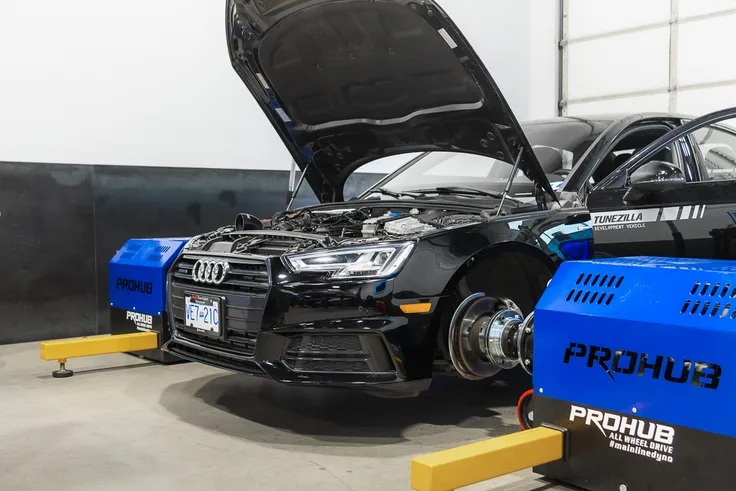
Garage management software is a digital platform that runs your entire shop from one system. It handles scheduling, work orders, inventory tracking, invoicing, and customer records without switching between spreadsheets, paper forms, and separate apps. Every job, part, and payment connects in real time, so nothing gets missed.
Key Point: Garage management software is the central nervous system of your auto repair shop—it connects every operation and keeps all your critical business data flowing seamlessly.
"Modern auto repair shops using integrated management systems report 25% faster job completion times and 40% fewer administrative errors compared to shops using manual processes." — Automotive Service Industry Report, 2024
Takeaway: Garage management software transforms your shop into a streamlined operation where every component works together for maximum efficiency, eliminating the need to juggle multiple tools and manual processes.
The Real Cost of Running on Paper and Patchwork Systems
Most shops build their workflow from whatever seemed easiest at the time: scheduling in a desk calendar, tracking repairs on carbon-copy forms, managing inventory in a spreadsheet, and handling billing through separate accounting software. This works with three bays and a loyal customer base, but breaks down as you grow.
Why do fragmented systems create costly mistakes?
A technician finishes a brake job but forgets to update the paper ticket. The service advisor calls the customer with outdated information. Parts get ordered twice because two people checked different lists. 70% of auto repair shops report improved efficiency after switching to integrated systems. Fragmented tools perpetuate this chaos.
How does the best garage management software eliminate workflow chaos?
Shops that consolidate their work on one platform eliminate constant tool switching, which wastes hours each day. Support Lane's shop management software replaces separate tools with a single system where job tracking, customer communication, and billing happen in one place. This lets you focus on repairs instead of searching for information across multiple programs.
Why Integration Beats Adding More Tools
You don't need another app. You need fewer systems that work together without manual data entry, phone calls, or sticky notes. Garage management software automatically connects scheduling to work orders, work orders to inventory, and inventory to invoicing. When a technician marks a job complete, the system updates the customer, adjusts parts stock, and prepares the invoice without manual intervention.
How does the best garage management software improve shop efficiency?
Every minute spent moving information between systems is a minute not spent fixing cars, talking to customers, or growing your business. Modern shops compete on speed and reliability, with customers expecting text updates, digital approvals with photos, and accurate estimates delivered fast. Paper systems and spreadsheet workflows cannot consistently deliver that experience.
What features should you prioritize when choosing software?
Knowing you need integrated software is only half the answer. The harder question is determining which features deliver real value and which ones merely impress in a demo.
Related Reading
What Features Should the Best Garage Management Software Include?
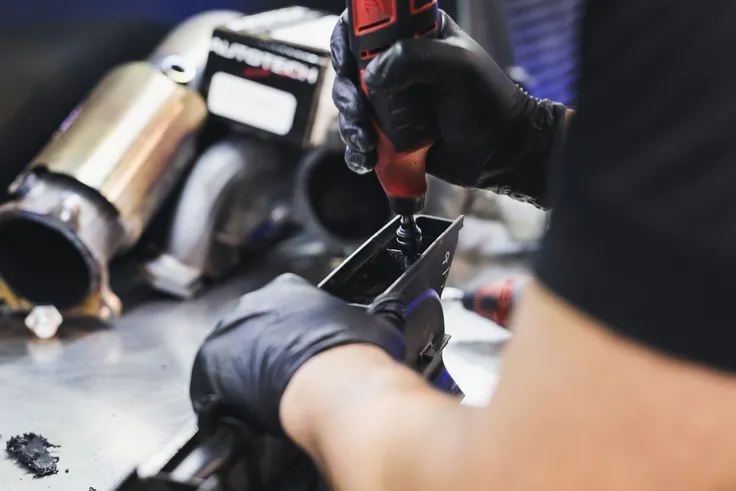
The best garage management software includes integrated scheduling with real-time availability, digital vehicle inspections with photo capture, comprehensive repair order tracking, automated inventory management, accurate estimating and invoicing, customer communication tools, performance analytics, and seamless third-party integrations in one platform rather than separate tools requiring constant switching and manual data entry.
Key Point: The most effective garage management systems eliminate tool switching by combining all essential features into a unified platform, reducing administrative overhead and improving workflow efficiency.
"Integrated garage management platforms can reduce administrative time by up to 40% compared to using separate tools for scheduling, invoicing, and inventory management." — Automotive Service Industry Report, 2024
Core Features, Key Capabilities & Business Impact
Scheduling integration
Key capability: Real-time availability tracking
Business impact: Reduces double-bookings and customer wait times
Digital inspections
Key capability: Photo capture and service documentation
Business impact: Improves transparency and builds customer trust
Repair order tracking
Key capability: End-to-end job monitoring
Business impact: Enhances workflow visibility and operational control
Inventory management
Key capability: Automated stock monitoring
Business impact: Prevents parts shortages and reduces excess inventory costs
Customer communication
Key capability: Automated updates and notifications
Business impact: Increases customer satisfaction and reduces manual follow-ups
Tip: Look for garage management software that offers native integrations rather than third-party connectors—this ensures faster data sync, fewer errors, and more reliable performance across all your business operations.
Real-Time Scheduling That Actually Reflects Shop Reality
Scheduling tools should show which bays are available and how many technicians are working throughout the day. This lets service advisors fill open time slots without overbooking or leaving bays empty. Customers can book appointments directly from your website, and automatic text reminders reduce no-shows by up to 40%, according to a 2024 Automotive Management Institute study. The calendar updates immediately when a job runs longer than expected, or a technician calls in sick, preventing cascading delays that turn one problem into a day of frustrated customers.
Digital Vehicle Inspections With Visual Evidence
Technicians capture photos, videos, and detailed notes during inspections, creating professional reports that customers can review and approve from their phones. Visual proof eliminates doubt that prevents service approval. When customers see a clear photo of a cracked belt or worn brake pad, accompanied by the technician's explanation, approval rates jump as trust replaces uncertainty.
Repair Order Management That Eliminates Lost Information
Digital repair orders track every job from estimate through completion with live status updates visible to the entire team. Technicians record time, add parts, and attach documentation in real time while service advisors monitor progress without interrupting work. This visibility shortens cycle times by eliminating delays from missing approvals or parts.
Inventory Tracking That Prevents Stockouts and Waste
The system monitors stock levels automatically, removes parts when assigned to jobs, and sends reorder alerts based on actual usage. It integrates with major suppliers for one-click ordering and pulls current pricing directly into estimates, preventing markup errors that cost shops thousands of dollars annually.
Shops avoid both production stoppages from missing parts and capital tied up in excess inventory.
Why does the best garage management software consolidate multiple systems?
Most shops handle three or four different systems for these tasks, copying information between platforms and risking mistakes. Our shop management software consolidates scheduling, inspections, repair orders, inventory, and invoicing into a single platform, eliminating the screen switching that wastes hours each week.
Can Garage Management Software Help Increase Revenue?

Yes, garage management software increases revenue by fixing operational leaks that cap earnings per vehicle. It surfaces hidden opportunities, speeds up approvals, and systematizes follow-up, converting missed revenue into captured income. Shops that implement integrated systems see measurable gains by addressing mechanisms that limit throughput, reduce ticket values, and enable customer retention.
Key Point: The real value isn't just in organization—it's in capturing revenue that would otherwise slip through operational cracks in your daily workflow.
"Garage management software transforms missed opportunities into captured income by systematizing the follow-up processes that most shops handle inconsistently." — Industry Analysis, 2024
Best Practice: Focus on integrated systems that address multiple revenue leaks simultaneously rather than piecemeal solutions that only fix individual problems.
How Digital Inspections Lift Approval Rates and Ticket Values
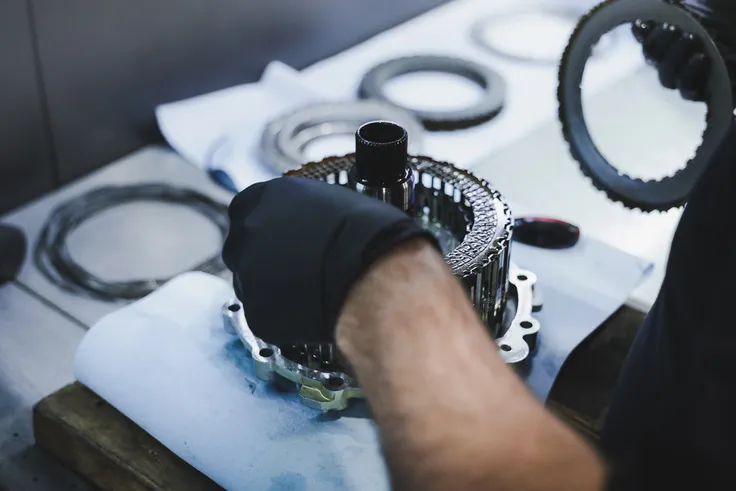
Technicians using mobile inspection tools document every issue with photos and videos, building a visual case file in real time. Service advisors send these detailed, image-rich estimates directly to customers' phones. When customers see clear photos of brake pad wear or fluid leaks rather than vague descriptions, they approve recommended work faster and more often. According to a report from Data Intelo, platforms with strong digital inspection and communication tools deliver service tickets with 18% higher values. Visual proof builds instant trust, converting hesitation into approved repair orders.
How Automated Reminders Drive Repeat Business
Complete digital vehicle histories let the software track service intervals and send personalized reminders based on actual mileage and time since the last visit. Customers receive automated text or email notifications when oil changes, tire rotations, or seasonal inspections are due. This approach keeps vehicles returning on schedule instead of going to competitors or delaying maintenance until breakdowns force emergency repairs. According to a report from Data Intelo, shops that use advanced CRM features in their management software see a 26% increase in repeat-customer visit frequency. Automated reminders eliminate manual gaps, creating predictable maintenance cycles that stabilize monthly revenue and transform one-time jobs into recurring business.
How Real-Time Workflow Visibility Maximizes Bay Capacity
Live scheduling boards show which bays are occupied, which technicians are available, and how long each job takes. Managers can immediately identify unused bays and reassign work to keep every bay occupied. Inventory tracking prevents stockouts that slow jobs, while automated parts ordering ensures critical parts arrive before technicians need them.
According to a report from Data Intelo, businesses using integrated management systems report 19% lower technician turnover, thereby preserving institutional knowledge and maintaining service capacity that supports revenue stability. The software converts freed-up time into more completed jobs weekly, expanding shop capacity without requiring additional physical space or staff.
How does the best garage management software consolidate operations?
Platforms like shop management software consolidate these tools in one place. Our Support Lane system features visual Kanban boards that track jobs from intake to completion, custom workflows that match each shop's operations, and built-in invoicing that captures every billable item without manual entry errors. The system eliminates the context-switching and paperwork that prevent shops from maximizing revenue from their existing space and resources.
What separates effective management platforms from basic tools?
The value of management software lies in capturing money lost through inefficient processes, slow approvals, and forgotten follow-ups. Every operational improvement translates directly into dollars earned rather than dollars lost. Choosing the right platform requires understanding the difference between tools that digitize chaos and systems that genuinely transform how shops operate and grow.
Related Reading
Ppc Advertising For An Auto Repair Shop
17 Best Garage Management Software for Auto Shops in 2026
Auto repair shop owners struggle with scattered paperwork, missed customer updates, idle bays, and lost revenue. Garage management software eliminates these problems by centralizing operations, automating routine tasks, and delivering real-time insights that boost efficiency and revenue. Here are 17 of the strongest options available for modern auto shops.
Key Point: The right garage management software can transform your shop from chaotic to streamlined, turning operational headaches into competitive advantages.
"Automotive repair shops that implement comprehensive management software see an average 30% increase in operational efficiency and 25% boost in customer satisfaction scores." — Automotive Service Association, 2024
Tip: When evaluating garage management software, prioritize solutions that integrate seamlessly with your existing payment systems, parts suppliers, and customer communication channels for maximum impact.
1. Support Lane

Support Lane is a powerful, modern garage management platform built specifically for auto repair shops that want to eliminate paperwork chaos, reduce technician frustration, and stop losing revenue from missed opportunities and poor communication. It unifies job tracking, customer engagement, scheduling, and financial operations into one intuitive system that delivers real-time visibility and automation, turning daily bottlenecks into smooth, profitable workflows.
Key Features
Kanban Job Management: Support Lane features a customizable Kanban board that gives shops complete visual control over every repair job. Drag-and-drop stages with color-coded pipelines let teams track progress instantly, trigger automatic actions like marking jobs as started or completed, and monitor time spent in each phase. This directly ends lost paper orders and miscommunication that cause idle bays and delayed completions.
Flexible Online Booking and Calendar: The platform includes a smart calendar view that lets staff create appointments quickly, while customers book online through a professionally hosted website. Availability is calculated automatically, appointments start as pending approval, and 24-hour reminders go out reliably. This consistently fills bays and eliminates no-shows that previously drained revenue.
Comprehensive Customer and Vehicle Management: Shops manage detailed customer profiles with notes, normalized phone numbers, and linked vehicle histories, including VIN decoding and mileage logs. This creates a complete 360-degree view, enabling personalized service and eliminating the frustration of missing records, which leads to repeated questions and lost trust.
Service Templates Library: Users build and manage reusable service templates with pre-defined labor, parts, sublets, and fees. Templates can be marked as bookable online or deactivated as needed. This speeds up the estimating process, ensures pricing consistency, and helps capture more recommended services, thereby increasing average repair order values.
Integrated Parts Catalog: Support Lane maintains an easy-to-use parts database with names, SKUs, and prices that populate automatically from jobs and templates. Technicians add parts to repairs instantly, reducing the time wasted hunting for components and preventing stock-related delays that stall jobs.
Professional Invoicing and Estimating: The system automatically generates estimates and invoices from job services and allows full customization of line items. Features include auto-generated numbers, PDF downloads, estimate-to-invoice conversion, and void options. This removes calculation errors and speeds up collections that previously tied up cash flow.
Location-Specific Tax Configuration: Taxes are configured per location, with support for complex setups such as separate GST/PST or Quebec-style rates applied to specific categories. This ensures billing accuracy across multiple sites and eliminates compliance headaches that create financial leaks.
Flexible Payment Processing: Support Lane tracks amounts owed and handles manual deposits, payments, and refunds, while supporting online payment links and optional in-person POS terminals with custom shop branding. Customers receive receipts automatically, creating a frictionless checkout experience that improves satisfaction and cash flow.
Two-Way Support Lane Chat: Built-in messaging lets shops communicate with customers via SMS or email directly from the platform. Customer replies appear instantly in the system, creating a single conversation thread tied to jobs and appointments. This replaces scattered texts and calls that lead to misunderstandings and missed follow-up opportunities.
Customer-Facing Hosted Website: Each location gets a professional website hosted on Support Lane (or custom domain) with editable hero images, services, team pages, and contact forms. This modern storefront improves online presence, drives direct bookings, and builds credibility, turning first-time visitors into loyal customers.
Best For
Support Lane works best for independent auto repair shops and multi-location operations that need an affordable yet powerful system to replace manual processes, improve customer experience, and scale efficiently. It suits owners tired of fragmented tools who want real-time control and automation without enterprise-level complexity or cost.
Pros
Highly visual Kanban system that brings immediate clarity to shop floor operations
Strong customer-facing tools, including online booking and messaging, that boost retention and revenue
Flexible configuration for taxes, payments, and locations that supports growth
Quick data import and mobile-friendly design that reduces implementation pain
Automation of reminders and workflows that directly cut no-shows and administrative time
Con
Teams transitioning from paper systems may need short training to use all features fully
Accessibility
Support Lane is fully cloud-based with a responsive design that works seamlessly on desktops, tablets, and mobile devices. Technicians and managers access the platform from anywhere with an internet connection, ensuring real-time updates even on the shop floor.
2. Pam
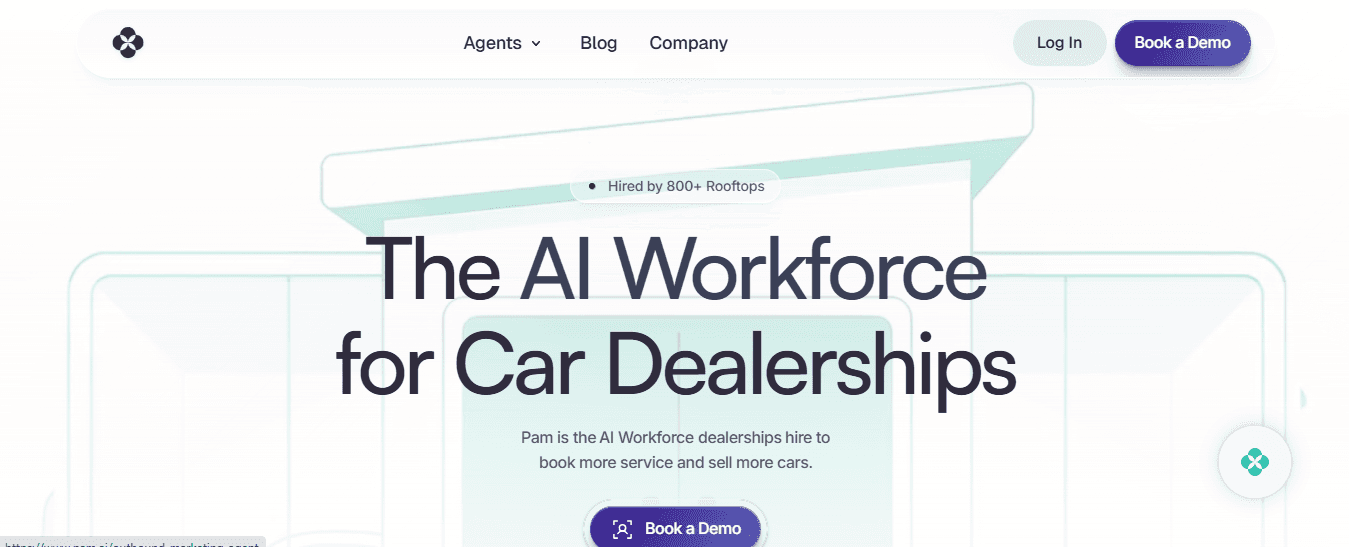
Pam functions as an AI-powered virtual receptionist that integrates seamlessly with garage management workflows to handle inbound calls, schedule appointments, and nurture leads 24/7. This directly solves the problem of missed inquiries and front-desk bottlenecks that cause customers to walk away and revenue to leak.
Key Features
AI call answering and appointment scheduling
Lead nurturing with automated follow-ups
Integration with major scheduling and dealership systems
Real-time availability syncing to prevent overbooking
Customer data capture for building detailed histories
Performance analytics on conversion rates
Multi-location support for scaled operations
Best For
Shops and dealerships are overwhelmed by phone volume and want to convert more calls into booked jobs without hiring extra staff.
Pros
Dramatic reduction in missed opportunities and no-shows
Fast one-day implementation that delivers quick ROI
Frees service advisors for higher-value tasks
Cons
Best as a complement to core shop management tools
AI interactions may need occasional human oversight for complex requests
Accessibility
Cloud platform with easy integration and mobile management capabilities.
3. GaragePlug
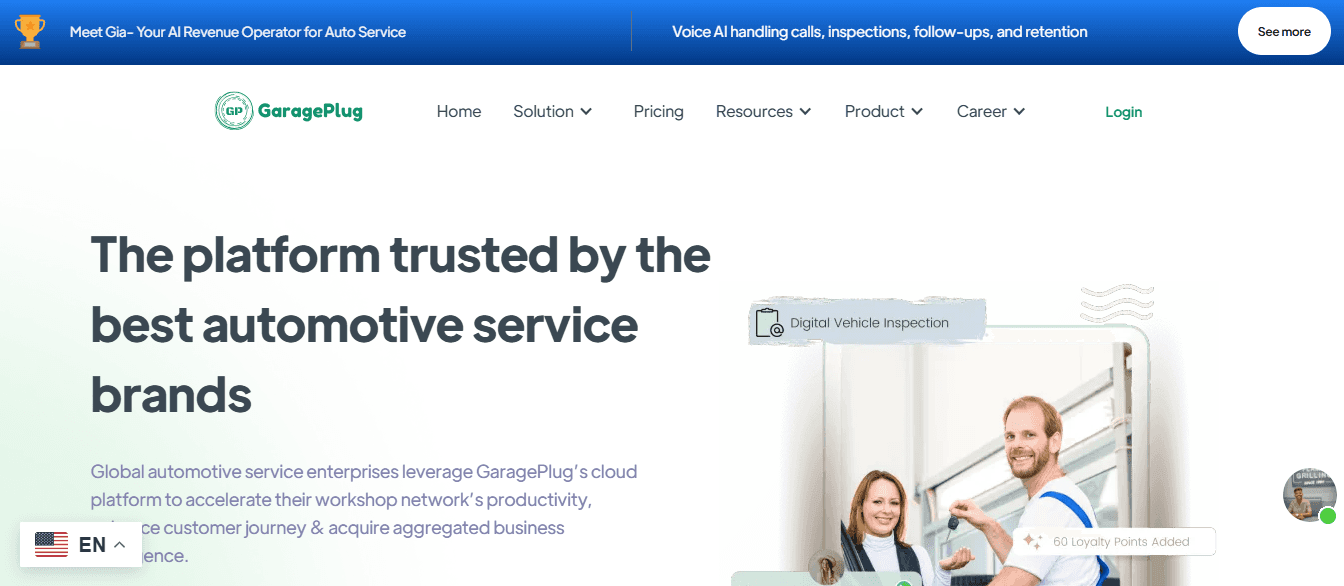
GaragePlug serves as a cloud-based end-to-end solution that centralizes appointment booking, service tracking, billing, and customer engagement for modern workshops. It addresses inventory shortages, delayed approvals, and poor retention by providing real-time visibility and automated communications that keep jobs moving and customers coming back.
Key Features
Digital job cards with e-signatures and mobile updates
Automated service reminders via SMS, email, and WhatsApp
Real-time inventory tracking and supplier integration
CRM-style customer engagement tools
Invoicing and payment processing
Multi-user access with role-based permissions
Analytics dashboards for performance insights
Best For
Multi-location or growing independent garages that need scalable, mobile-first operations to eliminate manual errors.
Pros
Strong automation that cuts administrative time significantly
Excellent customer communication features that improve loyalty
Paperless workflow that boosts overall shop throughput
Cons
Learning curve for teams new to cloud tools
Customization options may require support assistance
Accessibility
Fully cloud-based with dedicated mobile apps for technicians and managers.
4. AutoLeap

AutoLeap delivers a complete workshop management system covering scheduling, technician assignments, inventory, estimating, and invoicing. It tackles revenue leaks through improved visibility, faster workflows, and data-driven decisions, turning operational inefficiencies into higher average repair values and repeat business.
Key Features
End-to-end job scheduling and workflow tracking
Digital vehicle inspections with photo documentation
Real-time inventory management and parts ordering
Advanced reporting and owner dashboards
Automated customer communication and reminders
Integrated estimating and payment processing
Vehicle history and CRM tools
Best For
Independent repair shops focused on operational visibility, customer retention, and measurable growth.
Pros
Powerful analytics that reveal revenue opportunities
Strong retention tools that increase repeat visits
User-friendly interface that reduces technician frustration
Cons
A higher pricing tier may not suit very small single-bay shops
Some advanced features take time to fully utilize
Accessibility
Cloud-based platform with robust mobile applications.
5. ePROMIS

ePROMIS offers an enterprise-grade business management suite tailored for service centers, with modules for inventory, CRM, finance, and HR. It solves multi-location coordination problems, cash flow issues, and standardization gaps by consolidating all operations into a single centralized system with robust financial controls.
Key Features
Integrated inventory and procurement management
Full CRM with customer and vehicle tracking
Financial management and real-time profitability reports
HR tools for technician scheduling and performance
Standardized workflows across multiple locations
Service and sales operation linking
Compliance and centralized reporting
Best For
Larger garages and multi-location groups that require scalable processes and detailed financial oversight.
Pros
Excellent for standardizing operations and controlling costs
Deep financial insights that protect margins
Comprehensive coverage that reduces the need for multiple tools
Cons
More complex setup than simpler platforms
Best suited for larger operations rather than very small shops
Accessibility
Cloud-based with enterprise-level access controls and multi-device support.
6. Bookmot
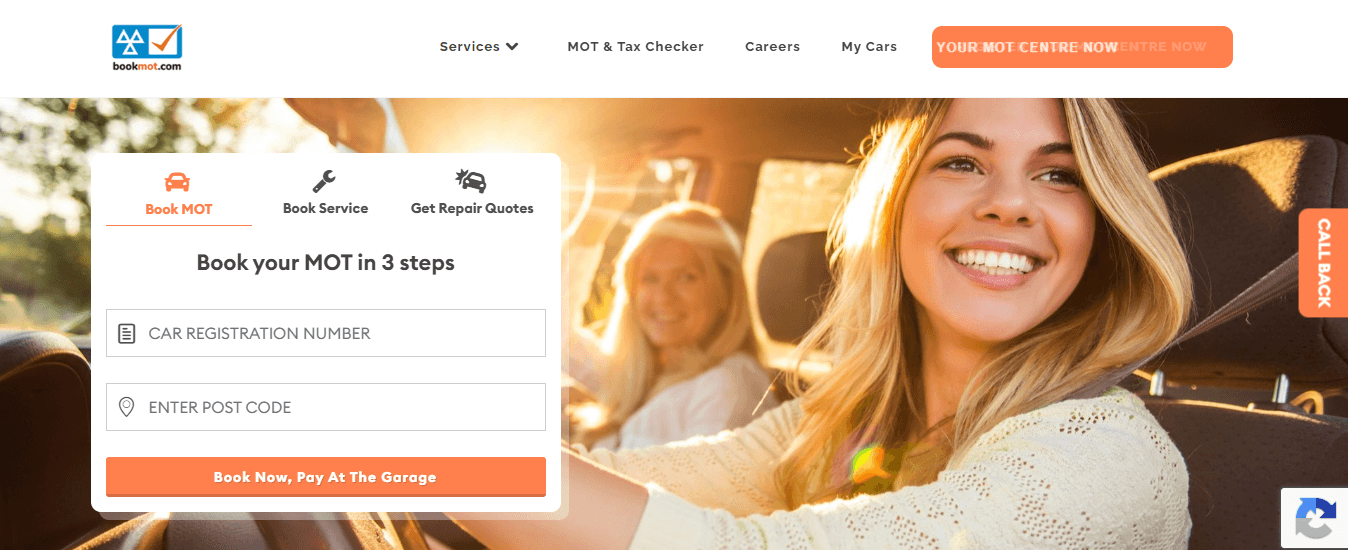
Bookmot delivers a clean, straightforward booking and scheduling platform built for smaller independent auto repair shops that need simplicity without sacrificing essential control. It directly tackles overbooking, missed appointments, and disorganized calendars that lead to idle bays and frustrated customers by providing an intuitive real-time interface and automated updates.
Key Features
Real-time calendar with drag-and-drop appointment management
Online booking links for direct customer self-scheduling
Automated reminders via text and email to cut no-shows
Basic customer and vehicle record storage
Simple job status tracking
Staff assignment and availability overview
Quick reporting on booking trends and utilization
Best For
Small single-location garages and independent workshops that want reliable appointment management without complex features or steep learning curves.
Pros
An extremely user-friendly design that teams adopt quickly
Effective at reducing missed visits and filling the schedule
Low overhead that fits tight budgets while solving daily chaos
Cons
Limited advanced inventory or deep financial tools
May need pairing with other systems for full end-to-end operations
Accessibility
Cloud-based with mobile-friendly access for basic updates on the go.
7. Autorox
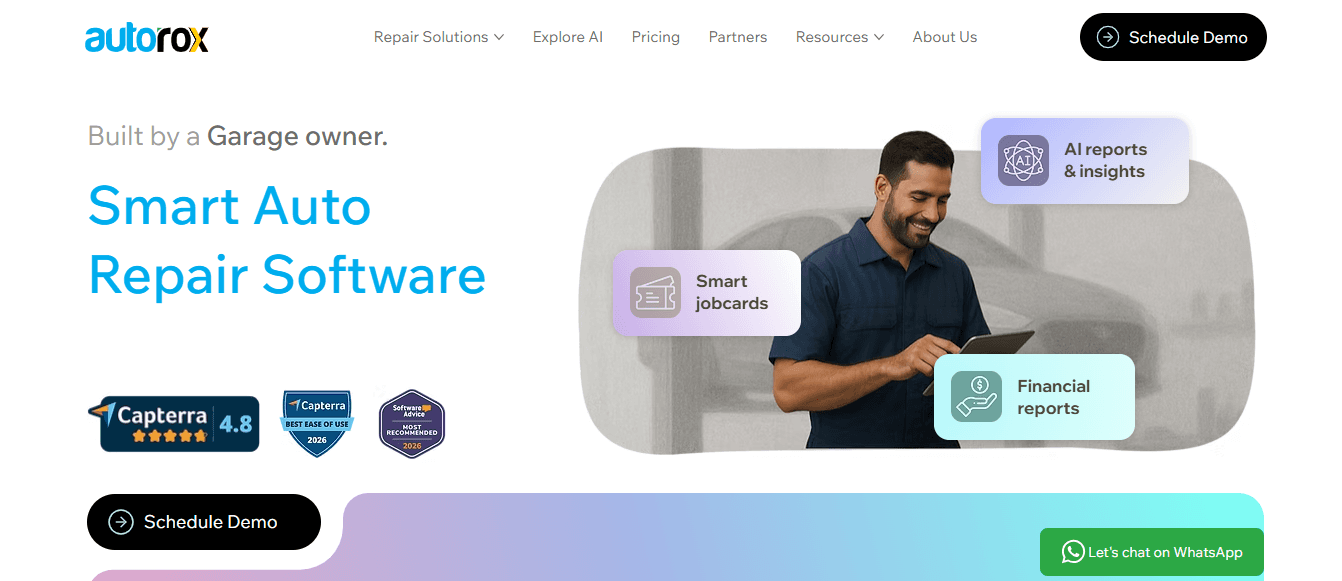
Autorox is a mobile-first, integrated garage management platform that digitizes the entire repair process, from booking to final payment. It solves slow approvals, miscommunication, and delayed parts issues by enabling real-time updates, visual inspections, and instant customer notifications, keeping jobs flowing smoothly and increasing completed services.
Key Features
Digital job cards with mobile technician updates
Real-time service status tracking and notifications
Inventory control with parts procurement support
Digital customer approvals via phone
Automated service reminders and follow-ups
Built-in estimating and invoicing tools
Performance dashboards for bay and technician efficiency
Best For
Modern independent repair shops focus on accelerating repair cycles, improving the customer experience, and boosting daily throughput.
Pros
Strong emphasis on mobile access that reduces floor delays
Excellent customer communication tools that build trust fast
Helps capture more upsells through visual proof and quick approvals
Cons
Some features may feel advanced for absolute beginners
Full benefits require consistent team adoption
Accessibility
Fully cloud-based with dedicated Android and iOS apps for technicians and managers.
8. AutoInTouch
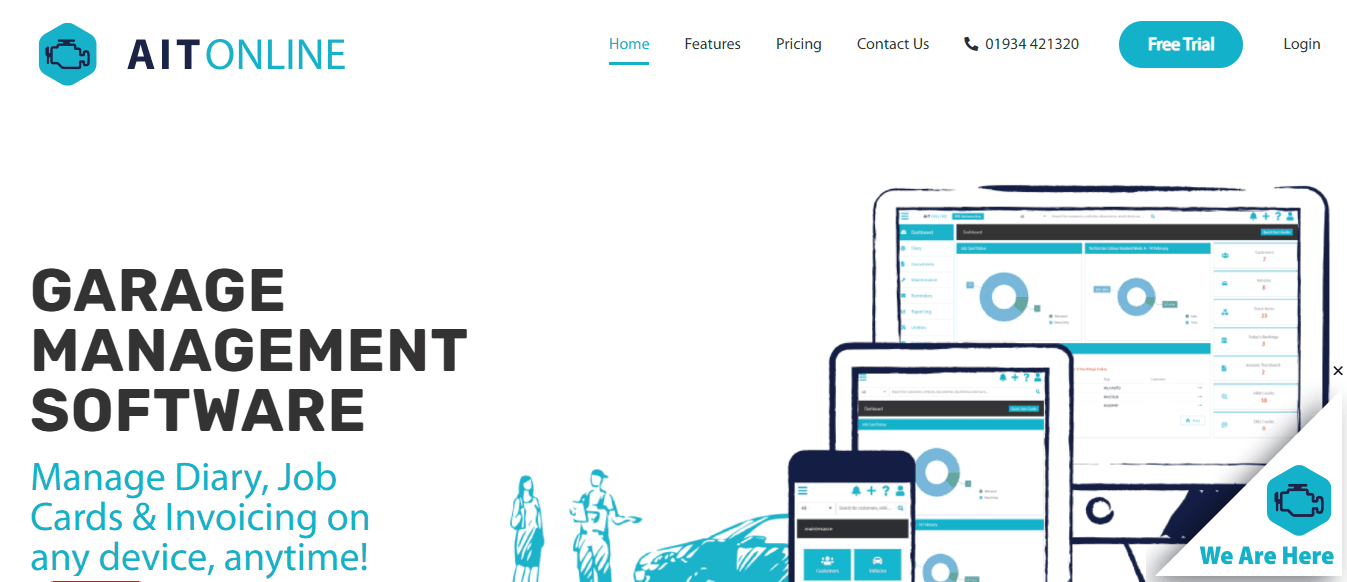
AutoInTouch specializes in communication-driven garage management that combines appointment handling with automated reminders and CRM capabilities. It addresses high no-show rates, lost repeat business, and weak customer relationships by delivering timely, personalized messages and tracking service history that turn one-time visitors into loyal, regular clients.
Key Features
Automated SMS and email reminders for appointments
Customer relationship management with service history
Targeted promotions based on vehicle records
Appointment scheduling and tracking
No-show reduction tools
Integration with accounting systems
Detailed customer communication logs
Best For
Shops struggling with customer retention and frequent missed appointments who want to strengthen loyalty through proactive outreach.
Pros
Proven reduction in no-shows and increase in repeat visits
Builds stronger customer connections without extra staff effort
Supports consistent revenue through timely service offers
Cons
Less emphasis on deep inventory or bay management
Works best alongside a core operational platform
Accessibility
Cloud platform with strong mobile messaging capabilities.
9. TechMan
TechMan provides robust shop control for complex service operations with strong automation across work orders, parts, and technician management. It eliminates bottlenecks from manual assignments, stock issues, and unclear progress tracking by offering granular oversight, integrations, and performance metrics that maximize productivity and reduce wasted time.
Key Features
Advanced work order generation and tracking
Technician task assignment and time clocking
Integrated parts inventory and supplier connections
Automated customer communications and authorizations
Detailed operational reporting and analytics
SLA enforcement and progress monitoring
Workshop performance dashboards
Best For
Larger or busier workshops that need precise control over operations, technician productivity, and resource allocation.
Pros
Comprehensive automation that boosts overall efficiency
Strong integrations with technical data and suppliers
Clear insights that help optimize staffing and pricing
Cons
Can feel feature-rich for very small operations
Setup may take longer to customize fully
Accessibility
Cloud-based system with tablet and mobile support for use on the shop floor.
10. CarVue

CarVue serves as a cloud-based hub for work orders, inventory tracking, and customer engagement, keeping everything centralized and accessible. It resolves scattered records, poor transparency, and front-desk friction by providing live updates, complete histories, and simple tools that improve trust and speed up the entire customer journey.
Key Features
Centralized work order and job tracking
Parts inventory management
Customer record and vehicle history storage
Live service status updates for customers
Automated service reminders
Mobile-friendly technician access
Basic reporting for shop performance
Best For
Small to medium-sized auto shops seeking an accessible, all-in-one solution for job tracking and customer communication.
Pros
Straightforward interface that reduces training time
Good balance of features for everyday operations
Enhances transparency that leads to higher customer satisfaction
Cons
May lack some advanced enterprise-level analytics
Scaling to very large multi-site operations might need supplements
Accessibility
Cloud-based with mobile support for easy access across devices.
11. MAM Autowork Online
MAM Autowork Online delivers a robust cloud-based garage management solution with strong parts supplier integrations that directly resolve stockouts, procurement delays, and inaccurate billing. It centralizes repair orders, inventory, and customer data to eliminate manual tracking errors and support scalable operations across single or multiple locations.
Key Features
Integrated parts catalog and supplier connections for fast ordering
Digital repair order management with full job tracking
Inventory optimization and stock level alerts
Customer communication and service reminders
Invoicing with accounting tool integrations
Workshop diary and appointment scheduling
Multi-location standardization and reporting
Best For
Garages focused on parts-heavy operations and those expanding to multiple sites that need precise inventory control and supplier efficiency.
Pros
Excellent parts management that prevents job delays and protects cash flow
Scalable design that grows with the business
Reduces administrative workload through automation
Cons
The interface may feel less modern compared to newer platforms
Stronger focus on parts than on advanced digital inspections
Accessibility
Fully cloud-based with web access and mobile compatibility for key functions.
12. Motasoft
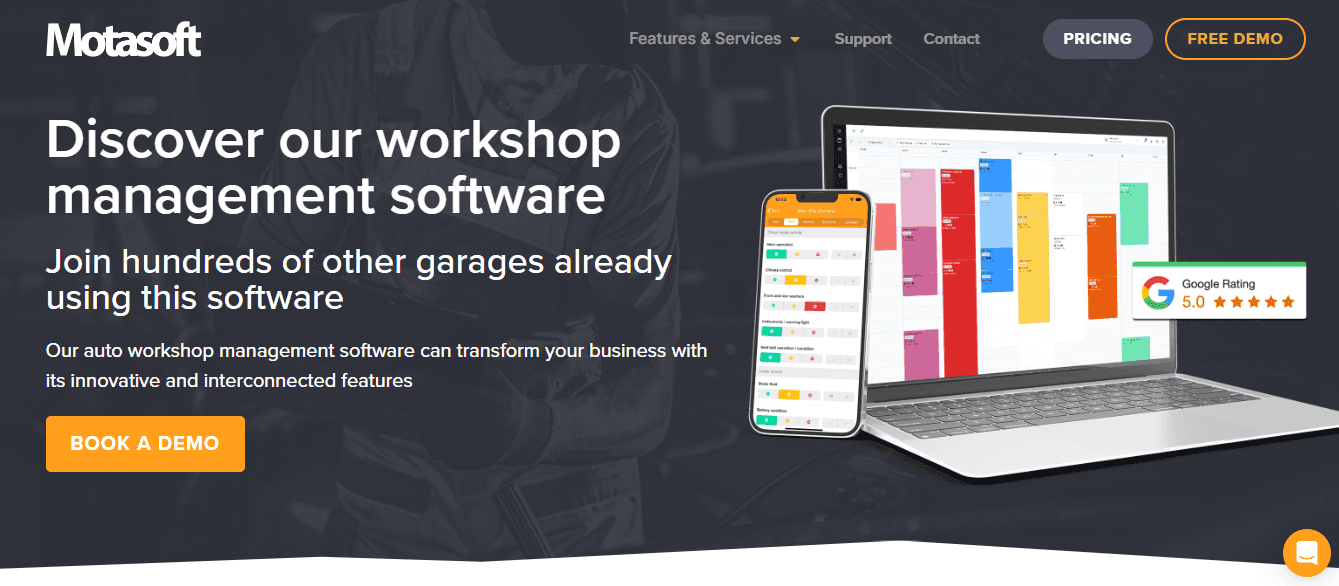
Motasoft, through its Virtual Garage Manager, offers a practical and affordable platform for workshop management with emphasis on usability, online bookings, and customer reminders. It tackles disorganized scheduling, high no-show rates, and basic operational friction that waste time and cost revenue.
Key Features
Workshop diary with real-time scheduling
Online booking integration
Automated SMS and email reminders
Job sheet and repair order management
Customer and vehicle history tracking
Basic inventory and parts handling
Accounting integrations for invoicing
Best For
Small to mid-sized independent shops seeking straightforward, cost-effective tools without overwhelming complexity.
Pros
Simple setup that ends daily paperwork headaches quickly
Strong automation for reminders and bookings
Budget-friendly while covering essential needs
Cons
Limited advanced analytics and reporting depth
May require additional tools for complex inventory needs
Accessibility
Cloud-based platform with mobile-friendly access.
13. GarageHive

GarageHive provides a community-driven garage management system shaped by real workshop feedback, covering scheduling, job tracking, invoicing, and customer service. It solves inconsistent processes and slow feature development by delivering practical tools that adapt to actual shop floor challenges.
Key Features
Appointment scheduling and bay management
Digital job tracking and progress updates
Invoicing and payment processing
Customer communication tools
Inventory management basics
User-guided feature development
Performance reporting dashboards
Best For
Independent garages that value software built by mechanics for mechanics and want ongoing improvements based on real user input.
Pros
Highly practical features aligned with daily shopping needs
Community focus ensures relevant updates
Reduces admin load while maintaining control
Cons
Smaller feature set than enterprise solutions
Growth may depend on a community-driven roadmap
Accessibility
Cloud-based with mobile support for technicians.
14. Auto Garage Network
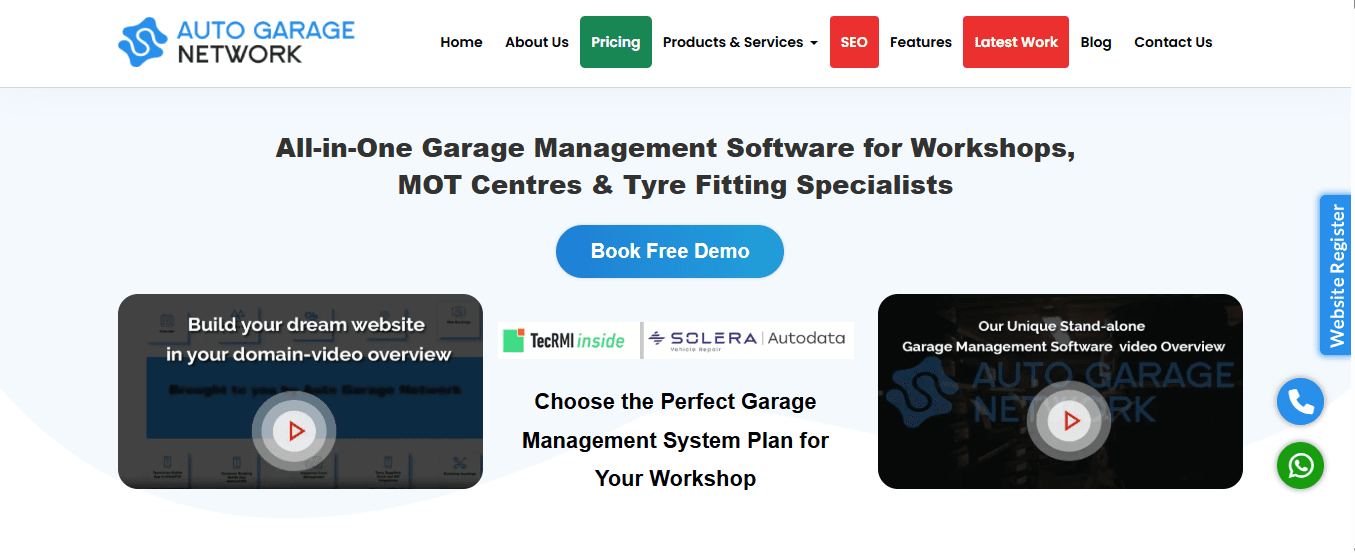
Auto Garage Network emphasizes transparent customer connections through digital records, online booking, and continuous repair updates. It addresses lack of trust, poor visibility, and weak engagement by creating clear communication channels that strengthen relationships and encourage repeat business.
Key Features
Digital service records and vehicle history
Online appointment booking
Real-time repair status updates
Customer portal for transparency
Automated notifications and reminders
Service history access for clients
Basic job and workflow management
Best For
Customer-focused shops that want to build trust and loyalty through modern, transparent engagement tools.
Pros
Enhances customer experience and satisfaction
Builds long-term loyalty with easy access to records
Reduces front-desk questions and callbacks
Cons
Less emphasis on deep inventory or financial modules
Best paired with stronger operational tools
Accessibility
Cloud platform with customer-facing portal and mobile access.
15. CarPro

CarPro focuses on structured job tracking and real-time visibility for managers with clear booking, repair documentation, and resource allocation. It eliminates delays caused by unclear progress, poor accountability, and resource misallocation by providing real-time oversight that keeps operations smooth and predictable.
Key Features
Booking and appointment management
Real-time job progress tracking
Technician task assignment
Customer interaction documentation
Resource allocation tools
Performance and utilization reports
Workflow standardization features
Best For
Managers who need operational clarity, accountability, and visibility to reduce bottlenecks and improve daily throughput.
Pros
Strong transparency that minimizes surprises
Better resource use that fills bays efficiently
Supports faster decision-making on the floor
Cons
May lack some advanced customer communication extras
Interface prioritizes function over modern design
Accessibility
Cloud-based with real-time access across devices.
16. Shopmonkey
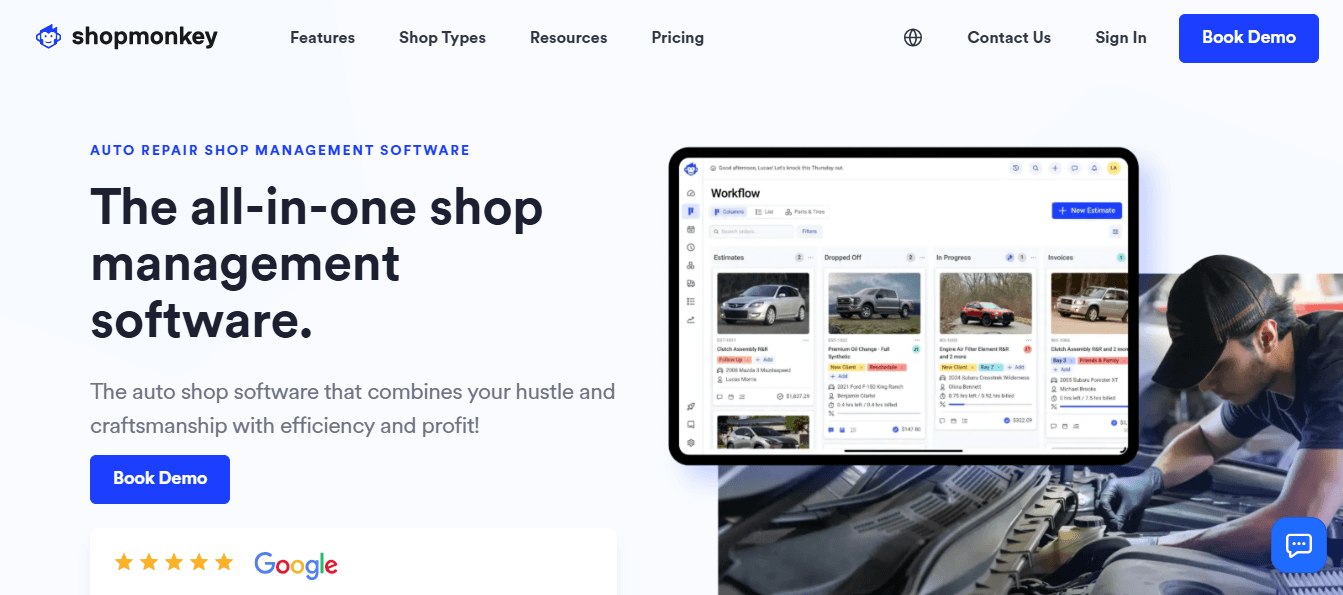
Shopmonkey provides a modern, cloud-based garage management platform with a strong emphasis on polished customer communication, digital inspections, and streamlined workflows. It directly resolves slow approvals, poor transparency, and lost upsell opportunities by delivering visual tools and automated updates that build trust, increase average repair values, and reduce frustration for technicians and customers.
Key Features
Digital vehicle inspections with photo and video documentation
Automated customer messaging and approval requests
Real-time job board and workflow tracking
Integrated scheduling and online booking
Inventory management with parts ordering
Professional invoicing and digital payments
Performance analytics and owner dashboards
Best For
Independent and growing auto repair shops that prioritize excellent customer experience and modern, intuitive tools to stand out from competitors.
Pros
Sleek interface that teams and customers love
Strong focus on digital inspections that boost service acceptance
Excellent automation that cuts no-shows and speeds up cycles
Cons
Pricing may be higher for very small single-bay operations
Some advanced inventory features require add-ons
Accessibility
Fully cloud-based with responsive mobile apps for iOS and Android.
17. Tekmetric
Tekmetric delivers a powerful, user-friendly shop management system built by former shop owners, offering deep reporting, technician management, and operational control. It tackles inefficiencies in bay utilization, technician productivity, and data visibility by providing precise insights and tools that optimize resources and support confident scaling decisions.
Key Features
Advanced digital vehicle inspections and estimates
Comprehensive reporting and profitability analytics
Technician time tracking and performance metrics
Inventory management with real-time alerts
Customer relationship and service history tools
Integrated scheduling and workflow automation
Multi-location support with centralized control
Best For
Growing independent repair shops and multi-location operations that need strong data insights and process control to maximize revenue and efficiency.
Pros
Excellent reporting that reveals hidden revenue opportunities
Intuitive design with fast adoption across teams
Proven tools for improving technician productivity and shop throughput
Cons
May include more features than very small shops initially need
Full customization can take time during onboarding
Accessibility
Cloud-based platform with full mobile access for shop floor and management use.
How to Choose the Best Garage Management Software for Your Business

The right garage management software transforms messy auto repair operations into organized, profitable processes by eliminating manual errors, improving customer satisfaction, and providing owners with the information needed for better decisions. The best system aligns with your shop's size, workflow, and growth goals.
Key Point: The most successful garages choose software that scales with their business rather than forcing them to change their proven workflows.
"Shops using integrated management software see 23% faster job completion times and 18% higher customer satisfaction scores." — Automotive Service Association, 2024
Pro Tip: Start by identifying your biggest pain points - whether it's scheduling conflicts, inventory tracking, or customer communication - then prioritize software features that directly address these operational bottlenecks.
Assess Your Shop’s Specific Needs First
Map out your current pain points and future goals before evaluating software options. Determine whether you run a single-bay independent shop struggling with scheduling and no-shows, or a multi-location operation battling inconsistent processes and cash flow gaps. Consider daily job volume, technician count, parts inventory complexity, and customer retention challenges. This prevents you from choosing an overly complex enterprise tool for a small shop or a basic scheduler that fails to scale with your business.
Evaluate Core Operational Features
Focus on platforms that cover the complete workflow from start to finish: digital repair orders, real-time scheduling, inventory tracking, and professional invoicing. The best solutions include visual job boards, automatic parts deductions, and seamless estimate-to-invoice conversion. Built-in customer communication tools and vehicle history management accelerate approvals and increase average repair values. The right features eliminate your biggest time wasters and revenue leaks.
Check Mobile Access and Cloud Capabilities
Modern garage management software must operate via mobile apps and the cloud, enabling technicians to update jobs from the work bays while owners monitor performance remotely. Cloud platforms deliver real-time data updates across all devices without requiring expensive on-site servers, keeping information current and eliminating unnecessary paperwork.
Analyze Pricing and Expected ROI
Look at all costs, including monthly subscriptions, per-user fees, system setup, and charges for payments or advanced reporting. Calculate potential returns from reducing no-shows, accelerating payment collection, increasing service sales, and reclaiming technician time. Good shop management software delivers measurable improvements in operational efficiency and profitability within months.
Test Ease of Use and Team Adoption
Pick software with an easy-to-use interface that your team can learn quickly with minimal training. Request live demos using your real daily work to ensure the system feels natural during busy periods.
Review Integration and Scalability Options
The ideal solution connects with accounting software, parts suppliers, payment processors, and marketing tools to eliminate duplicate data entry. Scalable platforms grow alongside your business by supporting additional locations, users, and advanced features without requiring a system switch later.
Examine Customer Support and Onboarding
Choose providers that offer quick responses to questions, detailed training resources, and smooth data migration. Quality vendors guide teams through setup and remain available to answer questions as they arise. Reliable support reduces downtime and helps you maximize the software's value from the start.
Prioritize Security and Data Protection
Ask for strong security measures like data encryption, role-based permissions, regular backups, and compliance with industry standards. Your shop management software handles sensitive customer and financial information, requiring robust protection against breaches. Reliable platforms are transparent about their security practices and proactively update their systems.
Request Demonstrations and Trial Periods
Test shortlisted options with real shop scenarios during personalized demonstrations and free trials. Observe how the software handles your specific processes, such as busy appointment days or complex multi-service repairs. Direct experience reveals practical strengths and limitations that feature lists cannot show.
Make a Data-Driven Final Decision
Gather feedback from your team, compare total value against cost, and pick the platform that solves your main problems while supporting your long-term goals. Avoid decisions based solely on price or features. The right choice creates clear improvements in efficiency, customer loyalty, and profitability that justify the investment.
Why Modern Auto Repair Shops Choose Support Lane for Garage Management
Modern auto repair shops choose Support Lane because it removes operational fragmentation that hurts profitability. When scheduling, invoicing, and customer records live in separate systems, every job requires switching between tools, slowing work and causing mistakes. Our shop management software integrates job tracking, appointment booking, customer communication, invoicing, and vehicle history into one interface, allowing technicians and service advisors to work from the same real-time view without switching between applications.
Key Point: Operational fragmentation is the silent profit killer in auto repair shops - every minute spent switching between systems is time not spent generating revenue.
"When repair shops eliminate system fragmentation, they see immediate improvements in workflow efficiency and customer satisfaction because nothing falls through the cracks." — Industry Analysis, 2024
Best Practice: Choose integrated shop management over piecemeal solutions - the time savings and error reduction from having everything in one platform quickly pays for itself through improved operational efficiency.
Visual Job Boards Replace Status Confusion
Most shops rely on whiteboards, paper tickets, or mental tracking systems requiring constant communication to determine bay status. Support Lane's Kanban board displays every job as a card moving through customizable stages: intake, diagnosis, awaiting approval, in progress, quality check, and complete. Technicians drag jobs between columns, triggering automatic timestamp logging that shows exactly how long vehicles spend in each phase. This visibility eliminates the coordination problem, preventing bays from sitting empty while customers await status updates and allowing shop owners to spot bottlenecks in real time and redistribute work before delays compound.
Automated Booking Fills Empty Appointment Slots
Empty bays cost money every hour they sit unused, yet phone-only booking creates artificial scarcity. Our Support Lane customer-facing booking portal shows real availability based on existing appointments, bay capacity, and service duration estimates. Customers book directly online; appointments enter the system as pending for quick staff approval; and automated reminders go out 24 hours before the scheduled times. This captures appointments lost to after-hours calls or customers who abandon the process when placed on hold. Shops using our online booking typically see 15 to 20 percent increases in appointment volume without adding staff hours.
Unified Customer Records Drive Repeat Business
When service history is spread across different places, customers repeat information they've already given. Support Lane connects every vehicle to its owner's profile, displaying complete service records, previous repair notes, parts purchased, and communication history on one screen. When a customer calls, service advisors see their full relationship with the shop immediately, including upcoming maintenance intervals based on mileage and time since last service. This continuity transforms one-time interactions into relationship-based service. Shops report that customers return more often when they feel recognized and when maintenance reminders arrive at the right time.
How does centralized communication prevent customer service breakdowns?
Without centralized communication, job details are scattered across phone calls, texts, and handwritten notes, with no record of customer conversations. Support Lane consolidates two-way SMS and email within each job record, so customer replies appear directly alongside the repair order.
Service advisors send photo updates, approval requests, and completion notifications without switching apps while maintaining an audit trail that prevents disputes. Our shop management software accelerates communication cycles from hours to minutes by keeping conversations attached to jobs rather than scattered across devices.
What separates growing shops from stagnant ones?
The difference between shops that grow and shops that stagnate often comes down to one question: can you handle more volume without adding chaos?
Related Reading
Tekmetric
Sign up for Your Free Trial to Manage your Auto Shop with Ease Today
The difference between shops that grow and shops that stay the same comes down to handling more work without creating chaos. If you're juggling paper repair orders, chasing payments, and watching bays sit empty due to no-shows, you need better systems.
Key Point: Support Lane replaces scattered tools and manual chaos with one platform built specifically for auto repair shops. The drag-and-drop Kanban board gives you visual control over every job, while online booking fills your schedule automatically. Professional invoicing and flexible payment tools speed up cash flow, and a customizable customer-facing website drives direct appointments. Technicians update jobs in real time instead of searching for paperwork, customers book and pay without callbacks, and you gain complete visibility without jumping between apps.
"No credit card required, no complicated setup—test everything risk-free in a live environment." — SupportLane Demo
Process, Feature & Benefit
Drag-and-drop Kanban
Feature: Visual control over every job
Benefit: Improved workflow visibility and real-time job tracking
Online booking
Feature: Automatic schedule filling
Benefit: Reduces manual scheduling and ensures full calendar utilization
Professional invoicing
Feature: Structured billing system
Benefit: Faster cash flow and fewer payment delays
Real-time updates
Feature: Instant system-wide information sync
Benefit: Eliminates paperwork searches and reduces operational delays
Customer website
Feature: Direct appointment booking
Benefit: Increases conversions by allowing customers to book instantly
Visit SupportLane.io and request a free demo. They'll import your existing customer data so you can see your shop's workflow come to life within minutes. No credit card required, no complicated setup—test everything risk-free in a live environment.
Warning: If you do nothing, the same problems continue: lost appointments, delayed payments, frustrated teams, and revenue slipping away. Take the first step today and transform how your auto repair shop operates.
Ready to modernize your shop?
Join the independent auto repair shops already using Support Lane to manage their jobs, customers, and invoices in one place.