Auto Repair Shop Marketing Plan: How to Create One in 2026

You've built a solid auto repair business on trust and quality work, but when service bays sit empty or revenue swings unpredictably month to month, something's missing. The problem isn't your technical skills or customer service. Most shop owners operate without a structured Auto Repair Marketing strategy, relying instead on word of mouth and hoping the phone rings. Building a complete 2026 marketing plan turns unpredictable customer flow into consistent bookings, giving you a clear roadmap for weekly actions and eliminating the guesswork about where your next customer will come from.
Strong marketing plans require the right systems to execute effectively and measure results. Successful shops track which campaigns bring customers through their doors, automate follow-ups that convert one-time visitors into loyal clients, and gather data needed to make smart decisions about marketing investments. When customer communication, appointment scheduling, and performance tracking work together seamlessly, shop owners spend less time on administrative tasks and more time serving customers with shop management software.
Table of Contents
Why Is Marketing Important for Auto Repair Shops?
What Makes a Successful Auto Repair Shop Marketing Plan?
What Metrics Should Auto Repair Shops Track in Their Marketing Campaigns?
How to Create a Marketing Plan for Auto Repair Shops in 2026
Key Goals of an Effective Auto Repair Shop Marketing Plan
How Support Lane Simplifies Your Marketing Plan
Sign up for Your Free Trial to Manage your Auto Shop with Ease Today
Summary
Car owners search online before choosing a shop, and 72 percent of consumers who perform a local search visit a business within five miles, according to HubSpot. If your shop doesn't appear in those top results with solid reviews and clear service details, potential customers never know you exist, even if you're two blocks away. Local SEO and an updated Google Business Profile ensure you capture demand when it matters most.
New customer acquisition costs five times as much as retaining current customers, yet most shops ignore the customers they already have. Automated service reminders via text or email bring vehicles back for oil changes, tire rotations, and seasonal maintenance without requiring staff to manually call hundreds of people. Email marketing delivers an average return of $36 for every $1 spent, according to Optimizely, making automated retention systems one of the highest return investments a shop can make.
Targeted advertising in automotive achieves a 2.5 percent higher conversion rate than non-targeted campaigns, proving that precision beats volume every time. Return on ad spend (ROAS) measures revenue generated per dollar spent on a specific campaign, revealing which platforms deliver profitable customers and which burn cash without results. Tracking ROAS separately across each channel transforms ad spending from a monthly expense into a reliable growth lever you can scale with confidence.
Online reviews determine whether searches convert into calls, with 88 percent of consumers trusting online reviews as much as personal recommendations, according to BrightLocal. Shops that systematically request reviews immediately after service through text or email with direct links see higher conversion rates because trust gets built before the first phone call. Responding professionally to every review within 24 hours shows you care about feedback and strengthens your reputation advantage over competitors.
Most shops juggle paper work orders, separate invoicing apps, and scattered customer data, creating friction that undermines even strong marketing efforts. Missed follow-ups, lost appointment details, and inconsistent communication prevent leads from converting into loyal clients. Shop management software addresses this by consolidating scheduling, customer records, and automated follow-ups into a single platform, connecting marketing directly to operations so the leads you generate actually translate into predictable revenue.
Why Is Marketing Important for Auto Repair Shops?
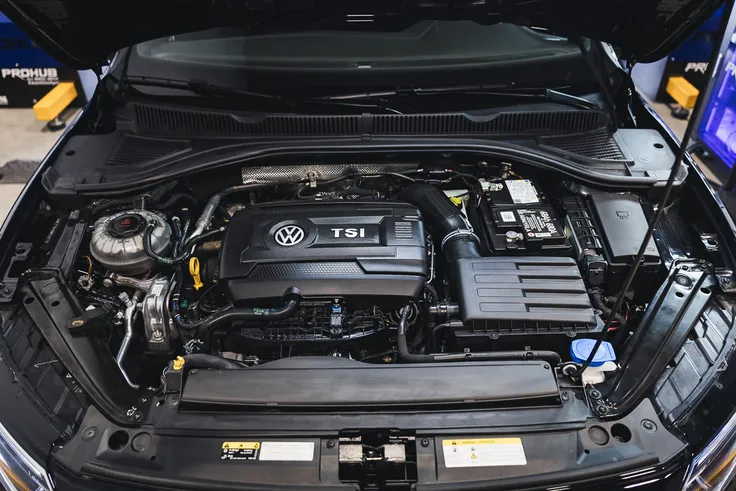
Marketing determines whether your shop stays visible when someone needs help or disappears behind competitors who appear first online. Without it, you rely on word-of-mouth, which rarely fills enough bays for steady growth. Strong marketing converts local searches into booked appointments and repeat customers who trust you with their vehicles.
Key Point: Visibility is everything in the auto repair industry - if customers can't find you online, they'll choose the first shop that appears in their search results.
"97% of consumers search online for local businesses, with 46% of all Google searches seeking local information." — Google Economic Impact Report, 2023
Tip: Consistent marketing efforts create a predictable pipeline of new customers while strengthening relationships with existing ones, ensuring your service bays stay full year-round.
Marketing Puts You Where Customers Already Look
Car owners search online before choosing a shop. They type "brake repair near me" or "oil change open Saturday" and pick from the first few results with good reviews and clear service details. According to HubSpot, 72 percent of consumers who do a local search visit a business within five miles. If your shop doesn't appear in those top results, potential customers won't find you, even if you're two blocks away. Local SEO, an updated Google Business Profile, and a consistent online presence help you capture that demand.
Reviews Build Trust Faster Than Anything You Say
Drivers hesitate to hand over their car keys to strangers. They scan Google reviews, check star ratings, and read customer experiences before calling. Positive feedback from real customers creates instant credibility that no ad copy can match. Shops that actively request and respond to reviews see higher conversion rates because trust builds before the first phone call.
Retention Requires Consistent Communication
One brake job doesn't guarantee the customer returns for their next oil change. Marketing automation sends maintenance reminders based on mileage or time intervals, seasonal service promotions, and follow-ups after each visit. These touchpoints keep your shop top of mind without manual effort, strengthening loyalty and increasing lifetime value far beyond the initial repair.
How does marketing fill service bays and stabilize revenue?
Empty service bays mean idle technicians, and overhead costs erode profits. Targeted campaigns drive appointment bookings during slow periods and highlight higher-margin services such as diagnostics, alignments, and transmission work. Research from 253 Media shows that focused marketing strategies can generate 10X traffic and lead growth for auto repair shops. Consistent outreach replaces unpredictable customer flow with steady revenue, enabling better staffing decisions, equipment investments, and long-term planning.
Why does an Auto Repair Shop Marketing Plan need integrated operations?
Most shops treat marketing as separate from daily operations, running ads while managing paperwork, orders, separate invoicing apps, and scattered customer data. This fragmentation creates friction: missed follow-ups, lost appointment details, and inconsistent communication undermine even strong marketing efforts. Our shop management software connects marketing directly to operations by consolidating scheduling, customer management, and automated follow-ups in one place, ensuring leads convert into loyal clients.
What Makes a Successful Auto Repair Shop Marketing Plan?
A successful auto repair shop marketing plan attracts new customers, converts leads into appointments, and brings existing customers back. The difference between struggling shops and those with full schedules is a written system that connects every marketing action to measurable results, rather than scattered efforts that feel productive but deliver nothing.
Key Point: The most effective auto repair marketing plans focus on three core objectives: customer acquisition, lead conversion, and customer retention. Without tracking specific metrics for each area, you're essentially throwing money at hope instead of investing in proven strategies.
Tip: Start by measuring your current conversion rates from each marketing channel. Most auto repair shops discover that their best customers come from referrals and repeat business, not expensive advertising campaigns that target everyone instead of the right people.
Define Revenue Targets, Not Activity Goals
Set goals around money earned, not tasks completed. Decide you need 15 new customers monthly at $350 average repair value to hit revenue targets, or that increasing repeat visits from 30 percent to 45 percent adds $8,000 monthly. These numbers clarify which tactics deserve a budget and which waste it. Tracking "social posts generated four appointments worth $1,400" reveals what fills your bays, while "posted on social media three times this week" measures motion instead of progress.
Build Local Search Dominance First
Customers who search for local services visit a store within 5 miles, so your Google Business Profile, website speed, and service page optimization determine whether those searches convert to appointments or go to competitors. Complete your profile with current hours, photos of your shop, and service descriptions matching the exact search terms customers use, such as "transmission repair" or "check engine light diagnosis." Inconsistent business information across directories damages your rankings and directs customers to competitors.
Why should auto repair shops prioritize customer retention over new leads
Getting new customers costs five times as much as keeping existing ones, yet most shops neglect their current customer base. Automated service reminders sent by text or email bring vehicles back for oil changes, tire rotations, and seasonal maintenance without requiring staff to manually contact hundreds of people.
According to the Harvard Business Review, increasing customer retention rates by 5 percent boosts profits by 25 percent to 95 percent.
How can an auto repair shop's marketing plan automation improve customer loyalty?
Loyalty programs that reward repeat visits turn occasional customers into regulars who spend more per year and refer friends. Most shops track customer history through spreadsheets, paper files, and memory, so reminders never go out and revenue walks away.
Platforms like shop management software eliminate chaos by centralizing customer records, service histories, and automated follow-ups in a single system. Our Support Lane platform helps your team nurture customer relationships and boost retention.
Collect and Display Reviews Systematically
People trust online reviews as much as recommendations from friends and family, so your reputation directly affects customer purchases. Ask happy customers for reviews immediately after serving them by sending a text or email with a direct link to your Google or Yelp profile. Respond professionally to every review within 24 hours. Display customer testimonials prominently on your website and social media so potential customers see proof before contacting you. Shops that ignore reviews lose appointments to competitors with higher ratings, even if work quality is identical.
Track What Delivers Appointments, Not Just Traffic
Website visits and social followers mean little without bookings. Install call tracking numbers for different campaigns, use booking links that show traffic sources, and track which marketing channels generate appointments versus unqualified leads. Review these metrics monthly to identify strategies with strong returns and those wasting budget. This transforms marketing from guesswork into a measurable system where you know what works. Then scale winning strategies and quickly eliminate losing ones.
Related Reading
What Metrics Should Auto Repair Shops Track in Their Marketing Campaigns?
The metrics that matter most show whether your marketing money turns into real appointments and customers who come back. Customer acquisition cost, return on ad spend, retention rate, conversion rate from leads to appointments, and website traffic behavior show exactly where your budget works and where it disappears. These numbers replace guessing with proof.
Key Point: Focus on metrics that directly connect marketing spend to actual revenue, not vanity metrics like social media likes.
Essential Metrics
Customer Acquisition Cost (CAC)
What it reveals: How much you spend to get each new customer
Why it matters: Helps measure marketing efficiency and profitability
Return on Ad Spend (ROAS)
What it reveals: Revenue generated per dollar invested
Why it matters: Shows whether advertising campaigns are financially effective
Retention rate
What it reveals: How well you keep customers coming back
Why it matters: Indicates customer satisfaction and long-term business stability
Lead-to-appointment conversion
What it reveals: Quality of leads and effectiveness of your booking process
Why it matters: Directly impacts revenue from incoming inquiries
Website traffic behavior
What it reveals: Where visitors engage and where they drop off
Why it matters: Identifies friction points and opportunities to improve conversions
According to HubSpot research, acquiring new customers costs five times more than retaining existing ones. BrightLocal data shows 76 percent of people searching locally visit a business within 24 hours. Companies focused on customer retention prove 60 percent more profitable than those that do not.
"Getting new customers costs five times more than keeping existing ones." — HubSpot Research
Tip: Leverage the 24-hour rule by optimizing your local SEO and Google My Business listing, since most searchers visit quickly.
Customer Acquisition Cost (CAC)
CAC shows the total amount of money you need to spend to acquire one paying customer. Add up all your marketing costs—Google Ads, Facebook campaigns, website hosting, staff time—then divide by the number of new clients who completed their first paid appointment during that period. This reveals when you're spending too much on leads who never convert or return. Track it monthly to find patterns: one shop might discover that Facebook ads cost $85 per customer while Google local service ads bring in the same customer for $42, making the choice clear.
Return on Ad Spend (ROAS)
ROAS measures the revenue generated from each dollar spent on advertising. Calculate it by dividing the total campaign revenue by its cost. A $500 campaign generating $2,000 in revenue yields 4:1 ROAS—four dollars earned for each dollar spent. Targeted ads in automotive achieve 2.5x higher conversion rates compared to non-targeted campaigns. Track ROAS separately by platform, as Google search ads and Instagram campaigns often perform differently. This makes your ad spending measurable and scalable.
Customer Retention Rate
Retention rate measures the percentage of customers who return for service within a set period, usually 6 or 12 months. Calculate it by comparing active customers at the start of the period with those who book again before the period ends, excluding new clients. High retention fills your schedule with familiar faces who trust your work, spend more per visit, and refer friends. Most shops focus on acquiring new customers while existing ones defect to competitors due to a lack of follow-up. Support Lane's shop management software automates retention by tracking service history and sending maintenance reminders at optimal times, converting one-time visitors into predictable monthly revenue.
Conversion Rate from Leads to Appointments
Conversion rate shows how many inquiries turn into scheduled appointments. Track it across every channel: phone calls, website forms, chat messages, and social media direct messages. If 100 people contact you and only 15 book appointments, your 15% conversion rate signals problems in response speed, offer clarity, or booking friction. Strong shops convert at 30% or higher by responding quickly, making scheduling effortless, and addressing price concerns up front. Break this metric down by source because your Google traffic might convert at 40% while Facebook leads convert at 8%, revealing where to focus your budget. Small improvements here multiply revenue without additional ad spend.
Website Traffic Sources and Engagement
Track where visitors come from and what they do on your site. Separate organic search, paid ads, social media, and direct visits, then monitor time on page, bounce rates, and which service pages receive the most attention.
This data distinguishes serious buyers researching brake repair from casual browsers. Consumers trust online reviews as much as personal recommendations; your review page traffic and engagement predict conversion strength better than raw visitor counts.
If your transmission repair page gets heavy traffic but zero appointment requests, your content or call-to-action needs work, not more ad spend.
How do you turn traffic data into an auto repair shop marketing plan improvement?
Tracking these numbers matters only if you use them to build something that grows month after month.
Related Reading
Ppc Advertising For An Auto Repair Shop
How to Create a Marketing Plan for Auto Repair Shops in 2026
Your marketing plan needs three layers: customer targeting that identifies who needs your services, channel selection that reaches them where they search, and retention mechanics that bring them back automatically. Most shops pick tactics before defining outcomes, wasting ad budgets.
Key Point: The three-layer approach ensures your marketing dollars work harder by connecting the right customers with the right message at the right time, rather than spraying generic ads across random platforms.
"78% of auto repair shops that implement structured marketing plans see 25% higher customer retention rates compared to shops using ad-hoc promotional tactics." — Automotive Service Association, 2024
Pro Tip: Start with customer targeting first - define your ideal customer's pain points, search behavior, and decision timeline before choosing where to advertise or what promotions to run.
Marketing Layer: Key Focus & Common Mistakes
Customer targeting
Key focus: Demographics, vehicle types, service needs
Common mistake: Targeting everyone instead of ideal customers
Channel selection
Key focus: Google, social media, local directories
Common mistake: Choosing channels without proper customer research
Retention mechanics
Key focus: Follow-up systems, loyalty programs
Common mistake: Focusing only on new customer acquisition
How do you calculate what growth actually costs for your auto repair shop marketing plan?
Figure out what growth will cost before you spend money. If you want $10,000 more in monthly revenue and your average repair ticket is $280, you need 36 additional customers. If your lead-to-customer conversion rate is 25%, that's 144 qualified leads per month.
Work backward to determine which channels generate profitable leads. This analysis forces honest choices about whether Instagram engagement or Google Local Service Ads actually move the metrics that matter.
How should you define customer segments in your auto repair shop marketing plan?
Define your customer segments with clear, practical details. Commuters driving 15,000 miles annually need different messages than retirees who drive infrequently or parents driving kids in minivans. Document their maintenance schedules, price sensitivity, preferred contact methods, and purchase triggers such as dashboard warning lights or seasonal tire changes.
How should your auto repair shop marketing plan integrate digital systems?
Your website, booking tool, and customer database should share information automatically. When a customer books an oil change online, that appointment should appear on your schedule, send a confirmation text, update their service history, and set up a follow-up reminder without manual intervention.
Why does system integration matter for customer experience?
Juggling paperwork, work orders, separate invoicing apps, and spreadsheet customer lists wastes time and breaks the experience customers expect in 2026. Our shop management software unifies scheduling, customer records, and your customer-facing website on a single platform.
When your booking system integrates directly with your service calendar and automatically sends maintenance reminders based on repair history, marketing becomes the natural byproduct of running your shop professionally: every completed job feeds the system that brings customers back.
Layer Paid and Organic Channels with Clear Attribution
Put 60% of your marketing budget into high-intent channels like Google Local Service Ads and search campaigns targeting phrases such as "check engine light repair near me." Allocate 30% to awareness tactics, including Facebook ads targeting local audiences within 5 miles and content that addresses common questions. Reserve 10% for testing new platforms or seasonal promotions.
Track every dollar through call-tracking numbers, unique landing pages, and UTM parameters to identify which $500 produces $2,000 in booked work, versus which disappears into impressions that never convert.
How do online reviews strengthen your auto repair shop marketing plan?
People trust online reviews as much as recommendations from friends and family. Send automatic review requests 24 hours after service completion using a simple text link. Respond to every review within 48 hours and display customer testimonials prominently on service pages where shoppers evaluate their options. Each new review strengthens future search results.
Key Goals of an Effective Auto Repair Shop Marketing Plan
A good auto repair shop marketing plan sets specific targets around how many new customers you want to acquire, how often customers return, how much revenue each customer generates, and how well you rank in local search results. These goals function as a comprehensive system in which each supports the others, converting scattered tactics into a clear strategy tied to actual business results rather than superficial metrics.
Key Point: Your marketing goals should function as an interconnected system where customer acquisition, retention rates, revenue per customer, and local visibility all work together to drive sustainable growth.
Tip: Focus on measurable outcomes that directly impact your bottom line rather than vanity metrics that don't translate to business value.
"Effective marketing plans transform disconnected tactics into a cohesive strategy that delivers measurable business results through interconnected goal systems." — Marketing Strategy Best PracticesAttract More New Customers Consistently
The main goal is to grow your customer base by reaching drivers actively seeking repairs in your area. When someone searches "check engine light repair" at 7 PM on a Tuesday, your shop needs to appear in those results. This requires dominating local search through an optimized Google Business profile, targeted ads for popular service searches, and compelling offers that convert searches into booked appointments. Without a steady flow of new customers, shops face empty bays during slow periods and lose business to competitors who invest in visibility.
Increase Customer Retention and Loyalty
Good plans focus on keeping customers coming back for regular maintenance through automatic service reminders based on vehicle mileage, special offers for older vehicles, and loyalty rewards. Retaining existing customers costs significantly less than acquiring new ones and increases lifetime customer value through multiple services over years rather than months. Shops that master this strategy enjoy steady income even when customer acquisition becomes difficult, creating a reliable revenue base to cover payroll and operating costs during seasonal slowdowns.
Boost Overall Revenue and Average Repair Order
Marketing goals must focus on generating revenue by servicing more vehicles and increasing the value of each visit. This happens through educational content highlighting preventive services, strategic recommendations during appointments based on vehicle inspection findings, and service bundles that package related repairs at slight discounts. This approach increases profitability without simply adding more cars to the schedule, which often increases labor costs without improving profits. It shifts thinking from volume-only growth to smarter revenue, where each customer contributes more to the bottom line through informed decisions.
Build Strong Brand Trust and Recognition
Build your shop's reputation as a trusted local expert by sending consistent messages, actively managing reviews, and engaging your community. Customers read online reviews before choosing a service provider, so your reputation directly affects whether they call your shop or a competitor's. Strong branding makes customers prioritize reliability over saving $20, positioning independent shops ahead of national chains that compete primarily through coupons.
How can auto repair shop marketing plan systems streamline operations?
Most shops track these goals separately, juggling spreadsheets for customer data, paper files for service history, and separate systems for scheduling and invoicing. As marketing generates more leads and retention programs create follow-up complexity, this fragmented approach breaks down.
Platforms like shop management software consolidate customer information, appointment bookings, and service records into a single system. Support Lane helps shops identify which marketing sources produce the highest-value customers and automate retention reminders without manual data entry across multiple tools.
What makes marketing systems actually work long-term?
The challenge isn't knowing what goals matter—it's building systems that move the numbers month after month. When those systems connect to how your shop operates, everything gets simpler. Support Lane's shop management software helps streamline these operations, aligning your goals with day-to-day processes.
How Support Lane Simplifies Your Marketing Plan
Support Lane brings together customer-facing tools, automated communication, and workflow management into one system. You spend less time switching between apps and more time on strategies that fill bays and keep customers coming back.
Key Point: Instead of juggling multiple platforms for scheduling, communication, and customer management, Support Lane consolidates your entire marketing workflow into a single dashboard.
"Businesses that use integrated marketing platforms see 23% higher efficiency in campaign execution and 18% better customer retention compared to those using fragmented tools." — Marketing Technology Report, 2024💡 Tip: The real power comes from having customer data, appointment scheduling, and follow-up sequences all working together automatically, creating a seamless experience that turns one-time visitors into loyal customers.
Hosted Website That Converts Visitors Into Appointments
Most shops lose customers due to outdated or poor websites. Support Lane provides each location with a customized website featuring changeable hero images, service pages, an About section showcasing your team, and a functional contact form. You can select which services customers can book online, creating a professional presence that ranks higher in local search results and builds immediate trust. When visitors find your site, they see your services clearly listed and are prompted to book, converting more traffic into scheduled jobs without additional advertising spend.
Online Booking That Captures Urgent Searches
Phone-only scheduling misses customers searching outside business hours. Support Lane's online booking lets customers select services, view real-time availability, and submit requests that default to pending for staff approval. The feature integrates with your calendar for seamless management, converting website visitors into scheduled appointments.
Automated Communication That Brings Customers Back
Repeat business drops when customers forget maintenance or lose touch after service. According to Optimizely, email marketing delivers an average return of $36 for every $1 spent, making automated retention systems one of the highest-leverage investments a shop can make. Support Lane Chat enables seamless SMS and email messaging, with conversations organized in a single platform. It sends automatic 24-hour appointment reminders and maintains customer-scoped notes and vehicle histories for personalized follow-ups. Automated reminder sequences reduce no-shows, boost loyalty, and create predictable income from your existing customer base.
Centralized Customer Data That Powers Targeted Outreach
When customer information is scattered across multiple systems, creating personalized marketing becomes difficult. Support Lane consolidates all customer data in one place for easy management. You can access vehicle lists with VIN decode, mileage logs, and searchable notes in a single location.
How does centralized data improve your auto repair shop marketing plan?
You can search across jobs, customers, vehicles, and invoices in one place to find information instantly. This organized database lets you reach the right people via chat or reminders, delivering marketing messages at the right time with service offers tailored to their vehicle history and maintenance needs.
What management tools streamline marketing execution?
Shop management software like Support Lane brings order with Kanban job boards, customizable pipelines, drag-and-drop stage tracking, service templates, parts catalogs, invoicing with PDF downloads, and payment tracking, including online links. As customer volume increases, appointments get double-booked, and reminders slip through the cracks without proper systems. Our software reduces administrative work, freeing your team to execute marketing strategies, improve offers, and respond faster to leads.
But none of this matters if you can't see whether it's working.
Sign up for Your Free Trial to Manage your Auto Shop with Ease Today
Your marketing plan fails without the ability to execute it. Manual follow-ups and outdated systems cause you to miss customers who need help right away and lose money every week. The gap between planning and achieving results is where most shops lose significant revenue.
Key Point: Support Lane closes that gap with a complete operational solution that transforms your shop's efficiency.
Support Lane closes that gap. You get a professionally hosted website with customizable images and service pages, plus built-in online booking that converts visitors into confirmed appointments. Automated 24-hour reminders and two-way SMS and email chat keep customers engaged while Kanban job boards, full customer and vehicle management with VIN decode, service templates, and seamless invoicing run your operation in one unified platform. Marketing strategies that once required manual effort now execute themselves.
"The gap between planning and execution is where most auto shops lose significant revenue every week." — Industry Analysis, 2024
Before Support Lane vs After Support Lane
Follow-ups
Before: Manual follow-ups
After: Automated 24-hour reminders
Call handling
Before: Missed after-hours calls
After: Online booking available 24/7
Operations
Before: Administrative chaos
After: Unified platform management
Customer communication
Before: Inconsistent customer contact
After: Two-way SMS and email chat
The result is measurable outcomes: more new customers book instantly through your website instead of calling during closed hours, existing customers return reliably for maintenance through automated reminders at exactly the right mileage intervals, your team reclaims productive time lost to administrative chaos, and your shop builds predictable, steady revenue with far less daily stress.
Tip: Start your free trial today to see immediate results in customer booking and retention.
Ready to turn your 2026 marketing plan into real growth? Go to SupportLane.io and sign up for your shop in minutes with no credit card required. Activate your hosted website and online booking to start seeing appointments flow in immediately.
Related Reading
Ready to modernize your shop?
Join the independent auto repair shops already using Support Lane to manage their jobs, customers, and invoices in one place.