25 Best Auto Repair Shop Websites to Inspire You in 2026
A shop's website is often the first impression a potential customer gets before stepping through the door. With local competition growing, a clean, easy-to-navigate site can mean the difference between a booked appointment and a lost lead. The best AI tools for auto repair shops make it easier than ever to build and maintain that kind of professional online presence. Studying what top-performing auto repair websites do well gives shop owners a clear, practical starting point for improving their own.
A strong website brings customers in, but keeping operations organized once they arrive is a separate challenge. Managing appointments, tracking repair orders, and communicating with customers all require reliable systems running in the background. Pairing a well-built online presence with the right shop management software helps shops run efficiently without the constant back-and-forth that slows teams down.
Table of Contents
What Do the Best Auto Repair Shop Websites Have in Common?
Do Auto Repair Shops Really Need a Website?
Can an Auto Repair Shop Website Help You Get More Customers?
25 Best Auto Repair Shop Websites to Inspire You in 2026
Key Features Every Auto Repair Shop Website Should Have
How Support Lane Helps You Build a Better Auto Repair Shop Website
Sign up for Your Free Trial to Manage Your Auto Shop with Ease Today
Summary
Shops that rely solely on a Google Business Profile or Facebook page to establish their online presence are leaving real business on the table. A Business Profile can display hours, address, and a phone number, but it cannot host individual service pages, explain warranty policies, or offer after-hours booking. The driver comparing options at 10 p.m. will default to the shop that gives them complete, specific information in one visit.
Mobile performance and page speed are not optional features for auto repair websites. Think with Google reports that 76 percent of people who search for something nearby on a phone visit a related business within a day. A site that shrinks into an unreadable desktop layout, hides the phone number below the fold, or takes more than a couple of seconds to load on cellular data hands that visit to the next result. High-performing shop sites are built mobile-first: large tap targets, a tappable number, a booking form that fits a small screen, hours and address in the footer, and pages that load fast on a mid-range phone.
Search visibility is directly tied to page structure, not just keywords. In May 2025, Endeavor Business Intelligence, working with AutoZone, surveyed 1,000 do-it-for-me customers who had a vehicle repaired in the prior 12 months and found that 44 percent had searched online for auto repair shops during that year. That search is the filter after a friend’s name drops. The driver looks for hours, a map, the services you actually perform, and a number that works on a phone. When those answers are missing, the referral turns into a call to the shop that published them.
Trust signals belong in the first screen a visitor sees, not at the bottom of a page. Displaying a Google star rating, review count, ASE certification, and warranty terms above the fold does more conversion work than any paragraph about quality service. A 4.8 rating with 200 recent reviews, placed next to a booking button, compresses the decision a nervous driver is already making.
The cost of having no website is largely invisible to shop owners. A driver who searches, finds nothing credible, and books two streets over never appears as a lost job on the repair order. According to multiple industry sources, 76% of people who search for a nearby business on a smartphone visit a related business within one day, which means missed searches translate directly into missed same-day appointments, repeatedly and quietly.
Shop management software addresses this by connecting the customer-facing booking flow directly to job tracking, scheduling, and invoicing, so a request made at midnight shows up on the board the next morning without anyone re-entering the information.
What Do the Best Auto Repair Shop Websites Have in Common?
The best auto repair shop websites treat the site as a working tool, not a digital business card. Every element helps a stressed driver move from "I need help" to "I have an appointment" as quickly as possible.
What every high-performing shop site gets right
The phone number and booking button are in the header on every page. The booking tool is a real scheduler where customers select the service, choose a date, and enter their vehicle details without waiting for a callback. Shops that route every request through a daytime phone line lose the searches that happen at 9 p.m. when the warning light first appears, exactly when customers book without comparison shopping.
Why do the best auto repair shop websites prioritize mobile performance?
Mobile performance is non-negotiable. Think with Google reports that 76 percent of people who search for something nearby on a phone visit a related business within a day. A site that shrinks into an unreadable desktop layout, hides the phone number below the fold, or takes more than a couple of seconds to load on cellular data pushes visitors to the next result. High-performing shop sites are built mobile-first: large tap targets, a tappable number, a booking form that fits a small screen, hours and address in the footer, and pages that load fast on a mid-range phone.
How do trust signals help the best auto repair shop websites convert visitors?
Trust signals should appear at the top of the page. The best shop websites display their Google star rating, review count, and ASE certification prominently. A 4.8 rating with 200 recent reviews and a visible warranty statement convinces customers to buy more effectively than any paragraph about "quality service."
Our shop management software with an integrated website closes the gap between online booking and shop operations, connecting customer bookings directly to repair orders and eliminating duplicate entry and lost information.
Why do dedicated service pages matter for auto repair shop websites?
Each service gets its own dedicated page, not a bullet point on a generic list. In May 2025, Endeavor Business Intelligence, working with AutoZone, surveyed 1,000 do-it-for-me customers who had a vehicle repaired in the prior 12 months and found that 44 percent had searched online for auto repair shops during that year. When a driver searches, they look for hours, a map, the services you perform, and a working phone number. Individual service pages give drivers the specific answer they searched for, providing the fastest path from search result to confirmed appointment.
Do Auto Repair Shops Really Need a Website?
The numbers are hard to ignore: BrightLocal's 2026 Local Consumer Review Survey of 1,002 U.S. adults found that 97 percent of consumers read reviews for local businesses, 41 percent always read them when they browse, 85 percent are more likely to use a business after reading positive reviews, and 80 percent are more likely to choose a business that replies to every review. The best shop websites put the Google star rating and review count on the first screen, embed recent reviews that update automatically, and answer those reviews in plain language instead of copy-paste replies.
"97 percent of consumers read reviews for local businesses — and 80 percent are more likely to choose a shop that replies to every review." — BrightLocal Local Consumer Review Survey, 2026
Read reviews for local businesses → 97% of consumers do.
Always read reviews when browsing → 41%.
More likely to use a business after positive reviews → 85%.
More likely to choose a business that replies to reviews → 80%.
Takeaway: These aren't marginal numbers — 97% means nearly every potential customer is checking your reviews before they ever pick up the phone. A shop without a website to showcase those reviews is invisible at the most critical moment.
Tip: Don't just collect reviews — respond to every single one. That single habit influences 80% of potential customers in your favor.
This is normal behavior for your next customer before they call or visit. The driver who heard a grinding noise is on their phone right now, comparing shops within five miles, and shops with no website won't make the shortlist.
Warning: If your shop doesn't have a website, you're being actively skipped by customers who are ready to spend money today.
What a missing website actually costs you
The failure point is invisible. You never see the customer who searched, found nothing credible, and booked two streets over. No line on the repair order says, "lost due to no website." The work disappears quietly, but that pattern repeats every week across every service category, and the cumulative loss compounds faster than a single bad month.
Why does a Google Business Profile fall short for best auto repair shop websites?
Most shops rely on a Google Business Profile and Facebook page. A Business Profile provides basics: hours, address, and phone number. It cannot display your ASE certifications, explain your warranty policy, list every service with dedicated pages for search visibility, or allow drivers to book at 10 p.m. without waiting for a callback. When a driver seeks proof and finds only a thin listing, the shop with a full website and real service pages wins that appointment by default.
How does connecting your website to shop operations remove hidden inefficiencies?
The operational gap runs deeper. Shops that patch together a basic website, a separate booking tool, and a standalone shop management system re-enter the same customer information three times before a car hits the lift. Shop management software like Support Lane connects the customer-facing website directly to scheduling, invoicing, and job tracking, so a booking made at midnight appears on the board the next morning without manual entry. The website becomes the first step in a workflow that runs the shop.
What does a missing site signal to drivers searching for a shop tonight?
Four out of five consumers in a Maru/Blue poll of 1,519 U.S. adults said transparency is "very important" when picking an auto repair shop. A blank search result fails that test instantly. People treat a missing site like a dark storefront: they assume the business is gone, too small, or hiding something.
A driver searching "oil change near me" on a Tuesday evening is deciding tonight, not researching for next month. A shop with a fast-loading mobile page, visible hours, and a booking option captures that intent. A shop without one does not exist in that moment, regardless of work quality.
How low is the bar that the best auto repair shop websites actually need to clear?
Web agency professionals often say auto repair shops are among their most common client types because a clear gap exists between what these shops offer online and what customers expect. A clean service page, a working phone number at the top of the page, and online scheduling put a shop ahead of most local competition. It is not a high bar, but most shops haven't cleared it yet.
Related Reading
Can an Auto Repair Shop Website Help You Get More Customers?

Yes, and the difference is not small. A shop with a well-built website converts searches that a Maps listing simply cannot close, turning strangers with urgent problems into booked appointments before they scroll to the next result.
"A shop with a well-built website converts searches that a Maps listing simply cannot close — turning strangers into booked appointments before they reach a competitor." — Key Industry Insight
Key Point: A Maps listing alone is not enough — a professional website is the critical tool that transforms search traffic into confirmed bookings.
Tip: Focus on making your website fast, mobile-friendly, and conversion-optimized so that every urgent search ends with a customer choosing your shop over the competition.
Maps listing only → Converts urgent searches partially → Does not close bookings directly.
Well-built website → Converts urgent searches yes — consistently → Yes, closes bookings directly.
No online presence → Never converts urgent searches → Never closes bookings directly.
Why do urgent searches favor shops with the best auto repair shop websites?
Search intent meets proof. Google's research shows intent is driven by time, not distance. Mobile searches for "near me today" and "near me tonight" grew more than 900 percent in two years, while searches for "near me now" grew more than 150 percent, and those combining "open," "now," and "near me" grew more than 200 percent. These searches occur when a warning light is already on. The driver wants proof you are open, what you fix, and how to book an appointment.
A driver searching "grinding brakes near me open Saturday" wants proof you fix this problem that day without a phone call. Shops that publish individual service pages with real scheduling availability answer that question directly. Shops relying on a single services page lose the driver in under ten seconds.
Does a website really affect whether word-of-mouth referrals convert?
AAA reports that 38 percent of people lean on friends and family when picking a shop. A friend gives a name. The driver searches that name. If the search returns a dead listing with no site, the referral dies in that session. If it returns hours, reviews, a map, and a booking button, you get the customer. The site is the last mile of word of mouth.
A pattern among independent shops: owners most skeptical about websites often do the best mechanical work yet lose referrals mid-search. A loyal customer tells a friend. The friend searches the shop name. The result returns no hours, a dead link, or nothing. That referral disappears in the same session it started. The website is the final step; word of mouth needs to work.
How do the best auto repair shop websites connect to shop operations?
Most shop owners handle the gap between their website and schedule with a mix of tools: a separate booking widget, phone confirmation, a whiteboard to track jobs. This works until a customer books online and the shop doesn't see it until the car arrives. Shop management software like Support Lane connects the customer-facing website directly to job tracking, scheduling, and invoicing in one system, so a booking made at 11 pm appears in the morning queue without re-entry. The website becomes the front door to the shop's workflow.
The shops pulling ahead treated their website as an operational tool rather than a marketing expense, built to answer the question a nervous driver is already asking before they pick up the phone.
25 Best Auto Repair Shop Websites to Inspire You in 2026
The best auto repair websites build trust, clearly show what services they offer, and make it easy for customers to take the next step.
"The best auto repair websites build trust, clearly show what services they offer, and make it easy for customers to take the next step." — Core principle of high-converting auto repair web design
Tip: The most successful auto repair shop websites combine trust signals, crystal-clear service listings, and strong calls-to-action — all working together to convert casual visitors into booked appointments.
Takeaway: A great auto repair website isn't just about looking good — it's about making the customer journey as frictionless as possible, from first impression to final booking.
Trust signals (reviews, certifications) → Builds immediate credibility with new visitors.
Clear service listings → Helps customers quickly find what they need.
Easy next step (CTA/booking) → Converts browsers into paying customers.
1. Reno Auto Works
Reno Auto Works is an independent shop at 1690 Vassar Street, Reno, NV 89502. The homepage puts the address and hours in the header: Monday–Saturday, 8:30 a.m.–5:00 p.m., Sunday closed. The shop dates to 1994 on the same street and states ASE-certified technicians, honest pricing with approval before work, a free 65-point inspection with service, and work on cars, trucks, SUVs, and diesels. Book Online sits next to Call. Call out free lot parking for Washoe County drivers coming from Reno and Sparks.
Key Features
Hours and address in the header so a Saturday searcher does not guess.
Saturday hours for weekend breakdowns most independents forfeit.
Book Online plus a raw phone number.
ASE stated in text, not only a buried badge.
Approval-before-work language that fights distrust.
Free inspection offers a Maps pin.
Diesel and truck work are named so owners don't bounce.
Best for
Long-tenured independents that still close Saturday and lose the jobs this shop is built to take.
Pros
Six-day calendar that matches real breakdown timing
NAP and booking on the first screen
Vehicle-type list that saves a referral search
Cons
Sunday closed
Keep the Vassar Street address identical on Google
Accessibility
Free lot parking and a phone fallback help drivers who will not fill out a form. Confirm tap-to-call and that Book Online works on a phone. The homepage does not publish a separate WCAG statement.
2. Omaha Car Care
Omaha Car Care is a family-owned, four-location Omaha group that started as a muffler shop in 1970 and now runs ASE-certified work across the metro. The homepage leads with free loaner cars and Schedule an Appointment, then lists hours (Monday–Friday, 7:00 a.m.–6:00 p.m.) and four shops: 132nd & Dodge, 59th & Center, 84th & L, and 144th & Harrison. Service pages cover engine repair and diagnostics, brakes, steering, cooling, tires, and more, each with a booking button. Named Google reviews sit on the site.
Key Features
Booking on the first screen so drivers don't have to hunt.
Hours above the fold for the “are they open?” test.
Separate location paths so NAP stays consistent.
Service pages with a CTA on the same screen as the job.
Free loaner offer that answers “I cannot sit all day.”
Real reviews with names and shops, not anonymous quotes.
ASE and history in public view to beat dealer-brand trust.
Best for
Multi-location independents selling convenience as hard as repairs.
Pros
Four shops without a messy mega-menu
Loaners and booking tied together
Reviews and service pages that close a referral search
Cons
Saturday closed hours need to stay obvious for weekend breakdowns
Keep every location’s phone identical on the site and Google Business Profile
Accessibility
Large booking buttons and location cards work on a phone if you keep tap targets big. The site does not publish a wheelchair or WCAG statement on the homepage. If you copy this model, confirm street-level entry and waiting-room access on each location page.
3. Good Vibes Garage
Good Vibes Garage in Laramie, Wyoming, is an ASE-certified independent shop at 5010 S Chaparral Drive. The homepage puts "Call or text 307-399-2820" next to "Schedule Appointment Online." The shop publishes free OBD scans, free multi-point inspections, sliding-scale rates, and a team page. The site summarizes reviews in the customer’s words. Address and email sit with the phone so a name search does not dead-end.
Key Features
Phone and text in the same line as online booking.
Address on the page that ranks for the shop name.
Free diagnostics that attack price fear.
Sliding-scale language for drivers who stall on cost.
Team page so “a mechanic” becomes a person.
Review snippets on the homepage.
A voice that still leaves the next step unmistakable.
Best for
Single-location shops that win on honesty and community, not chain branding.
Pros
After-hours text plus online scheduling
Transparency offers that Maps cannot hold
Human copy without hiding the CTA
Cons
Weekend hours must be stated early
Add dedicated pages for brakes, AC, and check-engine if you want those queries
Accessibility
Call, text, and online booking give three ways in. Confirm the live hours block and map on mobile. No public ADA statement was listed on the homepage; owners copying this layout should still publish parking and drop-off notes.
4. Martin Auto Service
Martin Auto Service in Elgin, Illinois, sits at 151 N. Spring Street, just east of the Kimball Street Bridge, behind the police station, with lot and street parking. Hours are Monday–Friday, 7:00 a.m.–5:00 p.m., closed weekends. The site leads with Schedule Appointment and cards for same-day service, shuttle, loaner vehicles, and a 5-year / 50,000-mile extended warranty. Financing is offered. Appointments are recommended for same-day work but not required.
Key Features
Warranty in writing on the first scroll.
Shuttle and loaner listed as convenience, not fine print.
Hours and “not open weekends” in the FAQ so nobody guesses.
Parking directions that reduce no-shows.
Schedule button beside the trust stack.
Same-day promise with a realistic appointment note.
Address landmarks so a Maps tap matches the site.
Best for
Independents competing with dealer lanes on warranty and wait time.
Pros
Trust offers a distrustful driver can read in seconds
Location and hours that survive a referral search
Financing called out for larger tickets
Cons
Weekend closed — put that on the hero, not only the FAQ
Build service-specific URLs for diagnostics and brakes if organic search matters
Accessibility
Street parking and a lot are described on the site. Shuttle and loaners help drivers who cannot wait on site. Publish a tap-to-call number in the mobile header. No separate accessibility policy appeared on the pages reviewed.
5. Sage Auto Repair
Sage Auto Repair serves the Twin Cities from 4239 Central Avenue NE, Columbia Heights, Minnesota, 763-789-6124. Hours are Monday–Friday, 8:00 a.m.–6:00 p.m. The homepage features the phone number and "Make an Appointment" in large type, followed by diagnostics, engine and transmission, oil and maintenance, tires, and brakes. The shop cites master technicians with more than 100 years of combined experience, service since the 1990s, drop-off, free Wi-Fi, a beverage center, loaners, and six months interest-free shop credit.
Key Features
Giant phone number for one-thumb calls.
Hours on the homepage for “open now” searches.
Service sections that match how drivers search (diagnostics, brakes, tires).
Appointment CTA next to the number.
Experience stated in years, not slogans.
Drop-off and loaner for people who cannot wait.
Financing for repairs that stall at the estimate.
Best for
Established neighborhood shops that need a site as clear as the sign on the building.
Pros
Phone, hours, and a booking path a panicked driver can use
Service groupings that support dedicated pages
Amenities that keep the car in your bay
Cons
Closed Saturday and Sunday
Keep review widgets current; a strong hero without fresh proof still leaks trust
Accessibility
Large type and a numeric phone help on small screens. Drop-off and loaners reduce physical wait. Confirm contrast, tap size, and a map embed. The homepage does not publish a formal accessibility statement.
6. Finish Line Collision & Customs.
Finish Line Collision & Customs is a third-generation family shop at 1058 Lake Boulevard in Redding, California, open since 1988. Owner Dennis Douglas and his son Dillan run collision repair, custom body work, motorcycle repair, and custom paint. The homepage puts Schedule Appointment and (530) 223-2720 next to the address. Hours are Monday–Friday, 8:00 a.m.–5:00 p.m., closed Saturday and Sunday. The site states free estimates, work with all insurance companies, mobile estimates, a customer shuttle, and a fax and quote email for shops that still send paperwork.
Key Features
Phone and schedule buttons on the first screen so a crash search doesn't bounce.
Address and weekday hours in the same block as the CTA.
Free estimate and insurance language that Maps cannot hold.
Mobile estimates for drivers who cannot tow in twice.
Shuttle offer that answers “I have no second car.”
Service list that names collision, custom, motorcycle, and paint instead of “we fix cars.”
Family names and years in business to quiet distrust after a wreck.
Best for
Collision and custom shops, and any independent that sells insurance work.
Pros
Contact facts a referred driver can confirm in seconds
Estimate and shuttle details that close the job after the listing tap
Real specialty list instead of one generic services dump
Cons
Closed weekends — say that on the hero for Saturday hits
Mechanical shops still need brake, AC, and diagnostic pages for those queries
Accessibility
Schedule, phone, and email give more than one path in. Shuttle helps drivers who cannot wait on site. Confirm tap-to-call on mobile. The homepage does not publish a WCAG or wheelchair statement.
7. Rocha’s Auto Service
Rocha’s Auto Service has served Shasta County since 1995 from two shops: 2506 Hartnell Avenue in Redding, (530) 222-4390, and 1818 South Street in Anderson, (530) 364-2222. Hours are Monday–Friday, 8:00 a.m.–5:00 p.m., closed Saturday and Sunday. The homepage repeats Schedule Appointment beside both addresses and both numbers. Amenities are listed in plain words: children’s playroom, free coffee and snacks, Wi-Fi, and free shuttle. The shop notes a 2023 Best Auto Repair Shop for the North State vote.
Key Features
Both locations and both phone numbers on the homepage so NAP stays clean.
Booking CTA next to each shop card.
Hours in more than one place, so nobody has to hunt.
Shuttle for people who cannot sit through a diagnostic.
Playroom and Wi-Fi that keep a parent from leaving for the chain down the road.
Family-owned story tied to a date (1995), not a slogan.
Contact page that repeats the same addresses and hours.
Best for
Two-location independents that sell convenience as hard as wrenches.
Pros
Dual-shop facts that survive a “near me” and a friend’s tip
Amenities that cut the cost of leaving the car
Booking repeated instead of buried in the footer
Cons
Weekend closed hours need to stay loud
Add city-plus-service pages for smog, diagnostics, and brakes if you want those rankings
Accessibility
Two phone numbers, a schedule button, and a shuttle give options beyond walking into the lobby. Confirm large tap targets on mobile. No formal accessibility policy appeared on the pages reviewed.
8. Auto Correct
Auto Correct is a family- and friend-owned shop with two Arizona locations: Glendale at 4381 W Bell Road, (623) 552-5292, hours Monday–Friday 7:00 a.m.–6:00 p.m., and Surprise at 13431 West Westgate Drive, (623) 462-0242, same hours. The site states a 5-year / 50,000-mile warranty on repairs, free second opinions, a 24/7 key drop box, and work on domestic, European, Asian, import, and diesel vehicles. A dedicated schedule page lists both shops, both emails, and a call path for drivers who still want to speak with someone.
Key Features
Early hours (7:00 a.m.) for drivers who drop off before work.
24/7 key drop for the night warning-light search.
Warranty in writing on the public site.
Free second opinion to fight “they’ll upsell me.”
Separate phones and emails per location.
Schedule page plus raw phone number.
Vehicle-type list so an import or diesel owner knows you take the car.
Best for
Independents fighting dealer service on warranty, hours, and after-hours drop-off.
Pros
Night drop and early open catch demand. Maps-only starts
Warranty and second-opinion copy a listing cannot store
Two-shop contact discipline
Cons
Keep reviews and map embeds current on each location
Green-shop story helps brand; it does not replace starting prices on common jobs
Accessibility
Key drop and two contact channels help people who cannot visit during lunch. Confirm the schedule form works on a phone. The homepage does not publish an ADA statement.
9. Threefold Collision
Threefold Collision (B & D Threefold Collision Center) is a family-owned Oklahoma group with six shops: Del City, Ponca City, Elk City, Sulfur, Oklahoma City/Moore, and Weatherford. Each block lists a local phone number and that shop’s hours. Del City, for example, is 1615 S. Hampton, (405) 670-5050, Monday–Friday 7:00 a.m.–5:30 p.m., Saturday by appointment. The About page states I-CAR Platinum certification and 45 years of combined experience. Schedule and contact sit on the same screens as the addresses.
Key Features
One phone per roof so Elk City never calls Del City by mistake.
Hours differ by location and are published per shop.
I-CAR Platinum in text, not only as a buried logo.
Schedule path on every location card.
State the family operation and years of experience.
Call out Saturday by appointment where it is true.
Contact page that is a directory, not a single generic form.
Best for
Owners adding a second (or sixth) location and anyone selling certified collision work.
Pros
Local NAP that Google and the driver can both trust
Credentials in words search engines and people can read
Multi-shop layout that still feels local
Cons
Collision-first — mechanical shops still need job pages for maintenance searches
Saturday rules must match each Google Business Profile exactly
Accessibility
Local numbers beat a single 800 line for people who need a short call. Confirm each location page has tap-to-call and a map. No sitewide accessibility statement was listed on the pages reviewed.
10. Autoworks
Autoworks in Redding, California, is at 2165 Pine Street, (530) 605-1200, Monday–Friday 7:30 a.m.–5:30 p.m., closed weekends. Owners Andy and Joy Nilsen position the shop as a dealer alternative for vehicles 1996 and newer, with a focus on Toyota, Subaru, Lexus, and Tesla. "Book Now" and "Call Now" sit in the header. Separate areas cover quick service, repair and maintenance, wheels, performance work, and a Tesla page for out-of-warranty cars. Team photos and a Google Reviews link sit on the site.
Key Features
Header phone and Book Now for one-thumb action.
Hours on the homepage, including “closed weekends.”
A Tesla (or other niche) page that matches how people search.
A brand list so a Subaru owner doesn't have to guess.
Service groups instead of one endless bullet list.
Owner names and photos instead of stock models.
Google Reviews link next to the book path.
Best for
Shops that win a niche (EV, import, performance) and still want general repair traffic.
Pros
Specialty pages Maps will not write for you
Early hours and a loud number
Dealer-alternative pitch with real contact facts
Cons
Weekend closed — put the next step on the Tesla page for Sunday failures
Keep NAP identical on every service URL
Accessibility
Call Now plus Book Now covers drivers who will not fill a long form. Confirm the Tesla page is readable on a phone. The site does not publish a formal accessibility policy on the pages reviewed.
11. Drive Auto Repair & Maintenance
Drive Auto Repair & Maintenance in Roswell, Georgia, is a family- and veteran-owned shop that has served Metro Atlanta since 1988 (formerly Import Auto Services). Owner Brad Goldberg lists the shop phone as (770) 998-1886. The homepage puts Schedule Service next to a long list of makes covering foreign and domestic brands. Service pages cover tires, brakes, oil (including diesel), general repair, preventative maintenance, battery work, and pre-purchase inspections at a published flat fee of $150. A warranty page states TechNet coverage of at least 24 months / 24,000 miles plus roadside assistance.
Key Features
Schedule Service on the first screen.
Include a phone number in the body copy that a searcher can tap.
Separate service URLs for brakes, oil, tires, and inspections.
A published inspection price so drivers aren't guessing.
Warranty in writing, not only a logo.
Owner name and shop history that beat a faceless Maps pin.
Make a list so an import owner knows you take the car.
Best for
Independents that want dealer-alternative trust without hiding the book button.
Pros
Service pages that match how people search
Warranty and inspection fee a listing cannot store
Veteran- and family-owned story tied to a real number
Cons
Put hours on the homepage, not only Google
Keep the old “Import Auto Services” name consistent on citations so NAP does not split
Accessibility
Schedule plus phone gives two ways in. Confirm tap-to-call and form fields on a phone. The pages reviewed do not publish a WCAG statement.
12. Stress-Free Auto Care
Stress-Free Auto Care runs 30-plus shops across Northern California, Southern California, and Dallas–Fort Worth. The homepage states published prices, a 24-month / 24,000-mile nationwide warranty, ASE Certified Master Technicians, and shops open seven days a week. Paths are Book Online, Request a Quote, and Give us a Call, plus an 888 number. A locations directory lists each shop’s street address, local phone, and hours. A review page routes praise to the correct roof.
Key Features
Prices on the site so the driver does not have to call for a range.
Seven-day hours for weekend breakdowns.
Warranty stated in months and miles.
Book, quote, and call as three equal doors.
One page per location with local NAP.
Review links that do not dump every shop into one pile.
ASE Master language in text search engines can read.
Best for
Multi-location operators and single shops that want to copy the trust stack without copying the chain.
Pros
Price transparency that fights distrust
Weekend access Maps-only shops miss
Location discipline that keeps “near me” honest
Cons
Independents should not fake seven-day hours they do not staff
A national 888 line never replaces the local number on each shop page
Accessibility
The footer includes an Accessibility link. Book, quote, and call cover people who will not fill a long form. Confirm each location page stays usable on a small screen.
13. Burnsed Body Shop
Burnsed Body Shop is a locally owned collision, paint, and body shop serving Pembroke, Georgia, and Bryan County for more than 54 years. Public listings put the shop at 34 S. Industrial Boulevard, Pembroke, GA 31321, phone (912) 653-2773, with weekday hours commonly listed as 9:00 a.m.–6:00 p.m. The site leads with Schedule an Appointment and service cards for body repair, paint, collision, and paintless dent removal. Copy states insurance claims and customer-pay work, plus lifetime warranties on the work.
Key Features
Appointment CTA above the process lecture.
Service cards that name collision, paint, and PDR.
Years-in-business on the homepage.
Insurance and customer-pay called out so wrecked-car searches convert.
Lifetime warranty in public language.
Repeat the phone number and address on service pages.
Process page for drivers who want to know what happens after drop-off.
Best for
Rural and small-town body shops that still lose jobs when the site hides the number.
Pros
Clear collision path after a crash search
Warranty and insurance notes Maps will not write
Family tenure that calms a first-time visitor
Cons
Keep the street address identical on Google and every page
Closed weekends need to sit next to the schedule button
Accessibility
Phone plus schedule beats a contact form alone. Confirm large type and tap-to-call. No formal accessibility statement appeared on the homepage.
14. Pete Kelley’s Automotive
Pete Kelley’s Automotive is a Phoenix-area independent at 9328 N. Central Avenue. The site uses a dark header, green accents, and card-based service modules. Award badges and a large review count (hundreds of customer reviews called out on the site) sit where a skeptical driver looks first. Service cards and a booking path stay in the same visual field as the proof.
Key Features
Reviews counted on the homepage, not buried on Google only.
Service cards a thumb can scan.
Awards next to the booking path.
Header that keeps Call and Schedule visible while scrolling.
Address on the same domain that ranks for the shop name.
Photo-backed cards instead of stock-only heroes.
One-tap next step on every service module.
Best for
Urban independents drowning in nearby pins who need proof on the first scroll.
Pros
Social proof a Maps snippet cannot fully tell
Card layout that works on a phone
Trust badges tied to an action, not decoration
Cons
A high review count goes stale if you stop asking for new ones
Confirm live hours and tap-to-call on the current header
Accessibility
High-contrast cards help on bright parking-lot screens. Confirm button size and that the review widget does not trap keyboard users. No public WCAG page was cited on the listing sources used here.
15. Scott’s Auto Repair
Scott’s Auto Repair serves West Houston from two locations on a Kukui-built site with a burgundy header, image slider, testimonial carousel, photo gallery, and certification badges. Two-shop operators should watch how the template keeps bookings, reviews, and credentials in the same pass. A gallery of real bays and cars beats a template skyline.
Key Features
Two-location navigation that does not hide either phone.
Testimonial carousel on the homepage.
Photo grid of actual work.
Certification badges in the footer and hero.
Slider that still leaves Book and Call tappable on mobile.
Service entry points from the first screen.
Consistent colors so both shops feel like one brand.
Best for
Two-location Houston-style shops (or any pair of roofs) that need one site and two NAP blocks.
Pros
Reviews, photos, and badges in one visit
Dual-shop structure that saves a referral search
Gallery proof stock photography cannot fake
Cons
Template sliders fail if they bury the number on a phone
Keep both addresses identical on Google Business Profiles
Accessibility
Carousels need pause controls and large tap targets. Confirm each location page has tap-to-call. Platform sites in this class rarely publish a detailed accessibility statement on the shop homepage.
16. Marino’s Auto Repair
Marino’s Auto Repair is a South Philadelphia shop at 2029 S. Chadwick Street, Philadelphia, PA 19145, phone (215) 467-4883. The header puts "Schedule an Appointment" and "Get Directions" on every page. The site flags a real-world trap: the entrance is on Chadwick Street, not Bancroft Street. Services cover PA state inspection and emissions, maintenance intervals, A/C and heat, brakes, diagnostics, tires, towing, and pickup and delivery. A 12-month / 12,000-mile parts-and-labor warranty is spelled out on the repair page.
Key Features
Phone in the header on every URL.
Written entrance directions that stop missed drop-offs.
Inspection and emissions pages that match local search.
Pickup and delivery for drivers who cannot sit.
Warranty in months and miles on the service page.
Get Directions next to the number.
Email plus phone so a night search still has a path.
Best for
City shops on confusing blocks where a Maps pin sends people to the wrong curb.
Pros
Local legal services (inspection, emissions) on their own pages
Access notes that save a wasted trip
Warranty a distrustful driver can read
Cons
Publish current hours on the homepage, not only directories
Keep Bancroft versus Chadwick consistent on Google
Accessibility
Pickup, delivery, and towing help people who cannot walk the block. Confirm tap-to-call. The homepage does not publish a WCAG statement.
17. Delgado’s Auto Service
Delgado’s Auto Service is a neighborhood independent at 1831 N. Western Avenue with a navy-and-red layout, icon service cards, a testimonial carousel, IATN and industry badges, and a drop-off form. The pattern is built for a driver who already has the shop name from a neighbor and needs proof plus a next step before the next light.
Key Features
Drop-off form for after-hours keys.
Service cards with icons a thumb can hit.
Testimonial carousel on the first scroll.
Trade badges in public view.
Phone and form on the same screen.
Color contrast that holds up on a bright phone.
A contact path that doesn't require a login.
Best for
Single-location shops that still lose night drop-offs to a chain with a key box.
Pros
After-hours path Maps cannot provide
Badges and reviews in one visit
Cards that work on mobile
Cons
Keep NAP identical if directories still show an old suite
A carousel that auto-plays will hide the number on small screens
Accessibility
Drop-off plus phone covers people who cannot wait in the lobby. Confirm form labels and tap size. No formal accessibility policy was listed on the public pages used for this write-up.
18. The Auto Shop (Phoenix)
The Auto Shop has served downtown Phoenix from 1705 East Jefferson Street since 1979. Owner Dan Dumbauld and GM Mickey Hermes are named on the contact page. The homepage leads with Book Appointment, savings, and repair services. Copy states ASE Master technicians and parts/service consultants, ACDelco and Motorcraft warranty-center status, free shuttle, free rental if the car is not ready when promised, lounge with Wi-Fi and workstations, and 24-hour towing with delivery 365 days a year. Google lists (602) 256-6164 and weekday hours starting at 7:00 a.m.
Key Features
Book an appointment on the first screen.
Named owner and manager for accountability.
Shuttle and loaner/rental in plain language.
ASE and warranty-center status in text.
24-hour towing for the night breakdown.
Address on the homepage, not only the footer.
Downtown-plus-commute copy that matches how people search “near work.”
Best for
Urban shops that win office commuters who cannot sit for a diagnostic.
Pros
Convenience stack that closes the “I have a job” objection
After-hours towing that Facebook cannot run
Credentials a dealer shop already advertises — on an independent URL
Cons
Keep hours on the site in the same block as the phone
Named staff pages go stale when people leave; update them
Accessibility
Shuttle, rental, lounge workstations, and towing give options beyond walking in. Confirm the booking form on mobile. No WCAG statement appeared on the pages reviewed.
19. Ottohaus of Charleston
Ottohaus of Charleston is a German-car specialist founded by Leo Colwill with two South Carolina shops: 1913 Sam Rittenberg Boulevard, Charleston, (843) 277-2541, and 9698 Highway 78, Ladson, (854) 222-3928. Both list Monday–Friday hours (commonly 8:00 a.m.–5:00 p.m.; confirm the Ladson closing time on the live contact page). Service pages are named Audi, VW, Mercedes, BMW, and Porsche, plus general diagnostics. The shop publishes 4.9-star Google ratings across hundreds of reviews and a “use us or not, we will help you decide” guarantee.
Key Features
One phone per location.
Brand pages that match “BMW repair Charleston.”
Founder name on the about page.
Review count stated in public.
FAQ and service lists for sunroof, air suspension, and other German-car jobs.
Hours on the same card as the address.
Dealer-alternative pitch with a real number attached.
Best for
Import specialists and any shop that should stop saying “we fix everything” on one page.
Pros
Niche URLs Maps will not write
Two-shop NAP done the right way
Proof volume that calms a high-ticket owner
Cons
Hours have appeared with small differences across pages — pick one and match Google
Closed weekends; say the next step on each brand page
Accessibility
Call Now appears on interior pages. Confirm both numbers are tap-to-call. No sitewide accessibility statement was listed on the pages reviewed.
20. Mike’s Auto Body North
Mike’s Auto Body North is a Boston-area collision and refinish shop (Saugus / Malden, Massachusetts) built around process, not slogans. The site states I-CAR Gold Class and Platinum training, OEM procedures, a McLaren Certified Collision Center claim on the gallery, and 500-plus five-star reviews. Service pages cover collision, frame and body, and paint matching. A gallery shows real repairs. Contact and free-consultation paths sit on the collision pages.
Key Features
Certification named in sentences, not only icons.
Gallery of finished cars instead of stock paint clouds.
Service URLs for paint, frame, and collision.
Review count on the public site.
Consultation CTA on high-intent pages.
Process language that answers “will you follow OEM?”
Luxury-vehicle path for owners who will not trust a generic body shop.
Best for
Collision shops that lose insurance and exotic work because the site looks like a template.
Pros
OEM and I-CAR language a claims adjuster and a car owner both read
Visual proof after a wreck
Specialty certification called out
Cons
Put street address, hours, and tap-to-call in the header; design-heavy sites hide them
Keep Google NAP matched to every “North / Malden / Saugus” mention
Accessibility
Contact and consultation forms need large fields and a phone fallback. Confirm contrast on the dark design. The pages reviewed do not publish a formal accessibility policy.
21. Larsen’s Auto Repair
Larsen’s Auto Repair is an independent shop in Provo, Utah, at 85 E 600 S, phone (801) 373-0048. Public directories list hours as Monday–Thursday 8:00 a.m.–5:00 p.m., Friday 8:00 a.m.–3:00 p.m., closed Saturday and Sunday. The services page lists flat fees drivers hunt for: $42 for emissions and $30 for a safety inspection, plus on-the-spot vehicle registration so customers can skip a second DMV trip. Brakes, tune-ups, restoration quotes, and other jobs sit on the same site with a call-for-quote path.
Key Features
Posted inspection and emissions prices.
Registration on site so the visit finishes the legal chore.
Phone next to the shop address.
Service pages for the jobs Utah drivers actually search.
Friday early close stated so nobody arrives at 4:30 p.m. to a locked door.
Quote path for work that cannot carry a sticker price.
Local “Utah County / Provo” language that matches near-me intent.
Best for
Shops in inspection state that they still hide the fee until the driver is at the counter.
Pros
Price transparency that kills the “what will this cost?” bounce
Convenience that a Maps pin cannot describe
Hours a Friday search can trust
Cons
Put those prices and hours on the homepage, not only an interior page
Keep Friday’s 3:00 p.m. close identical on Google
Accessibility
Call-for-quote plus published fees help people who will not fill a long form. Confirm tap-to-call. No WCAG statement appeared on the pages reviewed.
22. Curt’s Auto Repair
Curt’s Auto Repair is a family shop at 2222 W. Bell Road, Phoenix, AZ 85023, (602) 536-5115, near I-17 and Bell. The site dates the business to 1987–1988, names owner Curt Rock, and cites 300-plus five-star Google reviews. It states a 3-year / 36,000-mile warranty on most new parts, NAPA Auto Care and BBB Ethics Award status, ASE Master coverage across the major test areas, and a make-it-right promise on misdiagnosis. Book Online sits on its own URL. A coupons page lists numbers: oil change $49.99 blend, brakes $199.95 on most cars, alignment $99.95, free check-engine scans. Hours: weekdays 8:00 a.m.–5:30 p.m., Saturday by appointment.
Key Features
Published starting prices on common jobs.
Online booking plus a phone number.
Warranty in writing.
Review count on the homepage.
Saturday-by-appointment for weekend demand.
Diesel, AC, brakes, and alignment as separate paths.
Named owner and team so “a mechanic” becomes a person.
Best for
Phoenix-style independents competing with dealer lanes on price and proof.
Pros
Prices and warranty a listing cannot hold
After-hours booking page for the 10:30 p.m. search
Credentials stacked next to the CTA
Cons
Coupon math must match the advisor’s mouth or trust dies
Saturday rules have to match Google
Accessibility
Book Online and phone cover two kinds of drivers. Confirm the booking flow on a small screen. The contact form is heavy on SMS consent; keep a raw number visible for people who will not check that box.
23. The Mechanic Spot
The Mechanic Spot opened in 2004 at 2921 Dickerson Pike, Nashville, TN 37207, (615) 712-6089. Hours are Monday–Friday, 8:00 a.m.–6:00 p.m. The shop positions itself as dealer-quality work for imports, domestic vehicles, luxury cars, and fleets. Service pages include AC, and the site states after-hours drop-off and pickup, walk-ins, warranty coverage, and seven service bays. Book-on-the-site and the phone number sit on the same service URLs.
Key Features
After-hours drop-off and pickup.
Walk-in language for same-day heat and AC failures.
City-plus-service pages (AC repair Nashville).
Phone on every service URL.
Hours that run to 6:00 p.m. for after-work drop-offs.
Name fleet and family cars so neither audience bounces.
Address on the service page that ranks.
Best for
Corridor shops that live on commuter traffic and night drop-offs.
Pros
After-hours path that Facebook cannot run
Job pages that match summer search
Late weekday hours
Cons
Saturday closed — say that on the AC page
Keep review widgets honest; third-party scores differ by site
Accessibility
Drop-off, pickup, walk-in, and phone give four ways in. Confirm on-site parking notes on the contact path. No formal accessibility policy was listed on the pages reviewed.
24. Christian Brothers Automotive (Omaha)
Christian Brothers Automotive Omaha is a branded full-service shop at 17330 Evans Street, Omaha, NE 68116. The site leads with Schedule Service Now, then courtesy inspections, free shuttle, free Wi-Fi, certified technicians, a clean waiting area, and a 3-year / 36,000-mile Nice Difference® warranty on most repairs. National brand pages also cite the chain's repeat J.D. Power customer-satisfaction rankings. The local URL still has to carry the street address and the book button.
Key Features
Schedule Service Now above the brand story.
Warranty in years and miles.
Call out the shuttle for people who cannot wait.
Inspection as a standard, not an upsell surprise.
Waiting-room facts (Wi-Fi, drinks) for drivers who stay.
Local address on the city URL.
Certification in text.
Best for
Independents that want franchise-level clarity without copying the franchise.
Pros
Trust stack a skeptical driver can scan
Shuttle and warranty that close the dealer comparison
Booking on the first screen
Cons
Independents should not borrow brand awards they did not earn
Keep the Omaha NAP off the generic national template if you run one shop
Accessibility
Shuttle and a stated waiting area help drivers who cannot stand in a bay. Confirm tap-to-call on mobile. Review the brand’s published accessibility notes on the parent site if you model this layout.
25. Tuffy Millard
Tuffy Millard is a neighborhood auto repair site for 4870 S. 137th Street, Omaha, NE 68137. Call Us and Schedule Appointment sits in the header. Service blocks cover A/C, brakes, cooling, and engine work, with a book path on each. A reviews section loads on the homepage. The shop uses “Done Right” as the quality line and states high-quality, industry-approved parts. Contact facts repeat in the footer: address, phone, and schedule.
Key Features
Header Call and Schedule that never scroll away.
One block per high-intent job.
Reviews on the same page as the CTA.
Address and phone in the footer of every URL.
Parts-quality language for drivers who fear cheap work.
Neighborhood framing (“Omaha”) on the homepage.
A short quality promise tied to a button, not a paragraph.
Best for
Single-location owners who need a clean template that still behaves like a shop, not a brochure.
Pros
Two actions a thumb can hit
Service pages that save a referral search
Reviews next to the ask
Cons
Load reviews so the section is not an empty spinner
Match hours on the site to the Google listing
Accessibility
Call Us is the fallback when a scheduler fails. Confirm contrast on service cards. Franchise-platform sites in this class rarely put a full accessibility statement on the location homepage.
What all 25 of these sites share is not a design style or a color scheme. It is a commitment to answering the driver's question before they have to ask it. Hours, location, services, proof, and a next step. That sequence, done well, is what separates a shop that grows from one that waits.
The features that make these sites work aren't accidental, and knowing which ones matter most for your situation changes everything about where you should focus first.
Related Reading
Key Features Every Auto Repair Shop Website Should Have
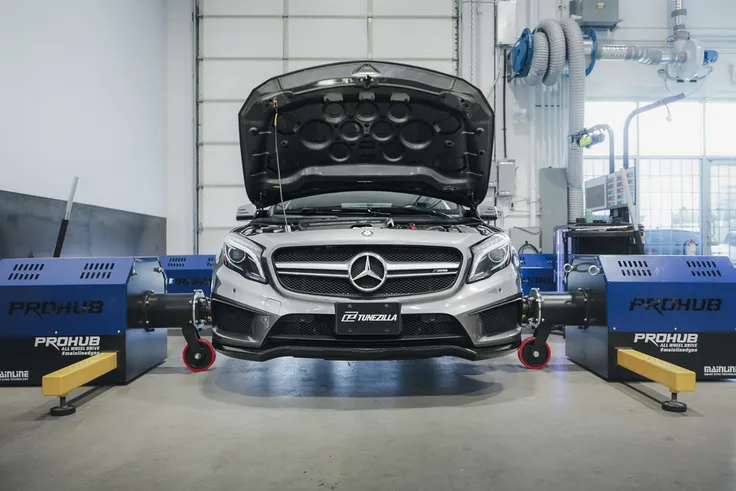
A good auto repair shop website should answer a driver's questions fast, build trust, explain exactly what the shop does, and make the next step easy.
"Your website is your digital storefront — if it doesn't answer questions fast and build trust instantly, drivers will click away to a competitor." — Web Conversion Best Practices
Key Point: The best auto repair websites do four things simultaneously — they inform, reassure, explain services, and drive action without making the visitor work for it.
Fast answers to common questions → Reduces friction and keeps drivers on the page.
Trust signals (reviews, certifications) → Builds immediate credibility with new visitors.
Clear service explanations → Helps drivers understand exactly what they're getting.
Easy next step (CTA/booking) → Converts visitors into paying customers.
Tip: Make your phone number, location, and booking button visible above the fold — drivers in a hurry should never have to scroll to find how to contact you.
A tap-to-call number that never hides
Put your shop phone number in the header of every page so customers can call you easily with one thumb. A referred customer still needs to find your number readily. Repeat it in the footer, and make sure it matches the number on your door and your maps listing. If your website number doesn't match your listing, drivers will assume you're closed or not real and visit the next result instead.
Online booking: the shop still controls
A contact form that sits until morning is not booking. The site must let customers select a service from your library and a time within your real hours, then send a request you approve, reject, or reschedule. Support Lane ties that flow to a customer-facing site per location, on a Support Lane subdomain or your own domain, with editable hero images, customizable services and about pages, and a contact form that lands in your inbox. Availability is calculated from calendar events. New requests default to pending to prevent double-booking. A reminder goes out a day before the visit. You mark which templates are bookable online and keep diagnostics on the phone. That is the difference between a brochure and a front counter that stays open after you lock the door.
Service pages, not one giant list
Brakes, diagnostics, air conditioning, oil, tires, and alignments each need their own page with a simple description, starting price, and book or call button. A single "we fix everything" page matches almost no search results and forces owners to guess whether you do the job. Mark routine work as bookable, and keep open-ended repairs behind a call so the calendar stays honest.
Hours, address, and a map on the same domain
Post your weekday and weekend hours on the homepage and contact page. Write the street address exactly as it appears on the door. Add a map so that a name search and a friend's tip show the same location. If you run multiple locations, give each one its own phone number and hours. Mismatched listings will cost you weekend traffic.
Reviews and credentials in public view
Put real customer words on the homepage and job pages they describe. Add ASE status, warranties in months and miles, and inspection or insurance credentials in readable sentences, not only as logos in the footer. Distrust is the default in this trade. Proof on the page turns a Maps tap into a set of keys on your counter.
Real shop photos and a team page
Take photos of your elevators, waiting area, and staff. Name the advisors and technicians on an about page. A driver leaving a car overnight wants to see faces, not stock photos of city skylines.
Mobile layout built for one hand
Design the first screen for a phone held one-handed. Use large type and big, easy-to-tap buttons. Avoid menus requiring pinch-zoom. Make the booking path and phone number accessible before scrolling. If the page is difficult to navigate with your thumb, customers will visit the next shop in the results instead.
A contact path that works when booking does not
Keep a short form for name, phone, vehicle, and the problem. Route it to a monitored inbox and pair it with email and two-way text so night questions don't get lost in voicemail. Repeat hours and physical address on that page so drivers who won't use a scheduler know where to leave the car.
Clear calls to action on every important screen.
"Schedule service" and "Call the shop" belong on the homepage, every service page, and the footer. One action per button. No clever labels. The site exists to move a stressed owner from doubt to a time on your calendar. If a page explains the job then goes silent, you train the visitor to leave.
Build those pieces first. Style comes after the numbers, hours, proof, and a booking request your team can accept before the next bay opens.
Related Reading
How Support Lane Helps You Build a Better Auto Repair Shop Website
Support Lane solves a critical problem: most shop websites operate separately from shop workflows. When a customer books online, staff manually transfer the request into another system, a process that is slow, error-prone, and avoidable. This gap erodes trust and lets customers fall through the cracks before work begins.
Tip: If your team is manually re-entering booking requests from your website into another tool, you're losing time and customers — often without realizing it.
"When online bookings feed into disconnected systems, customer drop-off increases and staff efficiency suffers — two problems no shop can afford to ignore." — Support Lane
Best Practice: Your booking system and shop workflow should operate as one seamless pipeline, not two separate tools held together by copy-paste.
Your website is your first handshake with customers. But a booking form that feeds into a separate inbox, or a contact page no one checks until Tuesday, signals disorganization before the car even reaches the lift. Every friction point a customer encounters online—a slow response, a missed message, a clunky form—directly threatens your shop's reputation.
Booking form → separate inbox → Requests get lost or delayed.
Contact page checked infrequently → Customers feel ignored.
Disconnected workflows → Staff waste time on manual transfers.
No real-time confirmation → Customers lose trust immediately.
Warning: A disorganized digital experience tells customers exactly what to expect in the shop — don't let your website make that first impression for you.
What changes when the website feeds the workflow
The familiar approach is to build a website with one vendor, manage appointments on a calendar app, track jobs on a whiteboard, and invoice through a separate tool. Each piece works independently. The hidden cost emerges in the gaps: a booking that never reached the board, a customer texted from a personal phone, an invoice that doesn't match the original estimate because someone retyped the line items.
How do the best auto repair shop websites close the gaps between disconnected tools?
Shop management software like Support Lane closes those gaps by connecting the customer-facing site directly to the job board, calendar, chat thread, and invoice, so the record that starts with a Monday night booking ends with a Friday payment without re-entry.
When a customer selects a service from your public site and chooses a time that aligns with your calendar, the request lands as pending on a location-based Kanban board. Staff approves, reject, or reschedules it. An automatic reminder goes out 24 hours before the visit. The booked service template generates both the estimate and invoice. Every broken link in that chain costs time, and time in a bay is money.
Why one record changes everything
The critical difference between a shop site that makes money and one that merely attracts visitors is what happens after someone clicks. Support Lane connects the public page to the internal record, so the driver who searched at 10 p.m. becomes the approved appointment at 8 a.m. without manual data entry.
How do the best auto repair shop websites handle multiple locations?
Shops with multiple locations apply the same structure to each location. Each location has its own hosted site, pipeline, calendar, and invoice list. Taxes calculate correctly for each location. When a customer searches for the north shop, they land on the north shop's hours, services, and booking rules, not a generic page with incorrect contact information.
Sign up for Your Free Trial to Manage Your Auto Shop with Ease Today
Running a professional shop used to require putting together separate tools—a website builder, booking app, and job tracker. Support Lane connects it all in one place, so customers who book through your website flow directly into your shop's calendar, job board, and invoice workflow without manual data entry.
Tip: The fewer tools you juggle, the fewer gaps exist for lost bookings, missed follow-ups, and billing errors—consolidation isn't just convenient; it's critical to running a tight operation.
Manual data entry between apps → Support Lane: Automatic data flow from booking to invoice.
Multiple logins and subscriptions → Support Lane: One unified platform.
Risk of scheduling conflicts → Support Lane: Synced calendar and job board.
Disconnected customer records → Support Lane: Centralized customer workflow.
"If your website is your digital storefront, your shop management software is the entire operation running behind it—without the right system, even the best website leaves money on the table." — Support Lane
If the websites in this guide showed you what a strong online presence looks like, shop management software gives you the system to back it up. Our platform streamlines your entire operation—from customer bookings to invoicing—so you can focus on running your business, not managing disconnected tools. Start your free trial with Support Lane today and turn your website into the operational front door your shop needs.
Key Point: A great website attracts customers—Support Lane ensures they're seamlessly converted into booked jobs, completed invoices, and repeat business.
Best Practice: Start your free trial today and experience how a fully integrated workflow eliminates the manual busywork that costs your shop time and revenue every single day.
Ready to modernize your shop?
Join the independent auto repair shops already using Support Lane to manage their jobs, customers, and invoices in one place.