7 AI-Powered Customer Service Tools for Auto Repair Shops
A customer calls during the afternoon rush for a status update, gets no answer, and dials a competitor instead. That kind of friction costs auto repair shops real revenue every day, and the best AI tools for auto repair shops help forward-thinking owners close that gap. AI-powered customer service helps shops respond faster, prioritize every caller, and build the loyalty that brings customers back for every oil change and brake job.
Support Lane is built specifically for auto repair businesses, using AI to handle customer communication, automate appointment reminders, and surface each customer's service history so every interaction feels informed. Shops looking to tighten operations without sacrificing the personal touch can get started with shop management software.
Table of Contents
What Is AI-Powered Customer Service for Auto Repair Shops?
Why Do Auto Repair Shops Need AI-Powered Customer Service?
Are AI Customer Service Tools Worth It for Independent Auto Repair Shops?
7 AI-Powered Customer Service Tools for Auto Repair Shops
How to Choose the Right AI Customer Service Tool for Your Auto Repair Shop
Why Shops Choose Support Lane for AI-Powered Customer Service
Sign up for Your Free Trial to Manage Your Auto Shop with Ease Today
Summary
Missed calls are one of the most measurable sources of lost revenue in auto repair, yet most shops lack a system to catch them. A Marchex analysis of large multi-location service operators found that up to 21 percent of inbound automotive service calls go unanswered or mishandled, with even the strongest locations averaging close to 10 percent missed. That gap represents real appointments, real repair orders, and real customers who move on to the next shop before a single conversation begins.
Customer response-time expectations have tightened significantly, and most independent shops aren't set up to meet them. Customers who don't hear back in that window rarely wait patiently; they call a competitor, and the lifetime value of that lost relationship averages more than $12,000 per customer, according to Cox Automotive's 2026 Fixed Operations and Ownership Study.
AI-powered tools trained on automotive-specific language and workflows can handle a substantial share of routine customer interactions without human involvement. The global auto repair software market is projected to reach $8.6 billion by 2033 from $3.4 billion in 2026, growing at a 14.2 percent compound annual growth rate, according to Persistence Market Research. That expansion is driven by independent shops and small-to-medium operations adopting cloud tools that automate customer communication and scheduling. Over 67 percent of small and medium-sized enterprises in the sector are already implementing automated workflow solutions.
The operational payoff from AI-assisted call handling is measurable and specific. Pied Piper's 2025 Service Telephone Effectiveness Study, which evaluated more than 2,100 dealerships and 200 independent service centers, found that full-capability AI systems completed service calls successfully 91 percent of the time without human assistance. When the AI handled the full interaction, customers scheduled appointments 86 percent of the time, which is a direct conversion metric tied to bay utilization and completed repair orders.
No-show rates are a hidden but consistent drain on shop profitability, and automated communication directly addresses them. An empty bay isn't neutral; it represents a technician's time, a lost repair order, and a slot that could have served a paying customer. Automated reminders and confirmations protect revenue, not just add convenience.
The retention side of the equation is equally concrete. Zendesk's 2026 research found that businesses using AI for customer service see up to a 30 percent reduction in support costs. Shop management software addresses this by keeping customer conversations, appointment details, vehicle history, and job records in one connected workflow, so every interaction, whether handled by AI or a staff member, carries full context rather than starting from scratch.
What Is AI-Powered Customer Service for Auto Repair Shops?
AI-powered customer service for auto repair shops is a connected system of voice agents, automated text messaging, and intelligent scheduling tools trained specifically on automotive language and workflows. It answers calls, books appointments, sends repair status updates, and follows up after visits — all without taking your team away from their core work. The technology handles predictable, repeating interactions so your service advisors can focus on conversations that require human judgment.
"AI-powered systems are trained on automotive-specific language and workflows — meaning they understand the difference between a brake flush and a brake bleed, and respond accordingly."
Example: A customer calls at 7:42 AM before your shop opens. Instead of hitting voicemail, an AI voice agent answers, collects their vehicle details, and books a same-day appointment — all while your team is still drinking their morning coffee.
Key Point: AI customer service is not a generic chatbot slapped onto your website. It's a purpose-built system designed around the specific rhythms of auto repair — from oil change reminders to multi-point inspection follow-ups.
Functions
What AI Handles
Inbound Calls: Answering, routing, booking
Appointment Scheduling: Real-time availability, confirmations
Repair Status Updates: Automated SMS notifications
Post-Visit Follow-Up: Review requests, return reminders
What Your Team Focuses On
Inbound Calls: Complex diagnostics conversations
Appointment Scheduling: High-value upsell discussions
Repair Status Updates: Customer relationship building
Post-Visit Follow-Up: Handling escalations and complaints
Warning: Shops that rely solely on manual phone handling risk missing after-hours calls — which represent some of the highest-intent customers actively searching for immediate help.
Why do auto repair shops lose customers before a conversation even starts?
A call goes unanswered at 7 a.m. A message sits in a queue during a busy afternoon. A customer needing brake work books with the shop down the street because nobody picked up. These are capacity failures, not staffing failures: no two- or three-person front desk closes that gap. A Marchex analysis found that up to 21 percent of inbound automotive service calls go unanswered or mishandled, with even the strongest locations averaging close to 10 percent missed. That is measurable revenue lost before a conversation starts.
What separates AI-powered customer service for auto repair shops from a generic chatbot?
What separates effective AI customer service from a generic chatbot is specificity. A system trained on year-make-model data, warning light descriptions, drivability symptoms, and shop-specific scheduling rules can have a meaningful conversation with a customer who says, "my 2019 Silverado is making a grinding noise when I brake." It can assess urgency, check live bay availability, offer concrete appointment times, and write bookings directly into your management system.
How does shared context make AI and human touchpoints work together?
Most shops handle communication through phone calls, sticky notes, text threads, and memory. When booking details, job records, and vehicle history live in separate places, every interaction starts from scratch. Shop management software like Support Lane keeps customer conversations, appointment details, and service history in one place, so AI-powered and human touchpoints share the same information instead of operating in separate silos.
What does the data say about AI-powered customer service conversion rates?
Pied Piper's 2025 Service Telephone Effectiveness Study examined more than 2,100 dealerships and 200 independent service centers. Full-capability AI systems handled service calls successfully 91 percent of the time without human intervention, and when AI completed the full interaction, customers scheduled appointments 86 percent of the time. Each percentage point of improvement in call-to-appointment conversion represents filled bays, completed repair orders, and returning customers.
Why Do Auto Repair Shops Need AI-Powered Customer Service?
When a customer drops off their car and hears nothing until 4 p.m., they don't think "the shop must be busy." They think "this shop does not care about my time." That judgment forms fast, sticks, and rarely gets reversed. AI-powered customer service closes the gap between what customers expect and what an overloaded front desk can realistically deliver.
"That judgment forms fast, sticks, and rarely gets reversed — and no amount of great mechanical work undoes a poor communication experience."
Tip: The moment of silence between drop-off and update is where customer trust erodes fastest — AI eliminates that silence automatically, without adding pressure to your front desk staff.
Warning: An overloaded front desk isn't just an internal problem — it's a customer-facing liability. Every missed call or delayed update is a lost review, lost return visit, and potentially a lost customer for life.
Customer Experience Gap
Without AI
Update frequency
Whenever staff remembers
Response to inquiries
Hours or missed entirely
Customer perception
"They don't care"
Front desk workload
Overwhelmed
With AI-Powered Service
Update frequency
Proactive & automated
Response to inquiries
Instant, 24/7
Customer perception
"They kept me informed"
Front desk workload
Manageable
Takeaway: AI-powered customer service isn't a luxury for auto repair shops — it's the critical bridge between operational reality and customer expectations.
What silence actually costs you
A missed call during the morning rush is one lost opportunity. Customers who don't hear back within that window aren't waiting patiently; they're already calling the shop down the street.
Customers who feel ignored don't complain to you. They complain publicly, switch providers quietly, and take their lifetime service spend with them. Cox Automotive's 2026 Fixed Operations and Ownership Study values that lifetime spend at more than $12,000 per customer. One unreturned call is a five-figure decision made by default.
Why does fragmented communication cost auto repair shops customers?
Most independent shops handle customer communication the same way they have for years: one phone line, one service advisor, and a mental list of customers that grows longer by the hour. When a technician needs repair approval, a walk-in appears at the counter, and the phone rings at the same time, the system breaks down. The customer on hold hears only silence.
How does AI-powered customer service for auto repair shops solve the fragmentation problem?
Shop management software built around a unified platform transforms operations. When a booking, job, and vehicle history exist in a single record, the AI-powered layer handles status questions, appointment confirmations, and follow-up messages with full context, eliminating the need for staff to search multiple systems. Communication remains consistent because information stays unified.
What does the market data say about automated workflows in auto repair?
The global auto repair software market is worth $3.4 billion in 2026 and is expected to reach $8.6 billion by 2033, growing at 14.2 percent annually, according to Persistence Market Research. More than 67 percent of small and medium-sized businesses in the sector already use automated workflow solutions. Automated reminders and confirmations protect revenue.
Related Reading
How To Digitize My Auto Repair Shop Operations
Auto Repair Customer Engagement
Digital Vehicle Inspection Benefits
What Is A Digital Vehicle Inspection
Improve Customer Communication In Auto Repair
Getting Auto Repair Shop Leads With Seo
Digital Vehicle Inspection Checklist Items
Are AI Customer Service Tools Worth It for Independent Auto Repair Shops?
AI customer service tools pay for themselves by recovering revenue lost through unanswered calls, empty bays, and overloaded advisors. Technicians needed only 3 days to fully adapt to new AI-powered shop management software: the barrier is not technical skill, but the assumption that one exists.
Tip: If your team hesitates about AI adoption, remember that 3 days is typically all it takes to get up to speed. The real obstacle is perception, not capability.
"Technicians needed only 3 days to fully adapt to new AI-powered shop management software — the barrier is not technical skill, but the assumption that one exists."
Takeaway: Every day without AI customer service tools is a day of preventable revenue loss from missed calls, unfilled bays, and advisor burnout.
The global auto repair software market stands at $3.4 billion in 2026 and is projected to reach $8.6 billion by 2033, growing at a 14.2 percent compound annual growth rate, according to Persistence Market Research. Over 67 percent of small and medium-sized enterprises in the sector are already implementing automated workflow solutions.
Metric & Figure
Market Size (2026)
$3.4 billion
Projected Market Size (2033)
$8.6 billion
Compound Annual Growth Rate
14.2%
SMEs Using Automation
67%+
Warning: If 67 percent of your competitors are already adopting automated workflow solutions, waiting is no longer a neutral choice — it's falling behind.
How does AI-powered customer service for auto repair shops give time back to your team?
For a shop running with one service advisor and a working owner, AI tools reclaim hours that help build the business. Your advisor's most valuable hour is spent walking a customer through a brake inspection result and securing approval on additional work, not answering "is my car ready yet?"
What happens when fragmented communication costs you customers?
Most independent shops manage customer communication through a single phone line, personal cell phone, and whatever the service advisor remembers to follow up on. That system fails when the phone rings while your advisor explains an estimate at the counter. Platforms like Support Lane consolidate fragmented communication into one workflow, where a customer's appointment, vehicle history, and open job sit in the same record with full context.
A shop that misses two appointment requests because the advisor was tied up loses two customers who call the next shop and likely stay there. AI-powered customer communication closes that gap by ensuring the relationship has a chance to start.
Related Reading
Auto Repair Shop Scheduling
Automated Customer Reminders For Auto Repair
Auto Repair Shop Workflow
How To Manage An Auto Repair Shop
Auto Repair Customer Communication
Reduce Customer Wait Time In Auto Repair
Auto Repair Customer Management Software
How To Market Auto Repair Shop Software Globally
Auto Repair Shop Franchise
7 AI-Powered Customer Service Tools for Auto Repair Shops
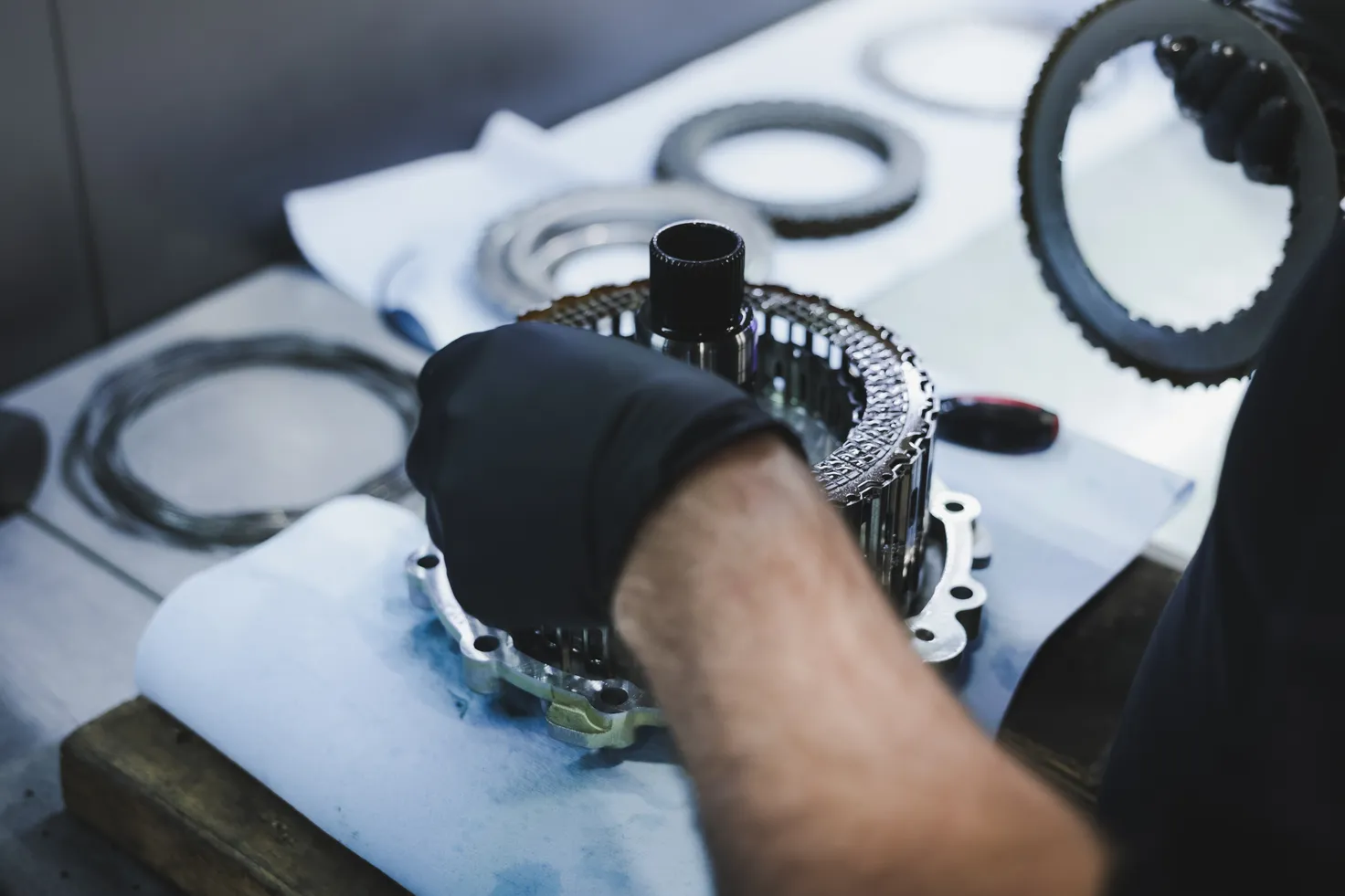
Independent auto repair shops lose jobs when calls go unanswered or customers wait too long for updates. AI-powered customer service tools answer phones, book appointments, send status texts, and handle routine questions—freeing your team to focus on what matters most: repairs.
"Shops that fail to respond quickly to customer inquiries risk losing business to competitors who leverage AI-powered automation to stay available 24/7." — Industry Insight
Task
Phone Answering
Without AI: Missed calls, lost revenue
With AI: Always answered, 24/7
Appointment Booking
Without AI: Manual, time-consuming
With AI: Automated, instant
Status Updates
Without AI: Customer calls in repeatedly
With AI: Proactive texts sent automatically
Routine Questions
Without AI: Staff interrupted constantly
With AI: AI handles instantly
Key Point: Every unanswered call is a potential job walking out the door — AI tools eliminate that risk entirely.
Tip: Implementing AI-powered customer service doesn't replace your team — it empowers them to focus on high-value repair work instead of repetitive administrative tasks.
1. Support Lane
Support Lane is an all-in-one shop management platform for independent auto repair shops, integrating job tracking, customer communication, online booking, and invoicing. It helps shops respond to customer requests faster, keep conversations and appointments organized, and reduce interruptions that pull service advisors from the counter.
Features
Unified Support Lane Chat receives email and SMS replies in one inbox.
Customer-facing hosted website with online booking to eliminate phone-based appointment requests
Auto-calculated appointment availability to prevent double-booking
Appointments managed as pending or requested, with options to approve, reject, or reschedule.
Automatic 24-hour reminder sent before every appointment
Calendar view with drag-and-drop appointment creation
Service selection from a reusable library for quick, consistent job entry
Full customer records listing every vehicle owned with customer-scoped notes
Vehicle records with VIN decode autofill, mileage logs, and vehicle-scoped notes
Job management on a Kanban board with color-coded stages, drag-and-drop movement, and time tracking
Job detail view with internal notes accessible directly from Kanban cards
Invoicing and payment tools to create estimates or invoices, send payment links, and track deposits or refunds
Best For
Independent auto repair shops needing tighter control over appointments, customer conversations, and job status without adding staff or juggling separate booking, texting, and invoicing tools.
Pros
Unified inbox eliminates missed or delayed responses across email and SMS.
Online booking automatically captures after-hours and peak-time requests.
Automatic reminders reduce no-shows and cancellations
Clear job stages and time tracking show exactly where every vehicle stands.
Customer and vehicle history sits alongside conversations to enable full-context responses.
Online payment links and terminals speed up payment collection.
Free first-year access removes barriers to testing the full system
Cons
No live voice AI receptionist for real-time phone call answering
Online booking appointments require staff approval before confirmation.
Advanced automation such as automatic payment-link delivery and multi-bay capacity rules remains limited.
Accessibility
Cloud-based platform with per-location setup. The customer-facing website runs on a Support Lane subdomain or the shop's own domain. All management functions (customers, vehicles, jobs, appointments, chat, and invoicing) are accessible from any internet-connected device.
2. Trillet AI Receptionist
Trillet delivers a dedicated AI voice agent that answers every inbound call for auto repair shops, captures vehicle details and symptoms, and books appointments or qualifies leads even when the front desk is busy or closed.
Features
24/7 natural-language voice answering that greets callers with the shop name
Automatic collection of year, make, model, mileage, and problem symptoms
Instant appointment booking tied to available slots
SMS confirmation and follow-up texts after every call
Screening for emergency versus routine work
Call transcripts and summaries delivered to the shop
Ability to politely decline jobs outside the shop’s capabilities
Pros
Directly recovers the missed calls that cost shops revenue; works after hours when most independent shops lose business; low entry price that one captured job can cover.
Cons
Overage charges apply after included minutes; best results require initial service setup and pricing ranges.
Accessibility
Starts at $49 per month with 150 minutes included, then $0.20 per additional minute. No long contracts. Setup takes minutes via website.
3. AgentZap
AgentZap is an AI sales and service agent built for independent auto repair shops. It answers phones and website chats, qualifies the request, and books jobs while integrating with common shop management systems.
Features
AI phone answering that handles service inquiries in natural conversation
Website chat agent that captures leads the same way
Full vehicle intake including VIN when available
Live calendar booking based on bay availability
Lead scoring so high-intent calls rise to the top
Integration with major shop systems for seamless handoff
Automated follow-up sequences after initial contact
Pros
Addresses both phone and digital inquiries that independent shops miss; published pricing makes budgeting straightforward; reduces the front-desk interruptions that slow technicians.
Cons
Some advanced shop-system integrations may require extra configuration; voice quality depends on the configured knowledge base.
Accessibility
Starter plan at $109 per month, Professional at $295 per month, Multi-Location at $899 per month, plus a one-time $499 setup fee. Cloud-based with quick deployment.
4. Mechly
Mechly is a voice AI receptionist created specifically for car repair shops and garages. It answers calls, schedules appointments against the live calendar, and sends automatic SMS and email confirmations to keep customers informed.
Features
Instant 24/7 call answering with shop-specific greeting
Smart scheduling that checks real availability before booking
Automatic SMS and email appointment confirmations and reminders
Central dashboard showing customer details and vehicle history
Handling of routine questions about hours, services, and pricing
Escalation of complex or urgent calls to a human
Full conversation logging for the service team
Pros
Keeps bays full by capturing after-hours and peak-time calls; frees the service writer from constant interruptions; reports transparent results for shops using the system.
Cons
Primarily voice-focused; less emphasis on multi-channel text and email compared with full platforms.
Accessibility
Cloud platform designed for independent shops and multi-location groups. Contact for current pricing and demo.
5. ZenOp AI Receptionist
ZenOp provides a conversational AI phone agent tuned for auto repair shops. It answers every call, collects vehicle and symptom details, books service, and texts confirmations so nothing falls through during busy bay hours.
Features
First-ring answering with natural conversation
Collection of year/make/model and problem description
Direct booking into open service slots
Automatic text confirmation with date, time, and address
After-hours and weekend coverage
Ability to provide ballpark pricing ranges when configured
Full call summary delivered to the shop team
Pros
Stops the exact revenue leak of unanswered rings; costs a fraction of a full-time receptionist; never takes sick days or vacation.
Cons
Requires service and pricing configuration for accurate responses; concurrent call volume is unlimited, but overage models vary by plan.
Accessibility
Typical plans range from low hundreds per year upward depending on volume. Quick setup with custom greeting and knowledge base.
6. Fulltime.ai
Fulltime.ai is a voice AI receptionist built specifically for auto repair shops. It answers every inbound call the moment it rings, gathers vehicle details and symptoms, and books the appointment so the service writer can focus on walk-ins and technicians can stay under the hood.
Features
Instant first-ring answering with a natural shop-branded greeting
Automatic capture of year, make, model, mileage, and problem symptoms
Symptom-based triage that flags urgent issues versus routine maintenance
Live scheduling that checks open bay times before confirming
Seamless handoff of complex calls to a human with full context
SMS confirmation sent the moment the appointment is locked in
Conversation transcripts available for the team before the customer arrives
Pros
Eliminates missed-call revenue leaks during peak and after hours; reduces front-desk interruptions that slow the entire shop; keeps high-intent callers from dialing the next garage on the list.
Cons
Primarily focused on voice; text and email automation is lighter than full multi-channel platforms; requires initial training on the shop’s services and pricing for best accuracy.
Accessibility
Cloud-based platform with fast deployment. Pricing is available via demo; designed for independent and multi-bay shops.
7. VoiceCharm AI Receptionist
VoiceCharm delivers a 24/7 AI phone agent tuned for auto repair shops. It answers service calls, checks live calendar availability, books the repair, and sends confirmations so bays stay full without adding staff.
Features
Always-on answering that never sends callers to voicemail
Real-time calendar checks that prevent double-booking
Direct booking of oil changes, diagnostics, brakes, and inspections
Automatic capture of vehicle details and customer contact information
Instant SMS confirmation with date, time, and shop address
After-hours and weekend coverage for breakdown and emergency calls
Simple dashboard that shows every booked job and conversation summary
Pros
Directly recovers the after-hours and lunch-rush calls that independent shops lose; costs far less than a part-time receptionist; keeps the schedule accurate without manual data entry.
Cons
Calendar integration is strongest with Google Calendar; deeper shop-management system connections may require extra setup; the voice-only focus makes text follow-ups secondary.
Accessibility
Flat monthly pricing starting around $149. Quick setup with no long-term contracts. Works for single-location independent shops.
How to Choose the Right AI Customer Service Tool for Your Auto Repair Shop
The right AI customer service tool should solve your shop's specific communication problems while working seamlessly together with your scheduling, customer management, and repair workflows.
"The best AI tool isn't the most feature-rich — it's the one that fits your shop's existing workflows without friction." — Industry Best Practice
Key Point: Don't choose an AI tool based on hype alone — evaluate it against your shop's real, day-to-day communication gaps and actual workflow needs.
Tip: Before committing to any platform, map out your top 3 communication pain points — whether that's missed calls, slow follow-ups, or appointment scheduling delays — and confirm the tool addresses each one directly.
Evaluation Criteria
Evaluation Criteria
Scheduling Integration
Eliminates double-booking and manual data entry
Customer Management Sync
Keeps repair history and contact info in one place
Communication Automation
Handles follow-ups, reminders, and missed inquiries
Ease of Setup
Reduces downtime during onboarding
Warning: Choosing a tool that doesn't integrate with your existing shop management software can create data silos and actually increase your team's workload instead of reducing it.
Start With the Friction You Feel Most
Map out the moments that already hurt your shop. If phones ring while you're under a car, prioritize tools that answer on the first ring and capture year, make, model, symptoms, and drivability status without human help. If after-hours breakdowns vanish into voicemail, focus on true 24/7 coverage that books or qualifies leads. The tool must close the specific leak visible in your day, not add unused features.
Demand Automotive-Specific Intake
Generic AI agents fail in repair shops—they treat every call like a restaurant reservation. The right tool captures vehicle year, make, and model; records the main issue or warning lights; confirms drivability; notes towing needs; and captures preferred timing. It should answer basic questions about hours, services, and location from your knowledge base. Without structured intake, every lead requires a callback and your team loses the time the tool was supposed to save.
Require Live Booking Instead of Message Taking
Many systems only collect a preferred time, leaving staff to handle scheduling. Choose a tool that checks your live calendar or bay availability during the call, books the appointment immediately, and then sends a text confirmation with the date, time, and address. Real-time booking converts a captured call into a locked-in job instead of another follow-up task.
Check Escalation and Handoff Quality
Even the best AI will face complex or emotional calls it cannot finish. The tool must transfer cleanly to a human with the full conversation transcript and collected vehicle details so the customer doesn't repeat everything. Test the handoff during a demo: failed transfers or lost context turn a good first impression into frustration and lost trust.
Evaluate Pricing Against Your Actual Call Volume
Figure out the real monthly cost based on how many calls you typically receive, including per-minute fees, per-call fees, and extra charges beyond the advertised base price. A low starter rate that increases during busy times can eliminate your savings. Flat or predictable pricing that scales with your volume protects your return on investment and prevents the tool from becoming an unpredictable cost.
Test Conversation Quality in a Live Demo
Make sure you hear the agent handle interruptions, accents, background noise, and messy real-world speech. Older systems that convert speech to text, generate a reply, then convert back to speech introduce delays that cause callers to hang up. Modern realtime voice agents respond naturally and keep conversations flowing without stiff or robotic voices that undermine your professional image.
Confirm Integration With the Tools You Already Run
The AI should write appointments and customer details into your existing shop management system or calendar, not force you to re-enter them. Native integrations with common independent-shop platforms reduce duplicate work and keep schedules accurate. Support Lane's integrations help eliminate data silos instead of creating new ones.
Review Setup Speed and Ongoing Support
Independent shops need tools that go live in days, not weeks. Look for platforms that let you load services, hours, and pricing once, then provide clear ongoing support for adjustments. Fast deployment lets you recover missed calls sooner instead of managing another system.
Why Shops Choose Support Lane for AI-Powered Customer Service
Shops that choose Support Lane aren't buying a chatbot — they're buying back the hours lost when communication, scheduling, and job tracking live in separate places, with each handoff consuming time they don't have.
"Every disconnected handoff between communication, scheduling, and job tracking is time a shop never gets back — Support Lane eliminates that loss at the source."
Key Point: Support Lane isn't just an AI tool — it's an operational upgrade that consolidates the fragmented systems draining your shop's most valuable resource: time.
Tip: If your team is toggling between multiple platforms to manage a single customer interaction, you're already losing billable hours — this is exactly the problem Support Lane was built to solve.
Without Support Lane
Communication, scheduling & tracking in separate tools
Time lost on every handoff
Staff managing manual follow-ups
Hours consumed by fragmented systems
With Support Lane
All-in-one streamlined workflow
Handoffs eliminated automatically
AI handles routine touchpoints
Hours recovered for revenue-generating work
What actually changes when everything connects
The failure point in most independent shops isn't effort—it's fragmentation. A booking lives in one place, job notes in another, payment conversations elsewhere. When a customer calls for a status update, the advisor leaves the counter, finds the paper ticket, checks the board, then returns to answer. That sequence repeats dozens of times daily, and every interruption pulls focus from revenue-generating work. Our shop management software solves this by consolidating the booking, job, and invoice into one record. The advisor opens a single screen and accesses everything: vehicle history, VIN-decoded details, mileage logs, prior notes, and the full customer message thread. Status questions get answered in seconds, not minutes.
Why does unified communication change the math for AI-powered customer service for auto repair shops?
According to AmplifAI's customer service research, 89% of customers are more likely to return after a positive service experience. That return visit is where independent shops build real profit. A customer who drops off a car, hears nothing for six hours, and must call three times for an update won't return for the next service appointment. When every status update, appointment reminder, and payment link flows through one connected thread with Support Lane, the customer experience feels effortless even when you're busy.
What is the hidden cost of splitting work across disconnected systems?
Most shops today split work across a phone system, a text app, invoicing software, and a whiteboard. Hidden costs emerge when advisors mentally track which customer is in which system, or when payment reminders never go out because invoices sit in draft folders. Shop management software like Support Lane keeps every customer interaction—from the first online booking to the final payment receipt—in one workflow any advisor can access without asking colleagues what happened last.
The question shops are not asking yet
Zendesk's 2026 research on AI-powered service shows that businesses using AI for customer service can cut support costs by up to 30%. For budget-conscious shops, this means lower staffing expenses and higher profit margins. Missed calls, repetitive customer questions, and manual invoice follow-ups create operational friction. These issues exhaust advisors, fragment customer experience, and slow deal closure.
How does AI-Powered Customer Service for Auto Repair Shops change the repair workflow?
Shops that make the most of AI-powered customer service treat communication as part of the repair workflow, not a side task. When customers receive automatic reminders, booking requests flow directly into the calendar, and payment links arrive as jobs close, the shop delivers an intentional experience that customers remember and discuss. Support Lane's shop management software automates these touchpoints, freeing your team to focus on repair work.
Most shop owners have not tested what happens to their numbers once that experience becomes the default.
Sign up for Your Free Trial to Manage Your Auto Shop with Ease Today
If your numbers haven't changed, the gap usually comes from friction: how customers reach you, how your team tracks jobs, and how payments finish. When these friction points sit in separate tools, fixing one rarely fixes everything. Shop management software like Support Lane connects online booking, two-way customer communication, job pipelines, vehicle records, invoicing, and payments in one place — so your customers experience consistency, not accidents.
"When friction points sit in separate tools, fixing one rarely fixes everything — your workflow needs to be connected, not fragmented." — Support Lane
Disconnected Tools
Customers book through scattered channels
Job tracking done manually or across apps
Vehicle history spread across spreadsheets
Invoicing and payments handled separately
Customer communication is inconsistent
Support Lane (Connected)
Unified online booking in one place
Centralized job pipelines for your whole team
Organized vehicle records instantly accessible
Integrated invoicing and payments in one flow
Two-way messaging that keeps everyone aligned
Tip: If your revenue or customer retention has plateaued, the problem isn't effort — it's the fragmented tools creating invisible friction at every step of the customer journey.
Warning: Running booking, communication, invoicing, and payments through separate systems means every handoff is a chance for something to fall through the cracks — and your customers will notice.
Explore Support Lane with a free trial to see what changes when your workflow becomes connected instead of fragmented. Experience streamlined job tracking, faster payments, and consistent customer communication in one place.
Best Practice: Start your free trial today and run Support Lane alongside your current process. Most shop owners notice the difference in efficiency and customer experience within the first week.
Key Point: A connected workflow saves time and creates the consistent customer experience that turns one-time visitors into loyal, returning clients.
Related Reading
Best Auto Repair Shop Websites
Auto Repair Shop Bookkeeping Software
How To Value An Auto Repair Business
How To Use Video In Your Auto Repair Shop Marketing
Best Accounting Software For Auto Repair Shops
Auto Repair Shop Billing Software
Auto Repair Shop Texting Software
Auto Repair Shop Crm Software
Ready to modernize your shop?
Join the independent auto repair shops already using Support Lane to manage their jobs, customers, and invoices in one place.