10 Best AI Tools for Auto Repair Shops and Mechanics in 2026
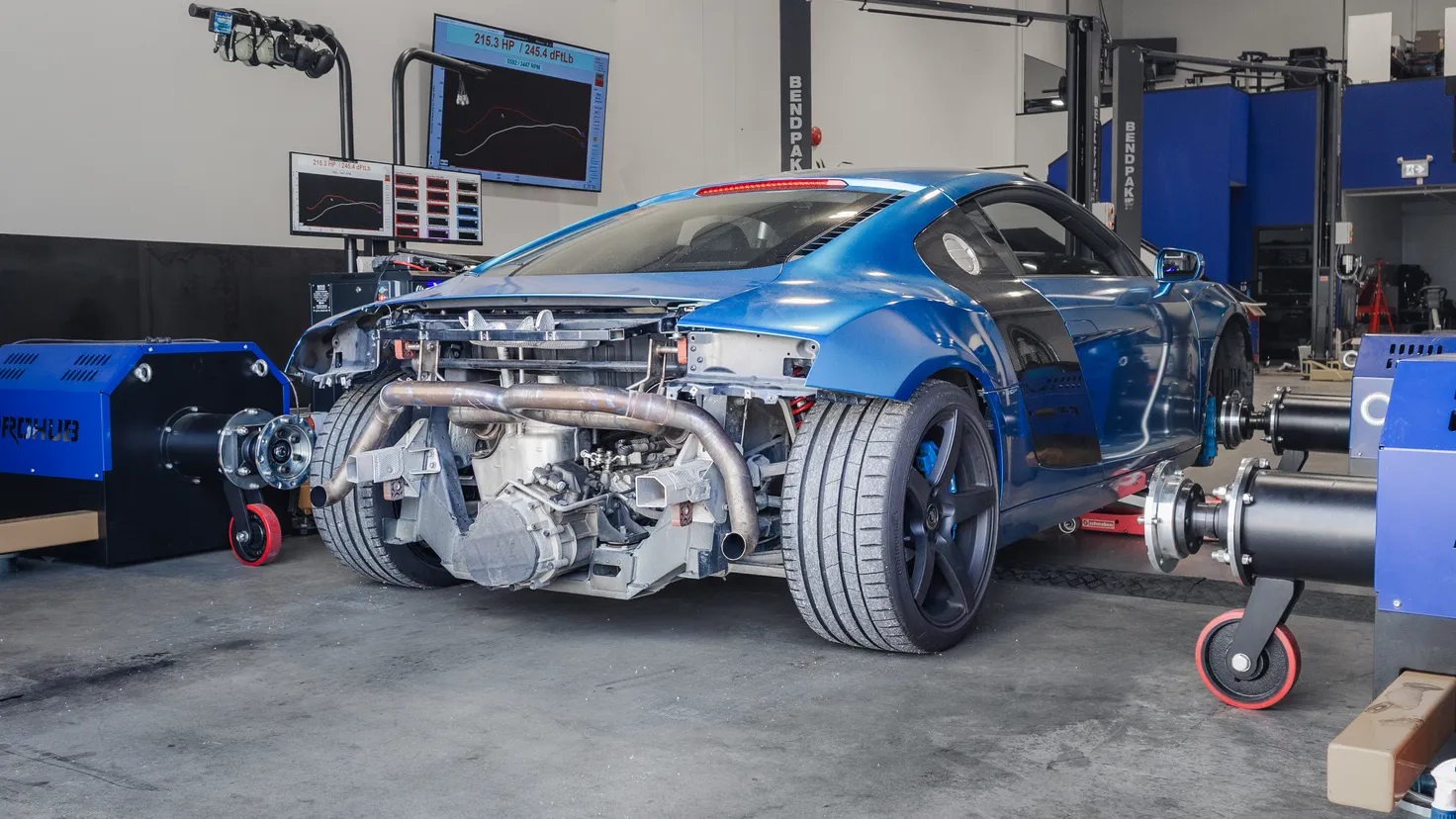
Running an auto repair shop means managing diagnostics, parts orders, customer calls, and technician schedules all at once. That pressure leaves little room for growth, and small inefficiencies compound quickly. The best AI tools for auto repair shops are changing that reality, helping teams work faster, reduce costly errors, and retain more customers.
Choosing the right tools starts with understanding what each one actually solves for a busy shop. Some handle scheduling and communication, others focus on repair tracking or parts management. For shops looking to bring those functions together without a steep learning curve, Support Lane offers a practical solution through its shop management software.
Table of Contents
What Are AI Tools, and Why Are They Important for Auto Repair Shops?
Can AI Tools Help Auto Repair Shops Work More Efficiently?
Is AI Worth It for Small Auto Repair Shops?
10 Best AI Tools for Auto Repair Shops and Mechanics in 2026
How to Choose the Right AI Tools for Your Auto Repair Shop
How Support Lane Helps Independent Shops Run Smarter
Sign up for Your Free Trial to Manage Your Auto Shop with Ease Today
Summary
Persistence Market Research projects the global auto repair software market will grow from $3.4 billion in 2026 to $8.6 billion by 2033 at a 14.2 percent compound annual growth rate. Shops that integrate these capabilities convert the same labor and phone traffic into higher car counts, stronger average repair orders, and tighter control over the variables that determine whether the business stays profitable.
Scheduling inefficiencies quietly drain bay utilization in ways that rarely show up as a line item. Shops using AI scheduling tools report a 20 percent increase in customer throughput according to GMB North America, a gain that comes from matching technician availability, job durations, and parts readiness before a vehicle is even confirmed. The coordination delays that keep bays occupied longer than the mechanical work requires are often invisible until a data-driven system removes them.
Fragmentation between tools is one of the most common and underestimated sources of lost revenue in independent shops. When scheduling, job tracking, invoicing, and customer communication each run through separate apps, the shop is not running one workflow but several, and every handoff between them carries a re-entry cost. The 2025 Ratchet+Wrench Industry Survey found that 61 percent of independent shops already use AI-powered estimate generators, yet adoption of integrated scheduling and customer service AI still trails behind, suggesting most shops are adding point solutions rather than connected systems.
Small independent shops often see sharper returns from AI adoption than larger operations because their cost structure makes every recovered dollar count more. Fixed overhead in rent, insurance, and payroll is already covered, so revenue from a captured missed appointment or a customer retained through automated follow-up flows almost entirely to profit. Shops using AI scheduling and customer management tools report up to a 25 percent increase in customer retention according to GMB's 2025 analysis, and for an independent with a loyal local base, that figure compounds year over year in ways a single marketing campaign cannot replicate.
Digital presence influences booking decisions before a potential customer ever contacts the shop. CDK Global research confirms that independent repair shops handle roughly 70 percent of all automotive service and repair work in the U.S., meaning the market opportunity is substantial. The shops capturing the most of that share are the ones making it easy for customers to book at any hour, on any device, without friction at the point of decision.
Shop management software addresses this by consolidating job tracking, scheduling, invoicing, customer communication, and online booking into a single connected workflow, so AI-generated data moves through the system automatically rather than requiring manual transfer between disconnected tools.
What Are AI Tools, and Why Are They Important for Auto Repair Shops?
AI tools solve critical operational constraints that extra staff and longer hours simply cannot fix. They handle repetitive, time-sensitive work — missed calls, slow diagnostics, scheduling gaps — turning these pain points into recovered revenue and tighter, more efficient workflows.
"AI tools transform the most costly operational gaps — missed calls, slow diagnostics, and scheduling failures — into recovered revenue and streamlined workflows." — SupportLane
What This Means for Your Shop: AI tools are not just software upgrades — they are operational multipliers that work around the clock to capture revenue your team would otherwise miss.
Key Takeaway: The real value of AI tools isn't replacing your staff — it's eliminating the gaps that cost your shop money every single day.
Operational Problem
Missed calls
What AI Tools Do: Answers and logs inquiries 24/7
Business Impact: Recovered bookings & revenue
Slow diagnostics
What AI Tools Do: Accelerates fault identification
Business Impact: Faster turnaround times
Scheduling gaps
What AI Tools Do: Automates appointment management
Business Impact: Fuller bays, tighter workflows
The problem is not effort. It is attention.
When a technician is diagnosing a problem and the phone rings, something suffers: either the call goes unanswered, or the diagnostic work loses focus. AI tools solve this by handling tasks that don't require a trained hand. Voice agents capture appointment details and write them directly into your calendar. Diagnostic assistants cross-reference OBD codes against repair databases and surface the most likely cause first, before a technician spends an hour chasing the wrong lead.
How do the best AI tools for auto repair shops affect shop growth and profitability?
Persistence Market Research projects the global auto repair software market will grow from $3.4 billion in 2026 to $8.6 billion by 2033 at a 14.2 percent compound annual growth rate. Shops using these tools increase output per worker, boost average repair order value, and gain better control over profitability.
How does AI improve scheduling and inventory decisions in a busy shop?
The same pattern shows up in scheduling and inventory. An AI scheduling engine that accounts for technician specialties, bay availability, and historical job durations fills gaps efficiently, preventing situations where two complex electrical jobs land on the same technician while a simpler bay sits empty.
Why fragmentation is the hidden cost most shops ignore
Most independent shops add a new tool for each problem: one app for scheduling, another for estimates, a third for customer follow-up, and a spreadsheet holding everything together. Each tool solves a narrow problem while creating others: duplicate data entry, missed context between systems, and staff spending more time switching tabs than serving customers. The 2025 Ratchet+Wrench Industry Survey found that 61 percent of independent shops use AI-powered estimate generators, yet adoption of integrated scheduling and customer service AI lags behind, suggesting many shops are adding point solutions rather than connected systems.
Where do shops quietly lose money when systems don't connect?
That fragmentation is where shops quietly lose money. A well-integrated shop management software like Support Lane brings together scheduling, repair tracking, customer communication, and invoicing into one workflow, so AI tools feed data through the system rather than creating another manual entry step. The question to ask about any AI tool is not whether it does the task, but whether it connects to everything else your shop already depends on.
The shops that get the most from AI are not the ones with the most tools, but the ones with the fewest gaps between them.
Related Reading
Improve Customer Communication In Auto Repair
Getting Auto Repair Shop Leads With Seo
Auto Repair Customer Engagement
Digital Vehicle Inspection Checklist Items
Digital Vehicle Inspection Benefits
How To Digitize My Auto Repair Shop Operations
AI-powered Customer Service For Auto Repair Shops
Can AI Tools Help Auto Repair Shops Work More Efficiently?
AI tools make independent auto repair shops work much better—improving how well they use their work bays, how much work technicians get done each hour, and first-time fix rate. The real question is whether the tools you choose make work easier or make it harder.
"The impact of AI on auto repair shops comes down to three core metrics: bay utilization, technician productivity, and first-time fix rate—get these right, and profitability follows." — SupportLane
Tip: When evaluating AI tools for your shop, always measure their impact on bay utilization and technician output before committing to a platform.
Takeaway: The best AI tools seamlessly integrate into your existing workflow—if a tool creates more friction than it removes, it's not the right fit for your shop.
AI Tool Impact Area: Bay Utilization
What It Improves: Smarter scheduling & job allocation
Why It Matters: Maximizes revenue per square foot
AI Tool Impact Area: Technician Productivity
What It Improves: Faster diagnostics & repair guidance
Why It Matters: More jobs completed per hour
AI Tool Impact Area: First-Time Fix Rate
What It Improves: Accurate diagnostics on the first attempt
Why It Matters: Reduces costly comebacks & rework
Where the real-time losses happen
The failure point is invisible on the books. Technicians lose significant portions of every shift to non-billable coordination: manual parts lookups, phone-based status updates, chasing estimate approvals. None of that time appears as a line item, so it never gets scrutinized the way labor hours do. It compounds across every repair order until the shop runs at a fraction of its actual capacity without anyone identifying why.
How do the best AI tools for auto repair shops close the throughput gap?
According to GMB North America, shops using AI scheduling tools report a 20 percent increase in customer throughput by eliminating coordination delays that keep bays occupied longer than mechanical work requires. When technician availability, job time estimates, and parts readiness are matched before vehicle confirmation, the schedule absorbs more work without adding staff or space.
How do the best AI tools for auto repair shops speed up diagnostics?
When a technician works through possible causes without ranked guidance from vehicle data, repair histories, and technical service bulletins, diagnosis takes longer and the risk of missing the root cause increases. Paul Campanella's Auto Centers reports that AI-powered diagnostic tools can reduce diagnostic time by up to 50 percent, meaning a job that took the first half of a technician's morning can be confirmed and written before the first break. That recovered time converts directly into additional repair orders on the same shift.
What happens when shop systems don't share data with each other?
Most shops handle scheduling, job tracking, and customer communication through whiteboards, spreadsheets, and separate apps that don't share data. As volume grows, gaps between systems cost money in re-entered information and missed follow-ups. Our shop management software consolidates these functions into a single workflow, so AI-generated scheduling data, job status updates, and customer communications flow through one system instead of requiring manual transfers between disconnected tools.
The efficiency gains that actually stick
Shops that sustain efficiency improvements eliminate handoff points between systems rather than simply adding AI features. Faster diagnostics increase throughput only when repair orders, parts orders, and customer notifications move automatically. Optimized scheduling works only when technician availability and parts readiness are visible in one place. When each tool connects to the next workflow step, efficiency gains compound. Without this integration, gains remain theoretical, and shops revert to manual coordination within a week.
But efficiency is only one side of the equation. For smaller independent shops, the more pressing question cuts deeper than throughput numbers.
Is AI Worth It for Small Auto Repair Shops?
Small independent shops aren't too small for AI. The gap between current spending and optimized spending is largest for independent shops, making AI their highest-impact investment.
"The gap between current spending and optimized spending is largest for independent shops — making AI the highest-impact investment they can make." — Industry Insight
Key Point: Independent auto repair shops gain more from AI adoption than larger chains. The cost-saving potential is greater at the small business level.
Tip: Don't assume AI tools are built only for big operations. Many affordable AI solutions are designed for small shop owners who need to maximize every dollar spent.
Shop Type
Small Independent Shop
AI Impact Potential
Highest
Primary Benefit
Cost savings & efficiency
Mid-Size Chain
AI Impact Potential
Moderate
Primary Benefit
Workflow automation
Large Franchise
AI Impact Potential
Lower (relative)
Primary Benefit
Scale optimization
Why thin margins amplify every recovered dollar
A shop running on tight margins with fixed overhead in rent, insurance, and core payroll earns almost nothing from an empty bay and almost everything from a full one. When AI captures a missed appointment, converts a diagnostic lookup from thirty minutes to five, or sends an automated follow-up that brings a customer back six months early, that recovered revenue flows almost entirely to profit because fixed costs are already covered. According to the GMB Blog's 2025 analysis of AI in auto repair, shops using AI scheduling and customer management tools report up to a 25% increase in customer retention, compounding year over year in ways no single marketing campaign can match.
The fragmentation trap that quietly kills small shop ROI
The problem usually isn't the AI tool itself, but buying three separate tools that don't work together. You then spend more time entering data between them than the tools save you. A voice agent that books appointments into one system while the technician schedule lives in another and invoicing runs through a third creates extra manual work. Most shop owners fix these gaps themselves, so the efficiency gain never materializes. Shop management software like Support Lane, which combines scheduling, job tracking, invoicing, and customer communication into one workflow, removes that re-entry cost completely, so AI features build on each other rather than cancel each other out.
What the diagnostic time savings actually mean on the floor
AI-powered diagnostic tools can reduce diagnostic time by up to 50%, according to Paul Campanella's Auto Centers Blog. In a four-bay shop running six to eight vehicles a day, this enables more repair jobs to be completed without hiring additional technicians. The primary constraint in most independent shops is throughput: how many vehicles a fixed team can diagnose, repair, and deliver per shift. Cutting diagnostic time in half expands capacity without spending on additional workers.
The real question is not cost; it is fit
A solo mechanic and a ten-lift garage face the same core problem at different scales: too many tasks competing for the same limited attention. The tools worth adopting shrink that competition rather than add another login, dashboard, and monthly notification. Enterprise software scaled down for small business still carries enterprise complexity, and that weight lands on the owner. The right measure of any AI tool for an independent shop is not its feature list, but how much lighter the day feels after sixty days of using it.
What does "lighter" actually look like inside a real shop workflow?
That question—what "lighter" looks like inside a real shop workflow—has a more specific answer than most owners expect.
Related Reading
Auto Repair Shop Franchise
Automated Customer Reminders For Auto Repair
How To Manage An Auto Repair Shop
Reduce Customer Wait Time In Auto Repair
Auto Repair Customer Communication
How To Market Auto Repair Shop Software Globally
Auto Repair Shop Scheduling
Auto Repair Customer Management Software
Auto Repair Shop Workflow
10 Best AI Tools for Auto Repair Shops and Mechanics in 2026

AI is moving beyond generic chatbots into day-to-day repair shop operations — and the shift is happening faster than most shop owners realize. The best 2026 options tackle the problems that cost shops real money: missed calls, scheduling problems, diagnostic research, repetitive tasks, parts identification, customer follow-up, and shop performance tracking.
"The best 2026 AI tools for auto repair shops go far beyond chatbots — targeting missed calls, scheduling, diagnostics, parts ID, and performance tracking to transform every layer of daily operations."
Takeaway: These aren't experimental tools — they're practical, revenue-protecting solutions built for the specific pain points mechanics and shop owners face every single day.
Tip: When evaluating AI tools for your shop, prioritize platforms that address at least 3–4 of these core problem areas — missed calls, scheduling, diagnostics, and customer follow-up — to maximize your return on investment.
Problem Area - What AI Solves
Missed Calls — 24/7 automated answering & booking
Scheduling Problems — Smart appointment optimization
Diagnostic Research — Instant repair data & fault code lookup
Repetitive Tasks — Automated workflows & reminders
Parts Identification — AI-powered parts matching
Customer Follow-Up — Automated messaging & review requests
Shop Performance Tracking — Real-time dashboards & insights
Warning: Shops that rely only on generic AI tools — not purpose-built repair shop platforms — risk missing the specialized features that drive measurable efficiency gains in 2026.
1. Support Lane
Support Lane is a complete shop management platform for independent auto repair shops and mechanics. It replaces paper tickets, scattered spreadsheets, and disconnected tools with one visual system that tracks every job on a customizable Kanban board, manages appointments and online booking, handles customers and vehicles, builds estimates and invoices, processes payments, and includes a professional customer-facing website plus unified email and SMS messaging. By centralizing scheduling, communication, and job flow, it reduces missed appointments, empty bays, manual data re-entry, and operational inefficiencies.
Key Features
Kanban board view with drag-and-drop movement between color-coded, customizable stages that include step-level actions: mark started, completed, or canceled.
Multiple pipelines per location with filtering by assigned owner
Calendar view for manual appointment creation or selection of a specific date and time
Online booking with auto-calculated availability: appointments remain pending until staff approve, reject, or reschedule them.
Automatic 24-hour reminder sent to customers before appointments
Customer management with normalized phone numbers, customer-scoped notes, and complete vehicle lists
Vehicle management with VIN decode that autofills information, vehicle-scoped notes, and mileage logs
Service templates for reusable common services (labor, parts, sublets, fees) can be marked bookable online and activated or deactivated.
Invoicing and estimating from job services with line-item editing, estimate-to-invoice conversion, voiding, and PDF downloads
Payment tracking showing amount owed, supporting deposits, payments, refunds, online payment links, and in-person terminals
Unified Support Lane Chat for two-way email and SMS messaging, plus per-location hosted website with editable hero images, services, about, and contact form, and global search across jobs, customers, vehicles, and invoices
Best For
Independent auto repair shops and solo or multi-bay mechanics need to eliminate paper chaos, prevent lost appointments, keep technicians focused on billable work, and present a professional front without juggling multiple tools.
Pros
Visual Kanban and calendar views provide instant clarity on every job and appointment, reducing idle time.
Online booking with auto-calculated availability and pending approval prevents double-booking while capturing more work.
Service templates and VIN decode reduce repetitive data entry.
Unified chat and automated 24-hour reminders improve customer communication and reduce no-shows.
Built-in estimates, invoices, taxes, and payment tracking eliminate the need for separate software.
Hosted professional website and contact form drive bookings.
Global search and complete customer/vehicle history put critical information one click away.
Cons
Advanced features such as parts are still planned rather than live.
Accessibility
Support Lane is a cloud-based platform accessible via browser where shops can manage multiple locations, customize pipelines and websites, and invite team members. Existing customer lists can be imported. Visit https://supportlane.io/ to get started.
2. AutoLeap AIR
AutoLeap AIR is a dedicated AI voice receptionist for auto repair shops that answers inbound calls 24/7, captures customer and vehicle details, books appointments directly into the shop calendar, and handles common questions. It addresses the industry-wide problem of independent shops missing over 40 percent of calls by converting after-hours and peak-time inquiries into confirmed jobs.
2. AutoLeap AIR
AutoLeap AIR is a dedicated AI voice receptionist designed for auto repair shops. It answers every inbound call 24/7 in a natural voice, captures customer and vehicle details, books appointments directly into the shop calendar, and handles common questions. This tool specifically targets the industry-wide problem of independent shops missing more than 40 percent of calls, turning after-hours and peak-time inquiries into confirmed jobs that would otherwise go to competitors.
Key Features
24/7 natural-language voice answering in multiple languages
Automatic capture of name, phone, vehicle year/make/model, and service need
Direct appointment booking into the shop management calendar
Returning-customer recognition via caller ID
Instant transcripts and call summaries for the team
Seamless escalation of complex issues to a human during business hours
Integration with existing shop management systems
Pros
Captures revenue from missed and after-hours calls with reported lifts of over $12,000 annually and strong ROI, frees the front desk for higher-value work, and operates around the clock without extra staff.
Cons
Works best when integrated with a full shop management platform; standalone use may require additional calendar setup, and overage charges can apply on higher call volumes.
Accessibility
Flexible plans start around $99 per month for included calls, with pay-as-you-go options and a free trial available.
3. Mitchell 1 ProDemand with SureTrack
Mitchell 1 ProDemand combines OEM repair information with SureTrack, a powerful real-world diagnostic layer built from over a billion actual repair records. Technicians search by code, symptom, or component and receive ranked probable causes, Real Fixes from shops just like theirs, and guided test procedures. This shortens diagnostic time on complex vehicles, raises first-time fix rates, and helps less-experienced techs work with greater confidence amid the ongoing technician shortage.
Key Features
1Search Plus that returns OEM data and SureTrack insights in one view
Real Fixes drawn from more than a billion shop repair records
Top Repairs ranked by frequency for the specific vehicle, mileage, and symptoms
ProView tool that maps relationships between multiple codes and components
Guided component tests with connector views and procedures
Integrated labor times, parts pricing, and estimating tools
Community access for hard-to-solve cases
Pros
Dramatically cuts diagnostic guesswork and comebacks, accelerates repairs on older and complex vehicles, and supplies proven real-world guidance that pure OEM data lacks.
Cons
Subscription cost is higher than basic information tools, and full value requires consistent use of the SureTrack layer rather than treating it as a simple manual lookup.
Accessibility
Available via subscription (commonly starting in the $150–$200+ per month range depending on package).
4. ALLDATA Diagnostic Intelligence
ALLDATA Diagnostic Intelligence layers AI-powered insights on top of comprehensive OEM repair information. Technicians enter codes or symptoms and receive prioritized probable causes, known fixes, typical diagnostic times, recommended approaches, and common mistakes to avoid. The tool consolidates TSBs, wiring diagrams, and community knowledge so shops diagnose faster and more accurately, protecting margins by reducing rework and bay time lost to prolonged troubleshooting.
Key Features
AI Insights that surface most likely root causes and diagnostic approaches
Ranked Known Fixes based on real repair outcomes
Support for multiple DTCs with separate tabs for each
Direct links to OEM procedures, TSBs, and wiring diagrams
Community answers from hundreds of thousands of technicians
Typical diagnostic time and skill-level guidance
Follow-up AI questions that refine the diagnostic path
Pros
Speeds accurate diagnosis on hard cases, reduces non-productive lookup time, and improves first-time fix rates through data-driven prioritization.
Cons
Best results come when paired with a full ALLDATA Repair subscription; pure AI suggestions still require technician verification for safety-critical work.
Accessibility
Offered as part of ALLDATA Repair subscriptions (typically starting around $199 per month).
5. THINKCAR Tyler AI Diagnostic Agent (THINKTOOL 394 AI)
THINKCAR’s Tyler is a voice-first AI diagnostic agent that runs on the THINKTOOL 394 AI tablet. Technicians speak natural commands, and Tyler scans the vehicle, interprets codes, surfaces probable root causes from hundreds of millions of cases, delivers step-by-step repair plans, and even predicts related future failures. It multiplies the capability of every tech on the floor by compressing decades of case knowledge into seconds, directly addressing the productivity limits caused by the technician shortage.
Key Features
Natural-language voice commands for full diagnostic workflows
Instant vehicle scan with health scoring and fault prioritization
Pattern matching across hundreds of millions of diagnostic records
Step-by-step troubleshooting guides tied to specific codes
Exploded parts views, wiring diagrams, and installation guidance
Predictive failure alerts based on similar vehicle data
Multi-agent architecture that handles diagnostics and maintenance planning
Pros
Turns complex diagnostics into guided conversations, boosts less-experienced technicians immediately, and shortens time-to-fix on difficult drivability and electronics issues.
Cons
Requires the compatible THINKCAR hardware tablet; voice performance depends on shop noise levels, and coverage continues to expand by brand and model.
Accessibility
Available through authorized THINKCAR dealers on the THINKTOOL 394 AI and expanding product line.
6. MECH AI
MECH AI is a mobile-first AI diagnostic assistant that lets technicians and shop owners describe symptoms or enter codes and receive ranked probable causes, step-by-step repair guides, wiring diagrams, and parts recommendations scoped to the exact vehicle. It runs on phones and tablets without requiring expensive hardware scanners, making advanced diagnostic support affordable for independent shops facing technician shortages and complex modern vehicles.
Key Features
Conversational AI mechanic that ranks causes by probability for the specific year/make/model
Smart DTC troubleshooting with guided diagnostic trees
AI-generated wiring diagrams (limited or unlimited by plan)
OEM repair and parts diagrams on higher tiers
AI insights on technical service bulletins and recalls
Photo analysis and parts/tool finder
Shared shop garage with team seats for multi-user access
Pros
Low entry cost with a usable free tier, speeds diagnostics without hardware investment, works for both individual mechanics and full shops, and reduces time spent searching manuals or forums.
Cons
Higher-tier OEM diagrams and unlimited access require paid plans; results still need technician verification for safety-critical repairs.
Accessibility
Free forever tier available; DIY from about $7.99/month, Mechanic around $19.99/month, Autoshop $59.99/month for the whole shop, including a month-to-month with yearly discount.
7. WickedFile
WickedFile is an AI-powered accounts-payable platform built exclusively for auto repair shops. It continuously matches every parts invoice line item to repair orders and vendor statements, automatically flagging missed core credits, duplicate charges, pricing discrepancies, and potential profit leaks that erode already thin margins.
Key Features
AI matching of invoice line items to specific repair orders
Continuous vendor statement reconciliation
Automatic detection of missing core returns and credits
Flagging of duplicate charges and pricing errors
Integration with major shop management systems (Tekmetric, Shop-Ware, Mitchell 1, and others)
QuickBooks and bank/credit-card feed connections
Task assignment and alerts for discrepancies
Pros
Recovers real dollars that manual processes miss (examples include thousands in the first month), reduces bookkeeper hours dramatically, and protects thin margins without adding staff.
Cons
Focused only on the back-office financial side; does not handle diagnostics or front-desk operations. Pricing starts higher than basic tools.
Accessibility
Contact for current pricing (commonly cited around $299/month with trial options); integrates with existing shop systems so no full migration is required.
8. Identifix Direct-Hit
Identifix Direct-Hit gives technicians access to more than three million confirmed, real-world fixes submitted and verified by working technicians, paired with OEM service manuals, interactive color wiring diagrams, and labor guides. Searching by symptom, code, or vehicle delivers the exact repair path that already worked in shops like yours, cutting diagnostic time and comebacks.
Key Features
Database of 3+ million technician-confirmed fixes
Search by vehicle, symptom, or OBD-II code
Full-color interactive wiring diagrams
OEM service manuals and procedures
Labor guides (MOTOR and Chilton)
ASE master-tech hotline archive and shortcuts
Mobile access for bay use
Pros
Delivers proven real-world solutions faster than pure OEM data alone, raises first-time fix rates, and shortens the learning curve for newer technicians.
Cons
Subscription cost is higher than entry-level AI apps; the core strength is the confirmed-fix database rather than generative conversation.
Accessibility
Direct-Hit Professional typically starts around $209–$229 per month (promotional rates sometimes available).
9. Tekmetric (with Smart DVI and AI features)
Tekmetric is a leading cloud shop management platform that has layered AI into digital vehicle inspections, customer-concern analysis, and related workflows. Its upcoming and current AI tools turn technician narration or photos into structured inspections and estimates, while supporting messaging and operational intelligence that help shops fill bays and communicate clearly.
Key Features
AI-assisted digital vehicle inspections (Smart DVI) that transcribe notes and organize photos
AI tools that improve customer-concern capture and follow-up questions
Two-way texting with AI Smart Replies
Digital inspections with photo/video that raise approval rates
Built-in labor guides, parts lookup, and estimate building
Real-time reporting on ARO, car count, and productivity
Integrations and multi-location support
Pros
Combines full shop management with practical AI that reduces inspection time and improves sales of recommended work; strong for shops already seeking an all-in-one platform.
Cons
Core pricing is higher than pure diagnostic apps; fullest AI benefits appear on higher tiers or as features roll out.
Accessibility
Plans commonly start around $179–$199 per month (billed annually options available)
10. Shopmonkey (with AI messaging and automation)
Shopmonkey is a modern shop management system that embeds AI into customer messaging (Smart Replies), automated estimate follow-ups, and workflow tools. It helps independent shops reduce non-productive communication time, recover declined work, and keep customers informed while handling scheduling, digital inspections, payments, and inventory in one place.
Key Features
AI Smart Replies inside the message center
Automated estimate follow-ups for declined or outstanding work
Unlimited digital vehicle inspections on higher plans
Two-way text and email with order context
Calendar, online booking, and automated reminders
Parts ordering, inventory, and QuickBooks integration
Mobile apps for technicians and advisors
Pros
Streamlines daily communication and follow-up that small shops often neglect, improves customer experience and revenue recovery, and offers a clean interface suited to independents.
Cons
AI features are supportive rather than deep diagnostic; higher plans are needed for unlimited inspections and advanced automation.
Accessibility
Tiered plans (Basic, Clever, Genius, Multi-Shop) with pricing that scales by features.
How to Choose the Right AI Tools for Your Auto Repair Shop
Pick AI tools by matching them to real problems—the daily frustrations that waste time, money, and technician capacity. Shops that compare options based on how well they fit with existing systems and clear results get faster improvements and avoid expensive mistakes.
"Shops that align AI tools with specific operational pain points avoid costly mismatches and see measurable gains faster than those that adopt technology without a clear fit strategy." — Industry Best Practice
Selection Criteria
Fit with existing systems
Why It Matters: Ensures smooth integration
Risk If Ignored: Expensive rework and downtime
Targets real daily problems
Why It Matters: Delivers immediate ROI
Risk If Ignored: Wasted budget on unused features
Measurable, clear results
Why It Matters: Tracks improvement over time
Risk If Ignored: No way to justify the investment
Tip: Before evaluating any AI tool, write down your top 3 daily frustrations—then use that list as your non-negotiable checklist during demos.
Warning: Choosing an AI tool based on hype rather than operational fit is one of the most expensive mistakes a shop owner can make. Always prioritize real-world compatibility over flashy features.
Identify Your Biggest Operational Bottlenecks First
List the three problems that cost the most hours or dollars each week—missed calls, long diagnostic times, weak follow-up, or margin leaks—and rank them by financial impact, starting with the highest-cost issue. This approach delivers clear early return and builds team buy-in. Independent shops routinely miss more than 40 percent of inbound calls, making call capture and scheduling one of the highest-leverage places to begin.
Prioritize Tools Built for Automotive Workflows
General platforms lack repair-order logic, core returns, labor guides, and customer communication expertise. Choose solutions trained on real shop data and vehicle-specific patterns to deliver ranked causes, usable estimates, and shop-relevant communication without forcing your team to adapt to a general-purpose interface.
Require Clean Integration With Existing Systems
The strongest AI layer fails if it creates double entry or forces a full software swap. Confirm the solution writes appointments, customer records, and repair-order updates in real time to your existing shop management platform, accounting software, and calendar.
Evaluate Ease of Adoption for Technicians and Advisors
Favor tools that work on phones and tablets already in use, accept simple inputs, and deliver answers without extensive training or complex navigation. Team resistance undermines even advanced features.
Calculate Concrete Return on Investment
Turn every claimed benefit into something you can measure: hours saved, appointments recovered, diagnostic time reduced, or money retained. Compare this against your monthly costs using real numbers from similar businesses. This way, you can choose what makes sense for your business, not simply because something is new.
Assess Scalability and Support
Ensure the solution scales as the shop adds technicians, bays, or locations, and that the provider offers quick onboarding and practical support. Independent shops typically lack dedicated IT staff, making reliable human help and documentation essential.
Test Under Real Shop Conditions Before Committing
Run actual recent jobs, call scenarios, or invoice reconciliation through a structured test and score results against the bottlenecks identified at the start. Lock in a longer commitment only after the test confirms measurable improvement.
How Support Lane Helps Independent Shops Run Smarter

Support Lane solves a specific problem most shop management tools ignore: the cost of switching. Every time a service advisor leaves one screen to check another app — or retypes a customer name into a third system — friction builds up across a hundred small decisions every day. The damage is quiet and constant.
"Every unnecessary screen switch and manual re-entry is a hidden tax on your shop's productivity — paid in time, attention, and advisor burnout." — Support Lane
Tip: If your service advisors are toggling between 3 or more tools during a single customer interaction, your shop is losing measurable time and revenue every single day.
Takeaway: The real cost of disconnected shop software isn't the subscription fees — it's the accumulated friction of hundreds of small inefficiencies that quietly drain your team's capacity and focus.
Workflow Problem
Switching between apps
What It Costs Your Shop: Lost focus, slower service
Retyping customer data
What It Costs Your Shop: Errors, wasted advisor time
Disconnected systems
What It Costs Your Shop: Inconsistent customer experience
Manual data re-entry
What It Costs Your Shop: Advisor fatigue and burnout
What changes when everything lives in one place
The failure point in most independent shops is not effort but architecture. When job tracking, scheduling, invoicing, and customer communication live in separate tools, the shop runs four workflows instead of one, paying a coordination tax on every handoff. According to the Cox Automotive Retail Ownership Study, dealerships using digital service tools see up to 20% higher customer retention rates, signaling that winning shops deliver a connected experience from booking to payment.
How do the best AI tools for auto repair shops unify the job from open to close?
Support Lane brings all of that experience together into one visual system. A Kanban board shows every open job by stage and technician. VIN decode eliminates manual vehicle information entry. Service templates add pre-built labor and parts lines to a ticket in seconds. The invoice builds from the same job record, with a payment link sent before the customer leaves the lot. The advisor who opened the job works from the same record the technician used, and the owner can see everything from across the shop.
Why does a connected customer record make the shop feel more professional?
Support Lane's shop management software connects every text message and email to the customer's information and their specific vehicle, so the next person who helps them already knows everything that happened before. That difference separates a professional shop from one that constantly plays catch-up.
Why digital presence closes more bays than advertising does
Most independent shops lose jobs before the phone rings. A potential customer searches for brake service on a Tuesday night, lands on an outdated or nonexistent website, and books with whoever has a clean online presence and visible availability. CDK Global research confirms independent repair shops handle roughly 70% of all automotive service and repair work in the U.S. The shops capturing that share make it easy to say yes at 10 p.m. on a phone screen.
How do the best AI tools for auto repair shops capture after-hours bookings automatically?
Support Lane gives every location a customer-facing website with live online booking. Customers select a service, the system automatically calculates open slots, and requests remain pending until staff confirms. A 24-hour reminder goes out before each appointment. The shop that once lost after-hours bookings to competitors now captures them without additional marketing or developer hiring.
The question is whether the shop that figures this out first in your market leaves room for anyone else to catch up.
Related Reading
Auto Repair Shop Billing Software
How To Use Video In Your Auto Repair Shop Marketing
How To Value An Auto Repair Business
Auto Repair Shop Texting Software
Best Auto Repair Shop Websites
Auto Repair Shop Crm Software
Best Accounting Software For Auto Repair Shops
Auto Repair Shop Bookkeeping Software
Sign up for Your Free Trial to Manage Your Auto Shop with Ease Today
Shops with connected workflows build an operational advantage that improves with each repair. Switching between separate tools for scheduling, job tracking, invoices, and customer messages creates friction that separates shops that grow from those stuck managing the same bottlenecks year after year.
"The difference between a shop that scales and one that stagnates is rarely talent — it's connected workflows that eliminate friction at every step." — Shop Operations Insight
Tip: If your team toggles between 3 or more disconnected tools daily, you're losing billable time to administrative friction rather than repair work.
Warning: Shops relying on separate, siloed systems for scheduling, invoicing, and communication face the same bottlenecks regardless of how hard their team works.
Support Lane brings those workflows together in one platform built specifically for independent auto repair shops. Our shop management software connects job tracking, scheduling, online booking, invoicing, payments, and customer communication in a single system, so your team spends less time chasing information and more time turning bays. Start your free trial at Support Lane today.
Feature
Job Tracking
What It Replaces: Separate repair order software
Online Booking & Scheduling
What It Replaces: Phone-only appointment booking
Invoicing & Payments
What It Replaces: Standalone billing tools
Customer Communication
What It Replaces: Disconnected messaging apps
Key Point: One platform means your entire team works from the same real-time information — no more missed updates, duplicate data entry, or lost customer messages.
Best Practice: Start your free trial today and experience how a fully connected shop management system transforms your daily operations from the first week of use.
Ready to modernize your shop?
Join the independent auto repair shops already using Support Lane to manage their jobs, customers, and invoices in one place.