10 Auto Repair Lead Generation Ideas for Shop Owners

Auto repair shops face a constant balancing act: managing bays, handling customer calls, and finding time to attract new business. Strong automotive shop workflow management keeps daily operations running smoothly, but without a reliable flow of local leads converting into booked appointments, even a well-run shop will struggle to grow. The strategies below are built for auto repair businesses looking to attract more local customers and turn inquiries into confirmed jobs.
Connecting lead follow-up directly to scheduling removes the friction that causes potential customers to fall through the cracks. One clear system that moves a prospect from first contact to a booked appointment is far more effective than toggling between spreadsheets and phone calls. Support Lane's shop management software is built to do exactly that.
Table of Contents
What Is Auto Repair Lead Generation, and Why Does It Matter?
Why Do Independent Auto Repair Shops Struggle to Generate Leads?
What Makes a High-Quality Lead for an Auto Repair Shop?
10 Auto Repair Lead Generation Ideas to Attract More Customers
Common Auto Repair Lead Generation Mistakes to Avoid
How Support Lane Helps Independent Auto Repair Shops Generate and Manage More Leads
Sign up for Your Free Trial to Manage Your Auto Shop with Ease Today
Summary
Online visibility is the starting point for auto repair lead generation, not a secondary concern. WordStream by LocaliQ’s 2026 Google Ads Benchmarks show that automotive repair, service, and parts advertisers achieve a median cost per lead of $29.96 on search campaigns, paired with a 15.51% conversion rate, nearly double the all-industry average. A shop without accurate listings, a fast-loading mobile site, and recent reviews is functionally invisible to most drivers searching right now.
Reviews carry as much weight as personal referrals in the decision to call a shop. Drivers start their search online, and 97% of consumers read reviews before choosing a local business, according to BrightLocal’s 2026 Local Consumer Review Survey. A shop with a strong, current review profile will pull customers away from competitors with better pricing but thinner or outdated social proof.
Independent shops lose ground to national chains not because of pricing or quality, but because of consistency. Chains run continuous ad spend with dedicated marketing teams, while independents often rely on one-time promotions with no system behind them. CBT News reports that car owners increasingly choose independent service centers to avoid dealership prices, meaning demand exists but flows to whoever has the infrastructure to capture it.
Not every inquiry represents the same opportunity. High-quality leads carry a specific problem, a real timeline, and a readiness to schedule. Promodo reports that 46% of all Google searches are for local information, and drivers searching for a specific repair at a specific time are responding to physical pressure, not doing research. That urgency converts quickly when a shop can respond quickly, and it evaporates just as fast when response time lags.
Response speed is one of the most concrete factors separating shops that close leads from those that lose them. According to BrightLocal’s 2026 Local Consumer Review Survey, more consumers rely on online reviews when searching for local businesses. In 2021, 77% said they always or regularly read reviews, compared with just 60% in 2020. They read what other customers said, decided the shop could handle their problem, and reached out.
Shop management software addresses this by connecting online booking, scheduling, customer communication, and job tracking into one platform, so inquiries that arrive outside business hours or during a busy bay rush still move forward without manual intervention.
What Is Auto Repair Lead Generation, and Why Does It Matter?
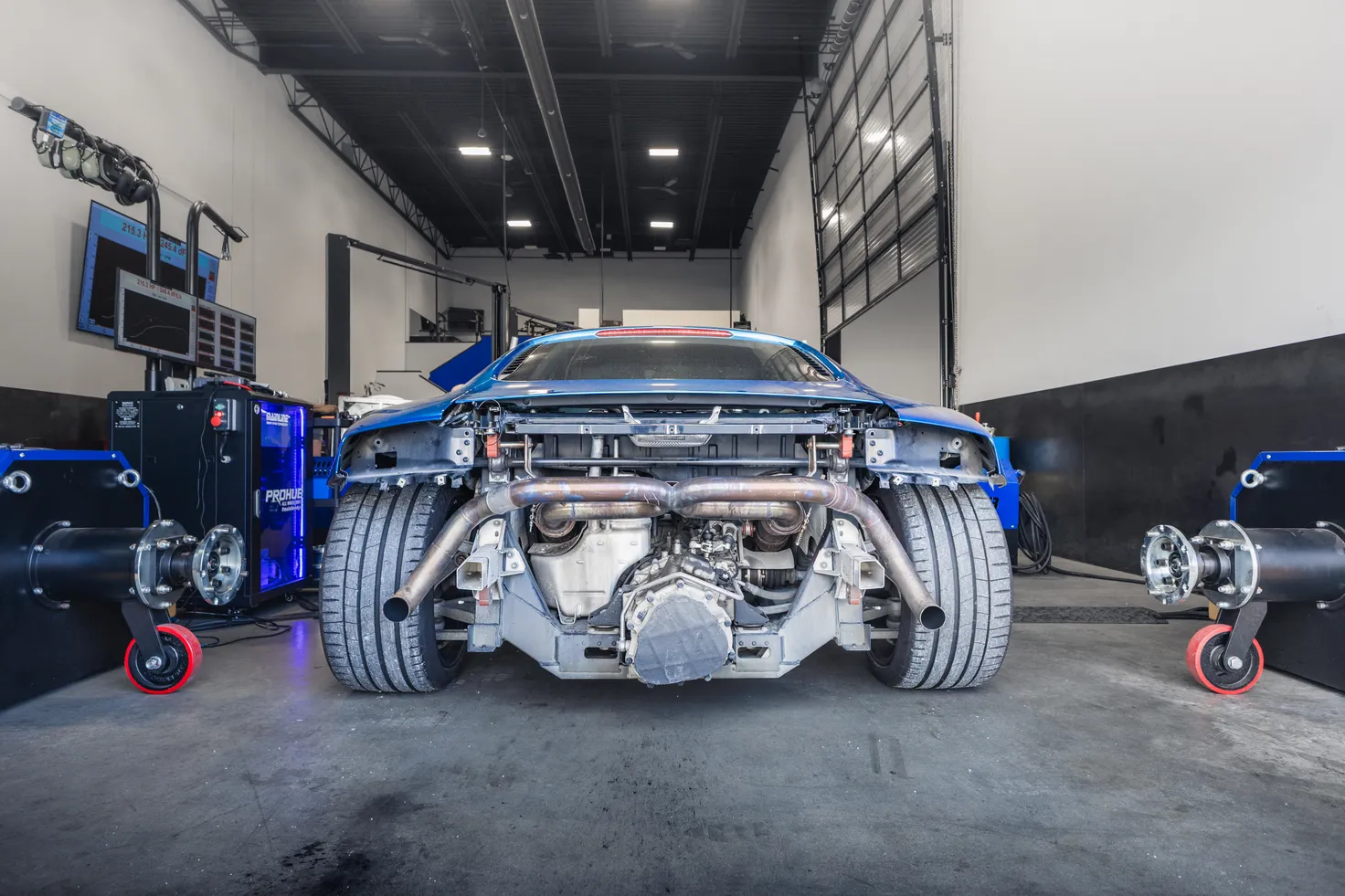
Auto repair lead generation is the process of attracting drivers who need vehicle work and guiding them toward booking a service with your shop. Every lead starts as a signal—a Google search, phone call, or form submission—and your job is to capture that signal before a competitor does.
Why online visibility decides who wins the call
WordStream by LocaliQ's 2026 Google Ads Benchmarks show that automotive repair, service, and parts advertisers achieve a median cost per lead of $29.96 on search campaigns, paired with a 15.51% conversion rate—nearly double the all-industry average. A shop without a strong local search presence, accurate business listings, and a fast-loading mobile website is invisible to drivers searching now.
Drivers start their search online, and 97% of consumers read reviews before choosing a local business, according to BrightLocal's 2026 Local Consumer Review Survey. A shop with five recent, detailed reviews will attract customers away from a competitor with better pricing but a thin or outdated review profile.
Where most shops lose leads they already have
Most independent shops handle incoming interest through voicemail, text threads, and mental notes. When inquiries overlap, responses slow down, follow-ups get missed, and leads book elsewhere. The failure point is not the marketing—it's the infrastructure behind it. Support Lane helps shops centralize customer inquiries and automate responses so no lead falls through the cracks.
How does the right platform turn Auto Repair Lead Generation into confirmed bookings?
Shop management software like Support Lane connects online booking, customer communication, and scheduling into one platform. When a driver books through Google search, the appointment flows directly into your workflow without manual entry. This streamlined process converts curious drivers into confirmed repair jobs.
Lead generation, done well, replaces the uncertainty of waiting for phone calls with a system that fills bays consistently.
Why Do Independent Auto Repair Shops Struggle to Generate Leads?
The struggle is rarely about work quality. A shop can have skilled technicians, fair pricing, and loyal returning customers yet still watch its schedule thin out week after week. The real problem is structural: most independent shops lack a reliable system for reaching drivers who don't already know them.
"Most independent shops lack a reliable system for reaching new drivers — and without that system, even the best work quality can't fill an empty schedule." — Core Industry Insight
Skilled Technicians → What Shops Are Missing: A lead generation system.
Fair Pricing → What Shops Are Missing: Visibility to new drivers.
Loyal Returning Customers → What Shops Are Missing: Outreach beyond word-of-mouth.
Key Point: A full-service shop with zero marketing infrastructure is essentially invisible to the majority of local drivers who need repairs right now.
Warning: Relying solely on returning customers is a structural risk — natural churn means your schedule will inevitably thin out without a steady pipeline of new leads.
The visibility gap that costs you before anyone calls
According to BrightLocal's 2026 Local Consumer Review Survey, 99% of consumers use the internet to find local businesses, including auto repair shops. If a driver can't find you on Google within ten seconds, you don't exist to them. Incomplete business profiles, missing service pages, and sparse reviews send high-intent customers directly to competitors who rank above you.
Why chains win searches that independents should own
Big national chains spend money on advertising and maintain dedicated marketing teams. Independent shops lack both the budget and staff to manage listings, respond to reviews, or update service content. When customers search "oil change near me," chains appear while independent shops don't, creating a cycle that steadily reduces foot traffic.
Why does inconsistency hurt auto repair lead generation more than budget does?
Most shops respond by doing more of what isn't working: a one-time ad, a Facebook boost, a flyer. When nothing sticks, they conclude marketing doesn't work. They're experiencing the cost of inconsistency—marketing without a system produces random results. CBT News reports that car owners increasingly choose independent service centers over dealerships to avoid high prices. The demand exists. The shops that capture it have infrastructure ready to receive it.
What infrastructure gap causes independent shops to lose leads at the moment of contact?
That infrastructure gap is the real problem. Many shops handle inquiries through phone calls, texts to a personal number, and outdated websites. When a driver submits a form at 9 pm or calls during a bay rush and reaches voicemail, the lead is lost. Shop management software like Support Lane connects online booking, scheduling, and customer communication in one platform, preventing inquiries from falling through cracks between disconnected tools.
When leads arrive but the shop can't catch them
The failure point is usually conversion, not traffic. A shop might rank well enough to get clicks, but if the website offers no clear path to booking, response time stretches past an hour, or the front desk is too swamped to follow up, the driver moves on. Every unconverted inquiry represents a bay that stayed empty not because demand was low, but because the shop's operational setup couldn't absorb it fast enough.
But solving the conversion problem only gets you so far.
Related Reading
Mechanic Shop Inventory List
Tech Efficiency
Automotive Technician Shortage
Auto Body Shop Marketing
Automotive Customer Retention Strategies
Auto Repair Advertising Slogans
How To Increase Business At Auto Body Shop
Auto Repair Shop Google My Business Categories
Most Profitable Auto Repair Services
What Makes a High-Quality Lead for an Auto Repair Shop?

Not every phone call or form submission deserves the same urgency. A high-quality lead for an auto repair shop has three things: a specific problem, a real timeline, and a readiness to schedule. A driver calling about a grinding noise who asks, "Can you fit me in today?" is a fundamentally different prospect than someone asking, "How much does a brake job usually run?" The first one needs a bay. The second one needs Google.
"A high-quality lead has three non-negotiable traits: a specific problem, a real timeline, and a readiness to schedule — everything else is just noise."
“Can you fit me in today?” — grinding noise → What They Need: A bay and a technician → Lead Quality: High-Quality.
“How much does a brake job usually run?” → What They Need: Google or a price page → Lead Quality: Low-Quality.
Specific Problem + Urgent Timeline → What They Need: Immediate scheduling → Lead Quality: High-Quality.
Vague Pricing Curiosity, No Timeline → What They Need: More research first → Lead Quality: Low-Quality.
Tip: Train your front desk staff to listen for all three signals — specific problem, real timeline, and scheduling intent — within the first 60 seconds of every call. If all three are present, that lead jumps to the top of the queue.
Warning: Treating every inbound inquiry with equal urgency is one of the most common mistakes auto repair shops make. Spending valuable time nurturing a low-intent price shopper means a high-quality lead—someone ready to book right now—may go to your competitor instead.
What separates a real lead from a research session
The clearest signal is specificity. High-intent leads describe a concrete vehicle issue, name the make and model, and frame the conversation around next steps rather than price comparisons. Vague inquiries come from drivers still deciding whether to fix the problem at all. Chasing those contacts costs a service advisor real time: every low-intent call handled is a ready customer who waited too long and moved on.
How does urgency filter auto repair lead generation results?
Urgency is the other filter most shops underweight. Invoca's 2026 Automotive Lead Conversion Benchmarks Report found that 53 percent of calls driven by digital marketing qualify as leads, and 45 percent of those leads convert on the call itself. Yet 64 percent of automotive businesses never ask the caller to book an appointment. Shops that screen for booking intent protect their advisors' time and fill bays with work that starts.
A lead with urgency is a lead with momentum. Without it, the shop pursues a prospect with no deadline and no reason to commit.
What happens to lead value when response time stretches?
Most shops handle lead intake through phone calls, voicemails, and contact forms that route to inboxes nobody checks before noon. When the shop gets busy, those signals pile up, response time stretches, and the urgency that made the lead valuable disappears. Shop management software like Support Lane addresses this by connecting online booking, customer communication, and scheduling into one place, so a high-intent driver who finds the shop at 8 a.m. can confirm an appointment before the advisor picks up the phone.
Why service fit matters as much as intent
A lead that matches what the shop can do converts faster and creates higher repair order value. A transmission specialist answering calls from people seeking oil-change prices generates noise, not real leads. Local search visibility filters naturally: a driver searching for a specific service in a specific area arrives pre-qualified by location and need.
How do reviews shape Auto Repair Lead Generation quality?
According to BrightLocal's 2026 Local Consumer Review Survey, 77% of consumers always or regularly read reviews when searching for local businesses (up from 60% in 2020). They read what other customers said, decided the shop could handle their problem, and reached out. That is a warm lead, not a cold one, and it closes differently.
What happens when a shop isn't built to receive good leads?
The harder truth is what happens to good leads inside a shop not built to receive them.
Related Reading
Automotive Text Message Marketing
Ai Marketing For Auto Repair
Auto Repair Shop Tax Deductions
Auto Repair Shop Payment Processing
Key Metrics For Auto Repair Shop Performance
How To Streamline Auto Repair Shop Operations?
How To Recruit Automotive Technicians
What Percentage Of Labor Rate Should a Technician Get
Auto Repair Shop Workflow Automation
10 Auto Repair Lead Generation Ideas to Attract More Customers

The right lead generation strategies help you reach drivers who need your services, build trust, and turn inquiries into booked appointments. Here are 10 practical ideas to attract more customers to your shop.
"The right lead generation strategies don't just bring in traffic — they bring in the right customers who are ready to book."
Tip: Not all lead generation tactics are created equal — focus on strategies that build trust first and then convert, for longer-lasting customer relationships.
Key Point: Implementing even 3–4 of these 10 ideas can significantly increase your shop's booked appointments and customer retention rate.
Digital Marketing → Primary Goal: Online visibility → Best For: Reaching new drivers.
Reputation Building → Primary Goal: Trust & credibility → Best For: Converting inquiries.
Local Outreach → Primary Goal: Community presence → Best For: Repeat customers.
Referral Programs → Primary Goal: Word-of-mouth growth → Best For: Low-cost lead generation.
1. Fully Claim and Complete Your Google Business Profile
Drivers searching on their phones check map results first. A complete profile with correct hours, services, current photos, and categories ensures the shop appears in those searches. Incomplete listings disappear from view and send calls to competitors. Keep photos current, list every main service, and reply to every review to stay active and trusted.
2. Turn Review Requests into a Daily Habit
Ask customers for a review right after service while the experience is fresh. A simple text or card with a direct link to the Google review page helps build more reviews and higher ratings. Shops with steady, recent reviews rank higher in search results and convert more profile views into calls because drivers see ratings as proof of quality.
3. Publish Dedicated Pages for the Repairs You Want Most
Create dedicated pages for high-margin services like brakes, diagnostics, or air conditioning instead of relying on a generic services list. Each page should describe symptoms, the repair process, and your shop's services. These pages capture drivers who already know the problem and are ready to book.
4. Run Targeted Local Services Ads or Search Ads on High-Intent Jobs
Pay only for searches showing someone needs help now—brake failure, check-engine light, or no-start problems. Local Services Ads place your shop at the top of search results for these keywords and charge you only when someone contacts you. Focus campaigns on jobs that generate revenue for your shop and avoid broad keywords that attract price-conscious customers.
5. Make Online Booking Simple and Visible
Drivers in a hurry book shops that let them choose a time without calling. Offer online scheduling that shows real availability and confirms appointments immediately. Our Support Lane shop management software handles calendar views, online requests, automatic reminders, and staff approval of pending bookings, removing friction and converting more website visitors into confirmed jobs.
6. Send Timely Service Reminders to Past Customers
Most repair work is predictable once a vehicle leaves the shop. Track the next oil change, tire rotation, or deferred repair and contact the owner by text or email at the appropriate time. These reminders convert delayed maintenance into booked appointments at minimal cost and keep your schedule full with reliable customers.
7. Build Local Referral Partnerships
Towing companies, body shops, tire stores, and fleet managers send drivers to you every day. Introduce your shop, explain what services you offer and how long repairs take, and make it easy for them to send customers your way. Referrals from people they know come with built-in trust and close more sales than customers who find you through a search engine.
8. Answer Every Call Quickly and Follow Up Without Delay
Drivers who want to fix their car call right away while the problem is on their mind. They hang up if no one answers. You need staff to answer the phone during open hours, call back missed callers the same day, and offer specific appointment times during initial contact. Speed converts interested callers into confirmed jobs and prevents them from visiting competing repair shops.
9. Keep the Conversation Going with Simple Messaging
After the first visit, stay in touch through text or email with helpful updates, thank-you notes, or seasonal check-ins. Regular contact keeps the shop top of mind for repeat visits and reduces bay-filling costs over time.
10. Track Every Lead Source and Double Down on What Works
Track how each new customer finds your shop: Google, referral, ad, reminder, or walk-in. Review the data monthly and prioritize channels that deliver booked jobs at the lowest cost. Shops that track this data eliminate guesswork and improve their lead mix over time.
Common Auto Repair Lead Generation Mistakes to Avoid
Even when drivers show interest in your shop, mistakes in marketing, communication, and booking can stop them from becoming paying customers. Understanding these common lead generation mistakes helps you avoid wasted marketing expenses and grow your customer base.
"Even the most interested prospects can be lost to poor follow-up, unclear messaging, or friction in the booking process — mistakes that cost shops real revenue every single day."
Warning: Failing to identify and fix lead-generation mistakes early means you're paying for traffic and interest that never convert into booked appointments.
Tip: Audit your marketing, communication, and booking process as a complete funnel — a breakdown at any stage means lost customers and wasted spend.
Poor Marketing Targeting → Impact: Attracts unqualified leads → Priority to Fix: High.
Slow or No Follow-Up → Impact: Loses interested prospects → Priority to Fix: High.
Friction in Booking → Impact: Stops conversions at the final step → Priority to Fix: High.
Key Point: Understanding and avoiding these common pitfalls is the fastest path to growing your customer base without increasing your marketing budget.
Leaving the Google Business Profile Incomplete
Drivers seeking help check map results first. A profile missing hours, outdated photos, or incomplete services disappears from view and redirects calls to competitors. Claim your profile, complete every section, keep photos current, and respond to all reviews to stay visible in search results.
Skipping a Steady Review Request Process
A shop with few recent reviews looks untested. Drivers compare ratings before they call, and the absence of fresh feedback costs trust and ranking. Ask every satisfied customer for a review the same day they pick up the vehicle—a short text with a direct link converts finished jobs into the social proof that brings the next ones.
Relying Only on Word-of-Mouth
Referrals arrive too slowly and unpredictably to keep bays full. Drivers research online even after a friend's recommendation. Treat referrals as one channel among others, not your sole strategy. Build visibility and systems that work independently of word-of-mouth.
Making Booking Harder Than It Needs to Be
Drivers ready to buy need to know what to do next. A website that doesn't enable scheduling, an unanswered phone, or a contact form requesting callbacks will lose the sale. Provide customers with real online booking that displays available times, confirms appointments, and sends reminders. Support Lane includes calendar views, online booking from a service library, staff approval of pending requests, and automatic 24-hour reminders so customers secure times while the need is urgent.
Ignoring Lead Tracking
Without knowing which ads, searches, or referrals produce booked jobs, the shop keeps spending on underperforming channels. Record where every new customer comes from and review it monthly. Focus time and budget on the paths that fill the schedule and cut those that only attract unqualified leads.
Letting Calls and Follow-Ups Slip
Missed calls and delayed replies send ready drivers to the next listing. Answer during open hours, return every missed call the same day, and follow up after the first visit with a check-in or service reminder. Consistent contact converts one-time customers into repeat ones.
How Support Lane Helps Independent Auto Repair Shops Generate and Manage More Leads
A driver who finds your shop through a search, reads your reviews, and clicks to book an appointment has already made up their mind. What happens in the next 60 seconds determines whether that decision holds.
Tip: That 60-second window is your most critical conversion moment — every friction point in your response process costs you a lead.
"Consumers who search for a local business on a mobile device call or visit within 24 hours — making immediate response not just helpful, but essential to capturing already-interested leads."
Consumers who search for a local business on a mobile device call or visit within 24 hours. A phone that rings to voicemail, a contact form with no confirmation, or an unanswered booking request loses leads that were already interested—leads your competitors will be happy to absorb.
Warning: The three fastest ways to kill a warm lead are an unanswered call, a silent contact form, and a booking request with zero follow-up.
Phone Rings to Voicemail → Lead Outcome: Caller moves on to the next shop.
Contact Form With No Confirmation → Lead Outcome: Customer assumes it didn't send — and leaves.
Booking Request Left Unanswered → Lead Outcome: Warm lead goes cold within minutes.
Key Point: Support Lane closes these gaps by ensuring every inbound lead — call, form, or booking — gets an immediate, professional response before interest fades.
Where the conversion actually breaks down
The failure point is rarely the marketing. It's the gap between a customer showing interest and a shop responding clearly. Most independent shops handle this through a mix of tools: a phone call noted on a sticky note, an appointment written in a paper calendar, a follow-up reminder that depends on someone remembering to send it. When inquiries increase, this system breaks down, and the shop loses the leads it worked hardest to attract.
How does auto repair lead generation fall apart without the right system?
Most shops manage this with familiar tools: a personal cell phone for customer texts, a whiteboard for job status, a spreadsheet for invoices. The cost is real. Conversations get buried, jobs lose their place in the queue, and customers who never receive callbacks book elsewhere. Shop management software like Support Lane replaces that scattered approach with a single platform that connects online booking, job tracking, customer records, and messaging. A driver requests an appointment; it lands on a live calendar, a confirmation goes out automatically, and the job moves through a visible pipeline from request to completed repair.
Why does auto repair lead generation depend on speed and structure?
When a driver books online and gets immediate confirmation, a psychological agreement forms. Shops that respond to inquiries within minutes convert at measurably higher rates than those responding within hours, not because the service is better, but because the experience signals competence before the car arrives. That first impression carries real weight in a category where trust is everything and switching costs are low.
Where do the real economics of auto repair lead generation live?
The same logic applies to repeat business, where the real economics of lead generation live. Getting a new customer costs significantly more than keeping one, yet most shops invest almost nothing in follow-up systems that convert first visits into repeat business. A customer record with full vehicle history, mileage logs, and attached notes means a returning car's conversation picks up where it left off rather than starting from scratch. That continuity distinguishes shops that grow through referrals and repeat visits from those permanently dependent on new advertising.
The tools that capture and convert leads are not separate problems. Shops treating them as one connected system stop feeling like they're always starting over.
Sign up for Your Free Trial to Manage Your Auto Shop with Ease Today
Building a connected system for lead generation is ongoing—making sure every part of your operation, from how drivers find you online to how your team responds and follows up, works together without gaps. Shop management software like Support Lane brings together your customer-facing website, online booking, appointment calendar, customer communication, and job tracking into one unified platform, so nothing falls through the cracks between tools.
"A fragmented workflow is a lead generation killer—when your tools don't talk to each other, customers fall through the gaps before they ever book an appointment." — Shop Operations Insight
Tip: The most successful auto shops don't just generate leads—they build connected systems that capture, nurture, and convert every opportunity automatically.
Online Booking → Without Support Lane: Scattered or manual → With Support Lane: Seamlessly integrated.
Customer Communication → Without Support Lane: Missed messages, delays → With Support Lane: Centralized & instant.
Appointment Calendar → Without Support Lane: Double-bookings, gaps → With Support Lane: Fully synced.
Job Tracking → Without Support Lane: Spreadsheets or guesswork → With Support Lane: Real-time visibility.
Lead Follow-Up → Without Support Lane: Inconsistent or forgotten → With Support Lane: Automated & reliable.
If your shop is ready to stop losing leads, a free trial with Support Lane is a practical next step toward transforming your workflow. Visit Support Lane to explore the platform and see how it fits into your shop's day-to-day operations.
Key Point: A free trial costs nothing, but continuing without a connected system could cost you valuable leads every day.
Best Practice: Use your free trial to test online booking, customer communication, and job tracking together—that's where the real time savings and lead retention gains become visible.
Related Reading
Auto Repair Promotion Ideas
Best Diagnosis Machine For All Cars
Automotive Customer Loyalty Programs
Invoice Software For Mechanic Shop
Mechanic Work Order App
Appointment Booking Software For Auto Repair
Spare Parts Inventory Management Best Practices
Seo For Auto Repair Shops
Mechanic Book Hours
Ready to modernize your shop?
Join the independent auto repair shops already using Support Lane to manage their jobs, customers, and invoices in one place.