Technician Productivity: 11 Tips to Improve Shop Performance

Technician time is one of the most valuable and most wasted resources in any automotive repair shop. Disorganized workflows, unclear job assignments, and constant back-and-forth with the front desk pull skilled workers away from the work that actually generates revenue. Automotive repair apps have reshaped how shops handle these daily friction points, giving teams clearer task visibility and faster turnaround without adding headcount.
The difference between a shop that grows and one that stalls often comes down to how well the workflow supports the people doing the work. When technicians know exactly what to do next, and managers can track job progress in real time, the entire operation runs more efficiently and profitably. Shops looking to build that kind of structure can start with shop management software.
Table of Contents
What Is Technician Productivity in an Auto Repair Shop, and How Is It Measured?
Why Is Technician Productivity Important for Shop Profitability?
What Factors Reduce Technician Productivity?
11 Tips to Improve Technician Productivity for Better Shop Performance
Benefits of Improving Technician Productivity
How Support Lane Helps Improve Technician Productivity
Sign up for Your Free Trial to Manage your Auto Shop with Ease Today
Summary
Technician productivity measures how much of a paid shift converts into billable repair work, and the gap between those two numbers is where most shops quietly lose money. The formula is straightforward: billed hours divided by available hours, multiplied by 100. A technician who clocks in for eight hours and bills 6.4 of those hours runs at 80% productivity, and that 1.6-hour daily gap across a four-person team adds up to more than 25 lost billable hours every week.
The financial stakes behind this metric are higher than most shop owners realize. BLS data show that median annual wages for automotive service technicians reach $49,670, meaning that underutilization due to training gaps turns high-cost talent into expensive idle time rather than productive output.
The bottleneck is rarely the technician. It is the system around them. According to L'Automobile, one empty or underproductive bay costs shops approximately $1,500 to $2,000 in lost gross profit per day, a figure that escalates rapidly when multiple positions underperform and compound over time.
Administrative overhead compounds the problem further. A PartsTech industry report identifies technician shortage and training needs for complex vehicles as top challenges, with 46% of shop owners and managers noting moderate to high operational impact from these interconnected issues.
Scheduling quality has an outsized effect on daily output. When job dispatching relies on whiteboards, verbal handoffs, or informal systems, technicians end up either overloaded or idle, and neither state produces revenue. FieldServicely reports that shops using optimized scheduling see up to a 30% increase in jobs completed per day. The underlying driver is simple: when technicians always know what is next and what is waiting, they stay in motion rather than pause to figure it out.
Training gaps create a less visible but equally costly drag on efficiency. Modern vehicles carry more software than many consumer laptops, and diagnostic work on advanced driver assistance systems or hybrid drivetrains requires current knowledge. When technicians encounter unfamiliar systems without adequate preparation, jobs slow down not from carelessness but from caution. That pattern of slower jobs accumulates across weeks and erodes labor revenue in ways that rarely appear clearly on any single report.
Shop management software addresses this by consolidating scheduling, job tracking, parts status, vehicle history, and customer communication into a single platform, so technicians spend less time chasing down information and more time on the repair work that actually generates revenue.
What Is Technician Productivity in an Auto Repair Shop, and How Is It Measured?

Technician productivity measures how much of a technician's paid shift converts into billable repair work—whether clocked hours generate revenue, not whether bays look busy.
Key Concept: Technician productivity is a precise measure of how effectively paid time converts into billable output.
"Productivity isn't about whether the shop looks busy—it's about whether clocked hours are generating real revenue."
According to CSI Accounting and Payroll, productivity is calculated as billed hours divided by available hours, multiplied by 100. A technician clocked in for 8 hours and billed 6.4 of those hours, running at 80% productivity. That 1.6-hour daily gap across a team of four technicians adds up to over 25 lost billable hours weekly.
The Math: An 8-hour shift with 6.4 billable hours results in an 80% productivity rate.
The Leak: Each technician loses 1.6 hours of potential revenue daily.
The Impact: Across a team of four, this equals a loss of 25+ billable hours every week.
Warning: A 1.6-hour daily gap may seem small per technician, but multiplied across a team, it becomes a significant weekly revenue leak that compounds over time.
Takeaway: Use the formula — Billed Hours ÷ Available Hours × 100 — to get your real productivity number, not just a gut feeling.
What separates productive shops from busy ones
The failure point is usually not the technician but the system around them. When a technician spends 40 minutes hunting down a repair order, waiting on parts confirmation, or walking to the front desk to clarify a customer note, that time disappears from the productivity column. Multiply that friction across six jobs a day, and the shop loses real revenue to invisible drag.
How does technician productivity get lost in day-to-day shop operations?
Most shops track this informally using paper logs or disconnected spreadsheets compiled at week's end, too late to act on patterns. Shop management software like Support Lane addresses this by giving technicians a live view of assigned jobs, reducing back-and-forth between bay and front desk, and keeping job status visible in real time so dispatchers can reassign work the moment a bay opens up.
How efficiency and proficiency round out the picture
Productivity alone does not tell the whole story. Efficiency measures how quickly a technician completes a job relative to the flat-rate standard, calculated by dividing billed hours by actual hours worked. Top technicians reach 120% efficiency or more, meaning they consistently finish jobs faster than book time allows, directly increasing shop earnings per labor hour without adding vehicles to the schedule. Proficiency combines both dimensions, comparing total billed hours to total available hours, and gives owners the clearest single metric for overall technician output.
Once you understand what these numbers mean and how they connect, the next question hits harder than most shop owners expect.
Related Reading
Why Is Technician Productivity Important for Shop Profitability?

Technician productivity directly drives shop profitability. According to L'Automobile, one empty or underproductive bay costs shops around $1,500 to $2,000 in lost gross profit per day—a figure that multiplies when multiple positions underperform.
"One empty or underproductive bay costs shops around $1,500 to $2,000 in lost gross profit per day—a number that grows quickly when multiple positions don't perform well." — L'Automobile
Takeaway: A single underperforming bay represents a $1,500–$2,000 daily drain on your bottom line. Across multiple bays, the financial impact becomes significant.
Warning: Many shop owners prioritize customer acquisition while overlooking internal productivity losses. Even one consistently underutilized bay erases thousands of dollars in weekly gross profit.
The revenue you have already earned but never collected
A technician works eight hours and leaves tired, but the shop bills only six. Those two missing hours disappear while waiting for parts confirmations, deciphering handwritten repair orders, or locating the next job assignment. That gap between hours worked and hours billed is where profit quietly disappears, compounding across every technician, every day, every month.
How does technician productivity suffer when shops rely on informal systems?
Most shops manage this through whiteboards, paper job cards, and verbal check-ins. But as vehicle volume grows and job complexity increases, this informal approach creates friction. Technicians pause their work to ask questions that should already have been answered. Service advisors interrupt one another to manually track job status. Our shop management software uses visual job boards and pre-configured service templates to eliminate that friction, keeping technicians focused on billable work without stopping to chase information.
When efficiency stalls, overhead wins
The U.S. Bureau of Labor Statistics reports a median annual wage of around $49,670 for automotive service technicians, so replacement costs and downtime create significant burdens when productivity issues drive good people away. Shops with high technician efficiency see up to 20% more revenue per bay. Most owners consider adding bays or hiring more technicians when revenue plateaus, but if existing bays run below capacity, adding space only scales the inefficiency. The smarter approach is to extract the full output from existing assets, since fixed costs such as rent, insurance, and equipment financing remain constant even when billable hours drop.
Why does technician productivity determine how much overhead costs you?
Overhead stays the same while productive output changes. When technicians work at high efficiency, those fixed costs are spread across more billed hours, improving profit on every repair order. When efficiency drops, the same overhead presses harder against a smaller revenue base, and profit shrinks. This is why two shops with identical car counts and identical labor rates can report dramatically different net income.
Productivity shapes more than the income statement
How much work a technician can do determines scheduling capacity, customer wait times, and whether the shop can take on more work without hiring additional staff. A shop where technicians spend most of their time on billable tasks can absorb sudden increases in workload without incurring overtime pay. Conversely, a shop with insufficient billable hours has no buffer: delayed parts, complicated diagnostics, or unexpected absences immediately affect both the schedule and revenue. Workforce performance, workflow efficiency, and financial health are interconnected.
Most shops already have enough work to generate significantly more revenue. The bottleneck is rarely the volume of incoming cars.
What Factors Reduce Technician Productivity?
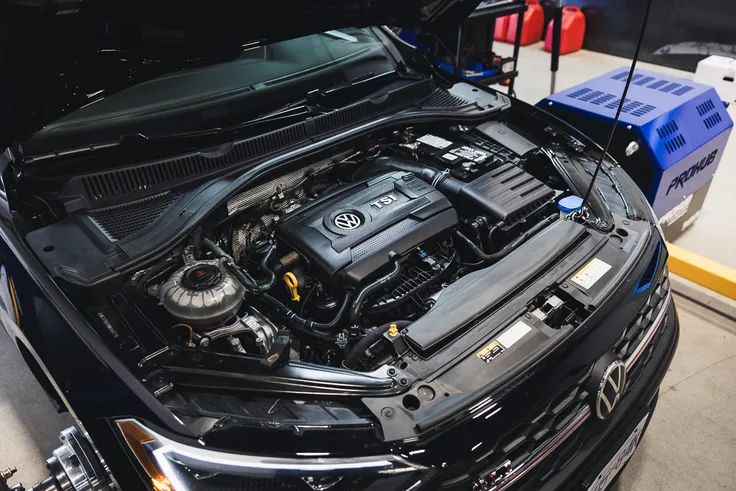
Technician productivity rarely falls apart because of bad technicians. It falls apart because the systems around them don't work well. Parts arrive late, job assignments are unclear, and the daily rhythm of the shop gets interrupted so often that skilled workers spend more time waiting than working.
"Technician productivity isn't a people problem — it's a systems problem. When workflows break down, even your best technicians are left idle."
Late parts: Poor planning forces technicians to sit idle.
Unclear assignments: Weak dispatch causes confusion and wasted time.
Disruptions: Unstructured scheduling leaves skilled labor underutilized.
Warning: If your technicians are consistently waiting on parts or clarity, the problem is never the technician — it's the workflow infrastructure failing them.
Takeaway: The biggest drain on technician productivity is preventable — fixing your systems, scheduling, and parts management unlocks the output your team is already capable of delivering.
How do interruptions and invisible downtime drain technician productivity?
The failure point is usually invisible. When a technician stops mid-repair to chase down a part, ask a service advisor for clarification, or wait while a bay gets cleared, that time doesn't show up on anyone's report. According to the Archie Blog's Employee Productivity Statistics, employees spend an average of 2.5 hours per day dealing with unnecessary meetings and interruptions. In a shop environment, those interruptions take a different shape, but the impact is equally severe. Two and a half hours of lost focus across a four-tech team equals ten hours of billable time disappearing before lunch.
Why does poor scheduling quietly hemorrhage shop efficiency?
Scheduling is where most shops quietly lose efficiency. When job dispatching depends on a whiteboard, gut feeling, or whoever shouts the loudest from the service counter, technicians end up either overloaded or idle. Without real-time visibility into job status, repair complexity, and technician capacity, the person assigning work is essentially guessing. Those guesses accumulate across the day into a workflow that looks busy but produces far less than it should.
How does fragmented job tracking stall technician productivity across the shop?
Most shops track jobs using paper repair orders, conversation, and memory. As the fleet grows, this informal system breaks down: jobs stall between the front counter and the bay, technicians duplicate work, and visibility disappears. Shop management software like Support Lane replaces this fragmented approach with a unified job board where every repair order, status update, and scheduling decision lives in one place, so technicians always know what comes next, and service advisors no longer become the bottleneck.
What role do training gaps play in eroding technician productivity over time?
Training gaps compound the problem in ways that are easy to overlook. Modern vehicles have more software than a mid-range laptop, and diagnostic work on advanced driver assistance systems or hybrid drivetrains requires current knowledge. When technicians encounter unfamiliar systems without adequate training, they troubleshoot slowly and methodically. The cost isn't a single slow job but the pattern of slow jobs accumulating over weeks, quietly eroding the shop's labor revenue.
Research from the Archie Blog's Employee Productivity Statistics shows disengaged employees cost the global economy $8.8 trillion in lost productivity, equivalent to 9% of global GDP. Disengagement in a shop rarely looks like apathy. It looks like a technician who stopped asking for training because nobody provided it.
What is the root cause connecting all technician productivity failures?
The pattern across all these factors is consistent. Parts delays, poor dispatching, inadequate training, and fragmented communication are not separate problems: they are different expressions of the same root cause—a shop running without the infrastructure to keep skilled people working at full capacity. Fix the infrastructure, and technician output follows.
But knowing what slows technicians down is only half the equation; the more interesting half lies ahead.
Related Reading
11 Tips to Improve Technician Productivity for Better Shop Performance
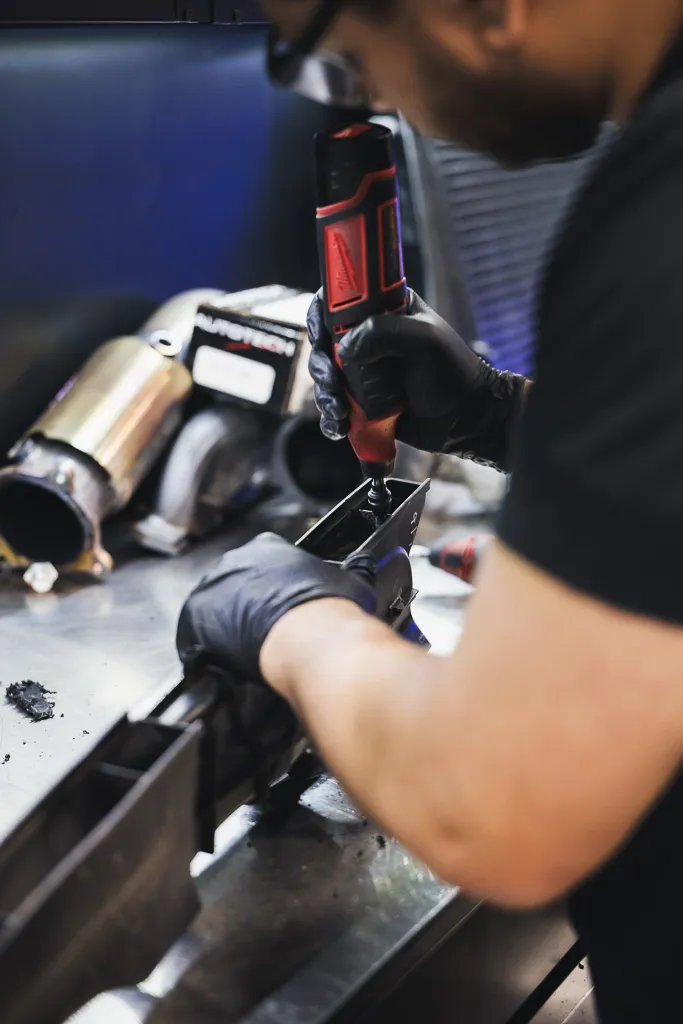
Making technicians more productive doesn't mean they need to work longer hours or work faster. The best way to improve productivity is by removing things that get in the way of repair work, making the shop run more smoothly, and giving technicians the tools and information they need to stay productive.
"The most effective path to technician productivity isn't about pushing harder — it's about eliminating friction so skilled technicians can focus on what they do best: fixing vehicles." — Shop Management Best Practices
Tip: Before adding new processes or expectations, first audit what's slowing technicians down — wasted time searching for parts, unclear work orders, or poor shop layout are often the biggest culprits.
Key Point: Productivity gains come from smarter systems, not harder workers. Shops that invest in streamlined workflows, better tooling, and clear communication consistently outperform those that simply demand more output.
Missing parts: Idle techs and blocked bays; solve with proactive ordering.
Vague work orders: Rework and confusion; solve with digital job cards.
Poor tool access: Wasted search time; solve with organized inventory.
Lack of info: Delayed diagnostics; solve with on-demand repair data.
Warning: Shops that focus only on billable hours without addressing workflow inefficiencies often see technician burnout and increased turnover — two factors that devastate long-term shop performance.
1. Optimize Parts Inventory and Availability
Keep a well-stocked inventory with accurate forecasting to reduce repair delays. Set up ordering systems that alert you when stock of common items runs low, and build strong supplier relationships for faster delivery. Technicians lose billable hours searching for parts or stopping jobs, so managing inventory proactively keeps work flowing and increases daily output.
2. Implement Efficient Scheduling Practices
Create balanced daily schedules that match technician skills to appropriate jobs with buffers for unexpected issues. Use clear dispatch processes that provide complete repair details upfront, reducing back-and-forth questions. Proper scheduling prevents overloads and idle periods, enabling seamless task transitions for higher throughput.
3. Invest in Ongoing Training and Skill Development
Offer regular training on new vehicle technologies, diagnostic tools, and repair procedures. Cross-train technicians across specialties to increase flexibility during busy periods. Skilled technicians complete jobs faster with fewer errors, boosting efficiency and confidence.
4. Improve Communication Across the Shop
Create open communication channels for service advisors, technicians, and parts staff through daily meetings or digital updates. Ensure repair orders contain complete details and encourage rapid feedback to expedite approvals. Strong communication prevents misunderstandings that cause delays.
5. Organize Workspaces for Maximum Efficiency
Design bay layouts with frequently used tools within easy reach and establish standardized cleaning routines. Position equipment strategically to minimize unnecessary movement and reduce clutter. An organized workspace cuts wasted motion and frustration, allowing technicians to focus on value-adding repair work rather than searching for tools.
6. Introduce Performance Tracking and Feedback Systems
Track key metrics such as billed hours, efficiency rates, and job completion times using reliable shop data. Provide regular feedback sessions that highlight technicians' strengths and areas for improvement. Regular check-ins with supportive coaching help technicians understand their performance, maintain accountability, and improve their skills.
7. Create Incentive Programs Tied to Productivity Goals
Create fair reward systems such as bonuses for reaching efficiency goals or team competitions for monthly output. Publicly recognize top performers while linking incentives to shop-wide success. This aligns individual efforts with overall profitability and motivates technicians to improve performance.
8. Reduce Non-Billable Tasks and Interruptions
Give administrative duties, vehicle shuttling, and cleaning tasks to support staff so technicians can focus on repairs. Reduce unnecessary meetings during core work hours. Protecting technician time from low-value activities increases daily billable output.
9. Leverage Technology and Diagnostic Tools
Give your team modern scan tools, digital inspection software, and workflow apps that speed up diagnostics and documentation. Provide training to ensure smooth adoption. Advanced tools reduce diagnostic time and guesswork, enabling technicians to resolve issues faster while maintaining high-quality standards.
10. Promote a Positive and Supportive Work Culture
Create a shop environment that prioritizes teamwork, work-life balance, and recognition of hard work. Prevent burnout by offering reasonable schedules and maintaining open communication about challenges. A supportive culture increases employee satisfaction, reduces turnover, and motivates technicians to perform at their best.
11. Adopt Comprehensive Shop Management Software
Use a platform like Support Lane to streamline your entire operation. It combines tenant and location management, job management with Kanban board views, customizable pipelines, and drag-and-drop stage tracking. Features such as online booking, calendar integration, VIN decode for vehicles, service templates, invoicing, payments, and Support Lane Chat eliminate manual tracking and communication gaps. This reduces administrative burden, provides real-time workflow visibility, and keeps technicians focused on repairs while the system handles scheduling, reminders, and documentation.
Benefits of Improving Technician Productivity
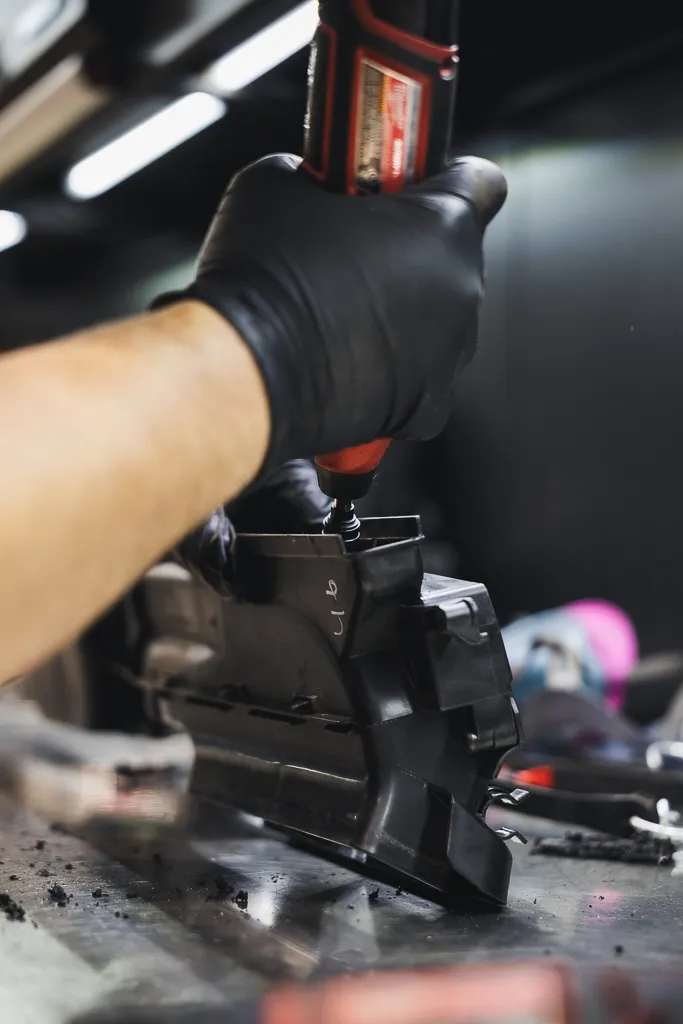
When technicians work more productively, it creates a powerful chain reaction: more work gets billed, vehicles are fixed faster, there are fewer workflow problems, and the repair business becomes more profitable, efficient, and able to grow.
"When technicians work more productively, it creates a chain reaction: more work gets billed, vehicles are fixed faster, there are fewer workflow problems, and the repair business becomes more profitable, efficient, and able to grow."
More billable work: Drives higher revenue per shift.
Faster turnaround: Boosts customer satisfaction.
Fewer bottlenecks: Ensures smoother daily operations.
Greater profitability: Fuels sustainable business growth.
Key Point: Technician productivity isn't just an operational metric — it's the single biggest lever for driving shop-wide profitability and growth.
Tip: Focus on eliminating workflow bottlenecks first — even small improvements in technician efficiency can trigger a compounding effect across billing, turnaround time, and overall business performance.
Increased Revenue and Labor Sales
Better productivity means you can bill more hours using the same technicians and shop time. Every extra productive hour converts directly into additional revenue from labor sales and parts without requiring a larger facility or more staff. This captures money that would otherwise be lost to wasted time.
Higher Profit Margins and Better Cost Control
When technicians complete more work in the available time, fixed costs like rent, utilities, and salaries spread across more output, lowering the effective cost per billed hour and expanding gross profit margins. Strong productivity turns labor into your most powerful profit driver.
Enhanced Customer Satisfaction and Retention
Finishing jobs faster means vehicles are ready sooner and customers wait less. When your team is reliable and productive, customers trust you because appointments start on time and repairs work right the first time. Happy customers return, leave good reviews, and recommend your shop to others.
Reduced Stress and Improved Technician Morale
Shops that work well have fewer problems, clearer processes, and balanced workloads that prevent burnout. Technicians spend their days doing meaningful repair work instead of waiting or scrambling, which boosts job satisfaction and reduces turnover. A motivated team stays longer and performs at higher levels.
Greater Competitive Advantage and Scalability
When shops are productive, they handle more work efficiently, respond faster to customer needs, and expand services without a proportional increase in costs. This enables sustainable business growth and helps you navigate industry challenges.
How Support Lane Helps Improve Technician Productivity
Support Lane improves technician productivity by replacing fragmented, tool-juggling workflows with a single, unified system. When scheduling, job tracking, parts management, and customer communication live in separate systems or on paper, billable time bleeds out daily.
"When scheduling, job tracking, parts management, and customer communication live in separate systems or on paper, billable time bleeds out daily." — Support Lane
Tip: The fastest way to recover lost billable hours is to eliminate the hidden tax of switching between disconnected tools — Support Lane consolidates everything into one streamlined workflow.
Key Point: Technician productivity doesn't just suffer from slow work — it suffers from fragmented systems. A unified platform like Support Lane removes the friction that silently drains time, focus, and revenue every single day.
Fragmented Workflow
Support Lane Unified System
Scheduling managed separately
All-in-one scheduling dashboard
Job tracking on paper or spreadsheets
Real-time job tracking in one place
Parts management in a separate tool
Integrated parts management
Customer communication via disconnected apps
Centralized customer communication
Where does the time actually go
The failure point is usually invisible. According to FieldServicely's Technician Productivity research, technicians spend up to 25% of their time on administrative tasks rather than billable work: one full day per technician per week lost to status checks, manual lookups, and chasing down information that should already be available. This loss doesn't appear as a line item—it appears as a technician standing at the counter instead of under a hood.
How do layered workarounds affect technician productivity?
Most shops handle this by layering workarounds: a whiteboard for job status, a spreadsheet for scheduling, a separate app for invoicing. These layers contradict each other as volume increases. A job marked "done" on the whiteboard hasn't been invoiced. A part listed in the spreadsheet was never ordered. A technician waits for confirmation that never comes. Shop management software like Support Lane consolidates these moving parts into a single platform, enabling technicians to retrieve accurate job details, parts, and service history from a single source without verification delays.
How does a unified workflow change technician productivity?
The difference shows up in throughput. FieldServicely reports that shops using optimized scheduling see up to a 30% increase in jobs completed per day. Support Lane's calendar-based scheduling and Kanban job board give technicians a clear, real-time picture of what's next, what's waiting on parts, and what needs customer approval. Drag-and-drop pipeline management replaces verbal handoffs, freeing time for repairs.
How does instant vehicle data compress repair time for technicians?
Support Lane's VIN decode and vehicle history features load automatically when a technician starts a job, eliminating calls to the front desk and paper file searches. Instant access to vehicle details, mileage history, and prior service notes compresses the front end of every repair, adding measurable daily output across dozens of jobs per week.
How communication stops being a productivity tax
Customer communication can slow down productivity in most shops. Approvals, status updates, and clarifications interrupt technicians throughout the day. Support Lane Chat sends customer messages through email or SMS and displays replies directly in the platform, so technicians can see responses without switching between tools or waiting for phone calls. Repairs progress faster, approvals happen quicker, and jobs don't sit idle waiting to reach customers.
What separates shops that maximize technician productivity from those that don't?
The shops that close the gap between potential and actual productivity aren't those with the most talented technicians. They're the ones who stopped talented technicians from working around broken systems.
Related Reading
Fullbay Competitors
Fullbay Vs Shopmonkey
Shopware Competitors
Autoleap Vs Tekmetric
Mitchell 1 Vs Alldata
Sign up for Your Free Trial to Manage your Auto Shop with Ease Today
Technicians focus on repairs instead of chasing information. Job flow stays visible. Close scheduling gaps before they cost you money. The shop runs closer to its actual capacity, and billable hours reflect the skill already sitting in your bays.
"When job flow stays visible and scheduling gaps close in real time, shops run closer to their actual capacity — turning existing skill into maximum billable hours." — Shop Operations Insight
Key Point: Every hour your technicians spend chasing information instead of turning wrenches is an hour of lost billable time you can never recover.
Information: Manual chasing shifts to streamlined repair focus.
Scheduling: Reactive gaps move to proactive optimization.
Workflow: Fragmented tools consolidate into one efficient flow.
Revenue: Lost potential converts into realized billable capacity.
Shop management software like Support Lane puts that shift within reach without complicated setup or a steep learning curve. Our Kanban board, calendar scheduling, VIN decode, and centralized customer chat replace the fragmented tools that drain productive time. Sign up at supportlane.io, and your team can stop working around the system and start working through it.
Tip: Support Lane's all-in-one platform means no more juggling disconnected tools. One system handles scheduling, communication, and job tracking from day one.
Best Practice: Start your free trial today and let your team experience the difference between reacting to chaos and running a shop that works for you.
Ready to modernize your shop?
Join the independent auto repair shops already using Support Lane to manage their jobs, customers, and invoices in one place.